
Cataract surgery
- Overview
Reviewed on Monday 18 May 2026 by a Consultant Ophthalmologist.
This operation treats cataracts by removing and replacing the lens of your eye.
What is cataract surgery?
Cataract surgery is an eye procedure that replaces the natural lens of your eye with an artificial one when it becomes cloudy and reduces your vision. It is one of the most common operations performed, with more than 650,000 carried out in the UK every year.
What is a cataract?
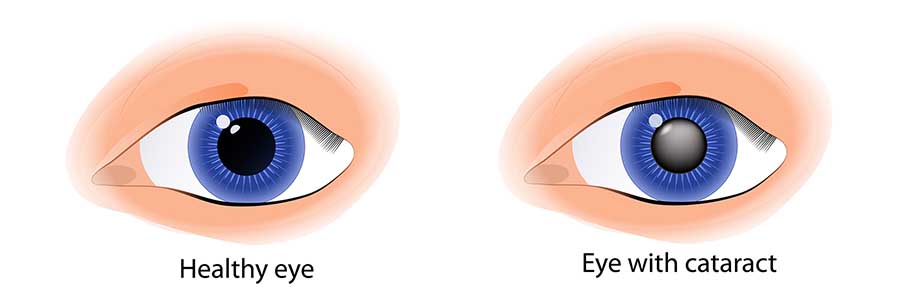
A cataract is the clouding of the natural lens in your eye. The lens is a clear disc-shaped structure that sits behind your iris (the coloured part of your eye). Its job is to focus light onto the retina, the area of light-sensitive cells at the back of your eye that sends signals to your brain to tell you what you can see.
Cataracts tend to develop slowly, and the cloudier the lens gets, the blurrier your vision becomes. Occasionally, cataracts can develop quickly, causing a rapid decrease in vision. A cataract can affect one eye or both. They can develop at the same rate, or one can develop more quickly than the other.
What causes cataracts?
Cataracts usually develop because of getting older, but other causes include:
- Diabetes: It’s not known exactly why, but people with diabetes are 60% more likely to develop cataracts than those without the condition.
- Steroid use: Research suggests that there’s a link between steroid use and cataract formation, with one study stating a 22.5% increased risk that oral and intravenous steroids will result in a cataract.
- Uveitis: Inflammation in the middle part of the eye that requires prompt medical treatment to prevent permanent vision loss.
- Genetics: You’re more likely to develop cataracts if a close blood relative is affected.
- Trauma: A physical trauma to your eye could cause a cataract to form.
How long do cataracts take to develop?
Age-related cataracts usually develop slowly over several years. However, those that are the result of a trauma to your eye, steroid use or uncontrolled or badly controlled diabetes could develop in just a few months.
What are the different types of cataracts?
There are several different types of cataracts:
-
Congenital cataractsCongenital cataracts are already present either at birth or form very shortly afterwards. It’s not always known why they develop, but they are particularly associated with infections during pregnancy or genetic conditions, such as Down Syndrome.
-
Posterior subcapsular cataractsThis is a cataract that forms on the back surface of the lens and is more commonly associated with trauma and diabetes. A posterior subcapsular cataract can form in the space of just a few months, and since they develop in the central part of the lens, can cause visual disturbances very quickly. They are also sometimes known as radiation cataracts as they can be caused by exposure to radiation or high levels of UV light.
-
Cortical cataractsCortial cataracts have a unique appearance, developing as white spoke-like clouding on the edge of the natural lens of your eye. They are most often linked to ageing, type 1 diabetes and UV light exposure, and are also more common in women and some ethic groups. They can also form more quickly than some other types of cataracts.
-
Nuclear sclerotic cataractsThis type of cataract appears as a yellow cloud in the centre of the lens and is the most common type of age-related cataract, usually starting to form after the age of 50. It can take years to develop and grow and causes a slow but progressive decline in your vision.
-
Traumatic cataractsTrauma can affect any area of the body, and your eyes are no exception. Studies suggest that up to 65% of eye traumas lead to the formation of cataracts, including blunt and sharp force injuries where vision loss follows rapidly.
What are the symptoms of cataracts?
If you have a cataract, you’ll experience problems with your vision in your affected eye. This typically manifests as clouding, like there is a fine film or fog covering the affected eye.
Other symptoms include:
- Increased sensitivity to light and glare
- Seeing halos around lights
- Finding it harder to drive at night
- Colours appear muted or faded
- Double vision
- Frequent changes in your prescription.
If you’re experiencing any of these symptoms, it's important that you visit your optician or eye doctor for an assessment.
What are the 4 stages of cataracts?
Cataracts usually develop in four stages:
Stage one – early cataracts: At the earliest stages, cataracts cause very minor symptoms such as slightly blurred vision or needing a little extra light when reading or concentrating on close-up detail.
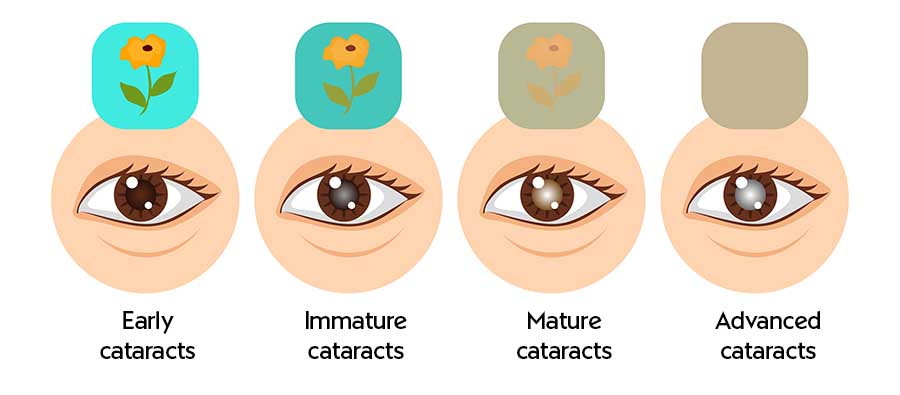
Stage two – immature cataracts: You may notice some clouding of the lens when you look at your eyes in the mirror. Symptoms will worsen, and you may need regular changes to your glasses prescriptions to help you see clearly. Low light will make your vision considerably worse too.
Stage three – mature cataracts: At this point, the entire lens of your eye will look cloudy and may appear to be grey or white in colour. Your vision will be very disrupted, and you may find some visual tasks, such as driving at night or reading in low light, are virtually impossible.
Stage four – advanced cataracts: The final stage of cataracts, the lens of your eye will appear to look hard, glassy and white or yellow in colour. You’ll find it difficult to see anything at all, and at this point, surgery will be essential to prevent any further complications that could damage your vision further.
How long does it take to go blind from cataracts?
It depends on the type of cataract that you have. For age-related cataracts, it can take many years for the clouding to reach a point where it significantly interrupts your vision. However, other types of cataracts can form extremely quickly and cause major disruption to your eyesight in a matter of weeks or months.
How are cataracts diagnosed?
You’ll need an appointment with a specialist eye care professional, either an optometrist or an ophthalmologist, to be diagnosed with cataracts. They will talk to you about your symptoms, conduct a visual assessment of your eye, and then perform several other tests to look at the lens of your eye and evaluate your vision.
The key diagnostic tests that may be involved could include:
- Visual acuity testing, which you’ll better recognise as the test where you’re asked to read letters and numbers off of a board
- A slit lamp exam, which enables your eye doctor to look at the structures at the front of your eye in exceptional detail
- Retinal exam, which is where eye drops will be placed into your eyes to widen your pupil, so your eye doctor can look at the structures at the back of your eyes
- Intraocular pressure testing, which measures the pressure inside your eyes to check for conditions such as glaucoma
- Biometry testing, where the eye is measured for the different types of lenses used to replace the cataract
- OCT scan, where the health of the macula and retina is checked
- Visual field testing, especially important if you have glaucoma
- Topography, where the shape of the cornea is checked, especially if you have astigmatism.
What are the benefits of cataract surgery?
The main benefit of cataract surgery is its ability to restore your vision. This means reducing the fogginess of your eyesight, improving colour clarity and reducing glare from light (artificial or natural). By improving your vision, the surgery can also improve your independence and quality of life.
You can also choose for your new replacement lens to be a corrective. What this means is that, if you usually need glasses, you can choose to have a lens placed that fixes short- or long-sightedness, or astigmatism. These lenses are known as intraocular lenses or IOLs for short.
Finally, one study has suggested that cataract surgery could lower your risk of developing dementia by as much as 25%.
Is cataract surgery right for me?
Before you can have cataract surgery, you’ll need to have a consultation with one of our ophthalmology team who will be able to assess your suitability.
You may be a good candidate for cataract surgery if you:
- Have blurred, cloudy vision
- Find that glasses or brighter lighting are no longer helping you to see more clearly
- Are finding day-to-day activities increasingly difficult
- Are generally healthy
- Have realistic expectations for what your vision will be after cataract surgery.
Do I have to wait for my cataracts to get bad before I can get surgery?
No, you can get cataract surgery at any point in their development. However, the majority of people usually wait until their vision is reasonably impacted and glasses or brighter lighting are no longer helping enough before they go down the route of having surgery.
What are the different types of lens implants?
There are a variety of different types of intraocular lens implants, including:
- Monofocal lenses: Monofocal IOLs offer clear vision at one specific distance – usually far away, although if you are short-sighted you may be offered a lens that keeps your near vision strong without glasses. They are the most common type of IOL.
- Multifocal lenses: As their name suggests, these IOLs can be used to correct your vision at two distances - near and far. You may also hear of them referred to as bifocal IOLs. They are ideal for people over the age of 40 who require prescription lenses to read clearly as well as see distances. Multifocal IOLs have a success rate of between 90% and 96% of people achieving 20/40 vision or better.
- Trifocal lenses: These IOLs have three vision zones rather than just two, including an intermediate section, helping you to see more clearly at all distances. They are very effective, with 90% to 95% of people achieving visual acuity that they are happy with.
- Extended Depth of Focus (EDOF) lenses: These are another type of multifocal lens that provide some near vision but reduce disturbances such as glare and halos of light, which can be a problem with other types of multifocal lenses.
- Toric lenses: Unlike standard IOLs, toric lenses are specifically designed to treat astigmatism and can be incorporated into monofocal or multifocal lenses. They do this by having different powers in different parts of the lens, which compensate for the unusual curve of the lens seen in astigmatism. They too have a high success rate, with studies showing 70% to 80% effectiveness in reducing astigmatism.
It is important to note that because the eye is a biological organ, there is no guarantee that any lens will achieve complete spectacle independence.
Can I have cataract surgery if I have astigmatism?
Astigmatism is a condition where blurred vision is caused by the lens of your eye having an uneven curve that causes light to be focused on more than one point on the retina. Cataract surgery can be used to treat cataracts and address astigmatism. It can do this by choosing to replace the cloudy natural lens with a special intraocular lens (IOL) that is designed to treat astigmatism. While you should be able to see more clearly, it may not eliminate your need for prescription glasses unless you have a multifocal or trifocal IOL.
Can I have cataract surgery if I wear varifocals?
Yes, you can. The type of glasses that you wear does not affect the type of lens that you can choose to have implanted during cataract surgery.
Can I have cataract surgery if I've already had laser eye surgery?
Yes, you can still have cataract surgery if you’ve had laser eye surgery. However, because laser eye surgery alters the curve of your eye, planning for your cataract surgery and choosing the correct IOL may be a little more complex and the results are not as predictable.
Who is not suitable for cataract surgery?
Cataract surgery is a viable solution for most people. However, you may not be a suitable candidate for the procedure if you have:
- Severe eye disease like glaucoma or advanced macular degeneration
- Uncontrolled diabetes
- An active eye infection
- Retina problems, such as a detached retina
- Corneal disease like Fuch’s dystrophy
- Unusual eye anatomy that makes treatment too risky.
You may also be told that you shouldn’t have cataract surgery if your vision is stable and isn’t having a negative impact on your day-to-day life. Your eye doctor will talk you through the pros and cons of cataract surgery if you have any problems, so that you can make an informed decision as to whether to proceed.
What are the alternatives to cataract surgery?
Unfortunately, there’s currently no cure for cataracts other than surgery, and little that can be done to slow their progression. There are steps you can take to support your vision, including regularly changing your prescription, using brighter lighting and wearing glasses with anti-glare coating. However, the benefits of these won’t last forever.
When you reach a point where your cataracts significantly impact your vision and quality of life, surgery is the only viable treatment.
How should I prepare for cataract surgery?
Before you can have cataract surgery, you’ll have a pre-operative assessment with our healthcare team. They’ll perform some tests to check your eye health and vision, and will recommend which type of intraocular lens you’ll have to replace your cloudy one after it’s been removed.
As cataract surgery is a day case procedure usually under local anaesthesia, there’s not a lot that you’ll need to do to prepare. You should avoid wearing make-up, and it’ll help if you’ve had plenty of water to drink so you don’t feel dehydrated during the procedure. You are encouraged to eat and drink as normal before cataract surgery. You should take all of your regular medications as usual unless your consultant advises you otherwise.
Smoking can increase the risk of complications in any surgery, and cataract surgery is no exception. It can also delay healing. If you smoke, try to give up as far in advance of your surgery as you can.
You won’t be able to drive after surgery, so make sure you have someone who can take you home.
How is cataract surgery performed?
Cataract surgery is usually performed using local anaesthetic, meaning that you’ll be awake but won’t experience any pain during the procedure. This is usually applied using drops, which will be administered a short while before your surgery along with dilating drops to make your pupils wider. Sometimes an injection is given around the eye as well.
Once your eyes are numb, your surgeon will make an incision into the front surface of your eye (your cornea). In normal cataract surgery, a tiny probe is inserted into the lens that emits ultrasonic energy that will break up the cloudy lens before it is sucked out using a minuscule vacuum.
Your chosen IOL can then be used to replace the cloudy lens. It’s inserted folded so it can fit through the incision and is then opened out to cover the space where the natural lens was. Since the incision is so small, no stitches are needed and your eye will be left to heal naturally.
In extracapsular cataract surgery, the incision is slightly larger so that the lens can be removed whole.
How long does cataract surgery take?
The actual procedure of a cataract surgery usually takes less than 30 minutes. However, with preparation and post-operative monitoring time, you can expect to be in hospital for at least a few hours.
How long does it take to recover from cataract surgery?
Although it takes around 6 weeks for your eyes to fully heal after cataract surgery, you should start to notice an improvement in your vision in as little as 48 hours. During this time, you may find that your eyes are watery, itchy or a little uncomfortable, but this should ease quite quickly.
You’ll need to wear a patch over your eye at night while you sleep to prevent you from accidentally rubbing it, and you’ll be advised to avoid lifting heavy objects or bending over (which could cause pressure to build up in your eyes), or swimming for at least a few weeks.
Always follow the aftercare advice provided by your eye doctor and Nuffield Health healthcare team.
How long will my vision be blurry for after cataract surgery?
Your vision will probably be blurry for a few days while they start healing following surgery. However, most people start to notice an improvement in their vision within 48 hours, and this should continue over the coming days and weeks until full clarity is reached at around six to eight weeks after surgery.
Will I need to use eye drops after cataract surgery?
Yes, eye drops are a standard part of the aftercare following cataract surgery. They are provided to help prevent infection, reduce the risk of infection and keep your eye lubricated and comfortable while you heal.
You’ll be given a specific schedule to follow, and it’s important that you administer the right eye drops at the correct times. This usually lasts around 4 weeks. If you have any questions during this time, always speak to your medical team.
When can I drive after cataract surgery?
Most people can start driving again around 48 hours after cataract surgery. However, you must meet the legal standard for vision and feel comfortable and confident to drive. Always follow the guidance of your eye doctor; otherwise, you could invalidate your insurance.
When can I return to work after cataract surgery?
It depends on your job. If you work in an office or have a job that involves light physical activity, you may be able to go back to work in just a few days. However, if you have a more intense physical role, you may need to take longer off work. Again, you should follow the guidance of your eye doctor.
What are the risks and complications of cataract surgery?
Cataract surgery is generally considered to be safe, with a low risk of complications or side effects. However, as with any surgery, there are some risks to be aware of, although some of these are very rare. These include:
- Infection
- Inflammation and corneal swelling
- Secondary cataract formation
- Retinal detachment
- Cystoid macular edema
- Dislocated IOL.
Your surgeon will explain these ahead of your procedure, including what to do if you have any concerns.
What are the signs of infection after cataract surgery?
If you follow your medical team's post-surgical guidance, infection after cataract surgery is rare. However, signs to look out for include:
- Redness
- Sensitivity to bright light
- Significant eye pain
- Swollen eyes
- Watery eyes
- Loss of vision.
If you’re concerned that you have an infection, contact your Nuffield Health team right away.
FAQs
-
What happens if I leave my cataracts untreated?If you leave your cataracts untreated, you’ll eventually experience severe vision loss that will make it impossible to perform many of your usual daily activities.
-
How safe is cataract surgery?Cataract surgery is safe, with complications occurring in an average of less than 2% of cases14. However, no surgery is without complications and and there is a 1 in 1000 risk of blindness after any eye surgery. Your doctor will discuss the risks with you.
-
Is cataract surgery painful?No, the surgery itself is performed under anaesthetic meaning that you won’t feel any pain, although some people report feeing slight pressure during the procedure. Your eyes may also feel gritty or slightly uncomfortable in the days following your cataract surgery, but over the counter pain relief should help if you need it.
-
Will I be awake during cataract surgery?Yes, nearly all procedures are carried out using local anaesthetic meaning you’ll be awake during your cataract surgery.
-
Can cataract surgery be performed on both eyes at the same time?In theory, yes, you can have cataract surgery on both eyes at the same time. However, it’s not common practice. This is because it means that your vision in both eyes will be adversely affected for several days. It also helps ensure that any complications, such as infection, are limited to a single eye only.
-
How long should I wait between cataract surgeries on each eye?If you plan to have cataract surgery on both eyes, it’s generally advisable to wait at a week between them, so that your vision is mostly restored and healing is well underway in the first eye. Always follow the advice of your surgeon.
-
How long do the results of cataract surgery last?Since the replacement lens is artificial and can’t develop cataracts and shouldn’t degrade, the results of your cataract surgery should last for the rest of your lifetime. However, it’s important to note that a small percentage of people develop a condition called Posterior Capsule Opacification (PCO) which clouding of the lens that can be easily fixed with a one-off laser treatment in clinic.
-
Will I still need glasses after cataract surgery?It’s also important to have realistic expectations about the outcome of your surgery. While many people find that their vision significantly improves after cataract surgery, if you have refractive errors that require prescription eyewear, it’s likely that you will still need to use them to achieve optimal vision.
-
When can I watch TV or use a screen after cataract surgery?You’ll be advised to rest your eyes as much as possible for the first 24 hours following surgery, as this will help kick start the healing process. If you need to, you can use your smart phone, laptop or TV, but you should really limit your screen time to prevent unnecessary eye strain.
-
When can I exercise after cataract surgery?You can get back to light exercise like walking within 24 hours of surgery, but anything more intense will have to wait a little longer. Avoid strenuous exercise, heavy lifting and bending at the waist for at least two weeks, and swimming and contact sports for at least 4 weeks. This will help prevent unnecessary pressure and reduce the risk of infection.
How much does cataract surgery cost at Nuffield Health?
The average guide price for cataract surgery (one eye) at a Nuffield Health hospital is £3,613.
Click here and select your local Nuffield Health hospital to view guide prices for cataract surgery in your area. Please note that the guide price stated is an approximate cost of treatment only. You will be given a fixed all-inclusive price for treatment following your initial consultation with a consultant.
| Initial consultation | from £200 | |
|---|---|---|
| Diagnostics | If needed to determine treatment plan | |
| Treatment | from £3,613 | |
| Pre-assessment | Included | |
| Main treatment | Included | |
| Post-discharge care | Included | |
| Pre-assessment, Main treatment and Post-discharge care | £3,613 | |
| Guide price | £3,813 | |
What does guide price mean?
The guide price stated above is an approximation of the cost of treatment only. The final price may vary according to Consultant fees, prosthesis or drugs used and any pre-existing medical conditions which may alter your care pathway. You will be given a fixed all-inclusive price for treatment following your initial consultation with a Consultant.
Ways to pay
Nuffield Health promise
Our prices are all-inclusive. We will equal any comparable price. There are no time limits on your aftercare.
Paying for yourself
There are no hidden costs in our treatment prices. The price you see is the price you pay.
Find out morePersonal medical loan
Spread the cost of your treatment with a 10, 12 or 24 month 0% personal medical loan.
Find out moreMedical insurance
We work with you and your insurance provider to get you the treatment you need quickly.
Find out more