
Knee arthroscopy (knee keyhole surgery) in Edinburgh
- Overview
Unsure what's causing your knee pain? At Nuffield Health Edinburgh Hospital our leading orthopaedic surgeons can investigate your knee troubles with a diagnostic knee arthroscopy procedure for a full diagnosis and expert advice.
What is a knee arthroscopy?
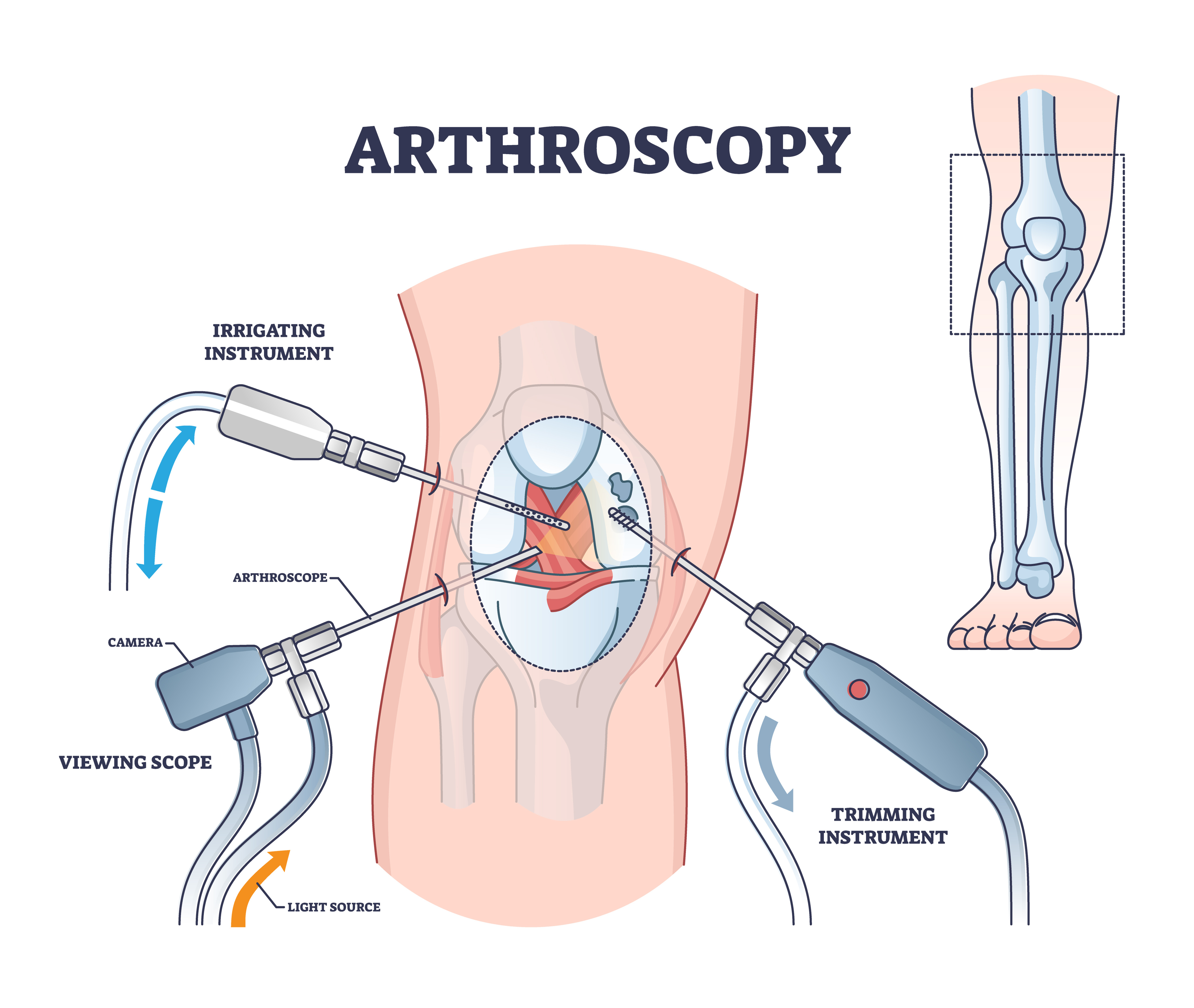
It’s a minimally invasive operation that involves inserting a small camera and specialised instruments into a tiny incisions (cuts) in your skin to examine the knee joint.
It can be used to diagnose and treat knee problems such as:
- Ligament damage
- Torn or damaged cartilage
- Misaligned kneecaps
- Meniscus tears
- Arthritis.
Why choose Nuffield Health Edinburgh Hospital for your knee arthroscopy?
At Nuffield Health Edinburgh Hospital, our orthopaedic knee surgeons specialise in knee arthroscopy surgery and are renowned for their impressive joint diagnostic accuracy and repair.
Our consultants can provide you with rapid access to a procedure though a treatment plan which is personalised to you, and you'll see the same specialist throughout your treatment.
You'll have your own private en-suite room, fully equipped with a widescreen TV, unlimited Wi-Fi and modern décor, giving you privacy and home comforts while you recover. Our friendly nurses will make sure you're comfortable and well looked after during your stay.
Your treatment package includes any aftercare you need for a speedy recovery. Our physiotherapy team will work alongside your chosen consultant to help you get you back to your feet. Our physiotherapists are all trained in orthopaedic aftercare and have experience helping patients with knee rehabilitation.
How to book a consultation at our hospital in Edinburgh
Suffering with prolonged knee pain and want to discuss your treatment options? Book a private consultation with one of our expert orthopaedic consultants by calling us on 0131 447 2340 or by filling in the contact form below.
When booking your consultation, please let us know if you've had any recent X-rays or scans, as there will be additional charges for any diagnostic imaging you need.
What treatments can be performed with a knee arthroscopy?
A knee arthroscopy can also be used to treat some of the above conditions, without making a larger cut. Here are some example treatments:
- ACL repair or reconstruction – if you’ve torn your anterior cruciate ligament (ACL), this procedure stitches the damaged ligament back together and anchors this into the thigh or shin bones (repair) or creates a new ligament which is fixed into the thigh and shin bone (reconstruction)
- PLC reconstruction – for posterior cruciate ligament (PCL) tears, this operation creates a new ligament which replaces the injured ligament
- Partial meniscectomy – the damaged or torn part of the meniscus is removed, leaving as much healthy cartilage as possible
- Meniscal repair – the torn edges of the meniscus are stitched back together
- Chondroplasty – this involves removing damaged cartilage in a joint to reduce friction and pain
- Microfracture surgery – small holes are created in the exposed bony surfaces to generate a healing response, which promotes the growth of new tissue
- Cartilage grafting/transplantation – healthy cartilage is harvested from another part of the knee (autograft) or from a donor (allograft) and transplanted to the damaged area
- Patella stabilisation – if your kneecap moves out of the groove at the end of your thighbone, this surgery can reposition it
- Synovectomy – if you have synovitis where the lining of the knee joint is inflamed due to rheumatoid arthritis or infection, this surgery removes the inflamed tissue.
Knee arthroscopy can also be used to remove fragments of bone or cartilage that have broken off due to injury or arthritis or to wash out an infected knee joint (septic arthritis).
Is a knee arthroscopy right for me?
If you have any of the following knee symptoms, and a scan has been inconclusive, an arthroscopy can help identify the problem:
- Persistent joint pain
- Swelling
- Stiffness
- Giving way or locking.
What happens during a knee arthroscopy procedure at Nuffield Health Edinburgh Hospital?
A simple knee arthroscopy usually takes around 30 to 45 minutes. Different types of anaesthetic can be used, and your anaesthetist will discuss the options with you. You may also have injections of local anaesthetic to help with the pain you feel after the operation.
Preparing for a knee arthroscopy
Your consultant and healthcare team at Nuffield Health Edinburgh Hospital will give you instructions on how to prepare for surgery, and it's important to follow them carefully.
Here are a few things you can do in the lead up to the procedure to make sure everything goes as smoothly as possible:
- Let your doctor know about any medication you take and follow their advice
- If you smoke, stop smoking several weeks before the operation
- Try to maintain a healthy weight
- Exercise regularly
- Don’t shave or wax your knee in the week beforehand
- Try to have a bath or shower either the day before or on the day of the operation
- Don’t eat or drink for 6 to 12 hours before the surgery
- If you are diabetic, keep your blood sugar levels under control
- Keep warm around the time of the procedure.
During the procedure
This is the general process for a diagnostic knee arthroscopy, but it will vary depending on what they find.
- Your surgeon will make a few small cuts in your knee (usually two)
- They’ll pump saline (sterile salt water) inside the joint through the cuts to make it easier to see, before inserting a tiny camera and examining the joint
- Depending on what they find, they’ll remove any loose material caused by wear of the joint and repair any damage to cartilage, join surfaces and ligaments – usually without making a larger cut
- If you’ve torn your ACL, you may need a reconstruction procedure, which is slightly larger operation but still performed through via knee arthroscopy
- Finally, they’ll drain the saline and close your skin with stitches or sticky strips.
After the procedure
The surgeon will wrap your knee in a bandage, which you should leave on for 2 to 3 days.
You’ll be taken to the recovery room where you’ll wake up from the anaesthetic. Your wounds, blood pressure and pulse will be checked carefully.
Recovery from a knee arthroscopy
Your knee will be swollen and sore for the first week, but most people recover fairly quickly and return to normal activities within 2 to 3 weeks after a simple procedure. This can be longer depending on the type of procedure you have.
Short-term recovery
Once you’ve recovered from the anaesthetic, the healthcare team will help you stand up. They’ll tell you how much weight you can put on your leg, and whether you need crutches.
If you’re allowed to go home the same day, for the first 24 hours:
- You’ll need someone to take you home and stay with you overnight
- If you’ve had general anaesthetic, you shouldn’t sign legal documents or drink alcohol
- Don’t drive, operate machinery, or do any potentially dangerous activities (like cooking) until you’ve fully recovered feeling, movement and co-ordination.
Managing your recovery at home
There are a few things you can do to aid your recovery. Although the risk of a blood clot is minimal, make sure you follow the advice of your healthcare team at Nuffield Health Edinburgh Hospital, and call them if you’re worried about anything.
- Wear compression stockings: For around 2 to 6 weeks after surgery to help avoid a blood clot
- Keep your wound dry: For at least 4 to 5 days and use a waterproof dressing when you have a bath or shower
- Avoid submerging the knee in baths or pools: Wait until the incisions are fully healed (usually around 2 to 3 weeks) before you do this.
- Elevate your leg and apply ice packs: Do this regularly or as advised by your care team to manage swelling, as well as improve your comfort and your ability to walk.
- Do some gentle exercises: The physiotherapist will show you some movements to prevent stiffness, maintain range of motion and improve muscle strength
- Stay active: Walking may be uncomfortable at first, so take any painkillers we’ve prescribed you for some relief. Short trips around the house are fine, but you should limit longer walks for the first 2 to 4 weeks if you’ve had a minor procedure.
- Don’t rush your recovery: Progress the intensity and duration of exercise gradually – doing too much too soon can aggravate your healing and potentially set back your healing.
- Don’t push through the pain While some discomfort is normal, sharp or increasing pain is a signal to slow down and rest
- Avoid limping: Try to walk with as normal a gait as possible, even if you need crutches to achieve it. Limping can lead to compensatory movements and pain in other joints.
Follow-up appointments
The healthcare team will let you know if you need to come back to have any stitches removed or dressings changed.
What are the benefits of a knee arthroscopy?
As a method of surgery, keyhole knee surgery offers several benefits, compared to traditional ‘open’ knee surgery.
- Minimally invasive: Only small cuts are required, resulting in less damage to surrounding tissues
- Lower risk of complications: The risk of bleeding and infection is lower due to smaller incisions
- Less pain and swelling: Again, as your surgeon will only make small cuts, you're likely to have less pain and discomfort afterwards
- Quick and accurate diagnosis and treatment: The arthroscope provides a clear view of the inside of the knee and can be used to both diagnose and treat the problem at the same time
- Shorter recovery time: Most people recover quickly and can return to their normal activities within 2 to 3 weeks.
The actual benefits of certain arthroscopic knee treatments may be more pronounced for specific conditions and more limited for others, such as advanced osteoarthritis.
How long do the benefits of knee arthroscopy surgery last?
This varies significantly depending on the condition being treated, the extent of the damage, individual patient factors (age, activity level, overall health), and how well you follow your rehab programme.
It is particularly effective for mechanical issues like meniscal tears requiring repair and ACL reconstruction. For degenerative conditions, particularly widespread cartilage loss, the benefits may be more limited and temporary.
It's essential to have a realistic discussion with your orthopaedic surgeon about the expected outcomes and potential longevity of the benefits for your specific condition.
ACL/PCL reconstruction
Typically highly successful with good long-term results (10 to 20 years), however there is still a risk of re-tearing the reconstructed ligament, especially in young, active individuals.
Also, despite successful reconstruction, some patients may still develop osteoarthritis in the long term, as the initial injury and subsequent surgery can contribute to degenerative changes in the joint.
Partial meniscectomy
Many patients experience significant pain relief and improved function in the short term.
However, some studies suggest a significant percentage of patients may experience progression of osteoarthritis or even require repeat surgery (including total knee replacement) within 10 to 20 years, especially if there was pre-existing osteoarthritis.
Meniscal repair
This has better long-term potential if the repair is successful as it aims to preserve the natural meniscus. However meniscal repairs have a higher failure rate compare to partial meniscectomies, especially in older patients or complex tears.
Recovery is often longer and more restrictive than partial meniscectomy to allow the repair to heal.
Chondroplasty
This provides symptomatic relief but does not restore the original hyaline cartilage. Its benefits are often considered temporary, especially for more extensive or degenerative cartilage loss.
Studies have shown that a significant proportion of patients undergoing chondroplasty may require subsequent knee replacement (knee arthroplasty) within 1 to 5 years.
Microfracture
Microfracture stimulates the growth of fibrocartilage, which is a less durable and biomechanically inferior tissue compared to the original hyaline cartilage.
While it can provide relief for smaller defects, the fibrocartilage may break down over time, leading to a return of symptoms. Its long-term efficacy is generally considered less robust than procedures that restore hyaline cartilage.
Cartilage grafting/transplantation
Procedures that involve transplanting healthy cartilage (e.g. OATS, autologous chondrocyte implantation) aim to restore hyaline cartilage and therefore have the potential for more durable, long-term benefits.
However, these procedures are more complex, have longer recovery times and their long-term success rates are still under ongoing research and vary depending on the specific technique and patient factors.
Removal of loose bodies, synovitis etc
For conditions like removal of bone fragments/cartilage or inflamed synovium, arthroscopic removal typically provides immediate relief from symptoms.
The long-term benefit depends on the underlying cause of the loose bodies or inflammation. If the underlying condition (e.g. early osteoarthritis causing cartilage flakes) progresses, new symptoms may arise.
What are the risks of a knee arthroscopy?
All surgery carries a risk of complications. Your surgeon at Nuffield Health Edinburgh Hospital will help you weigh these up against the benefits of the procedure. It’s good to be aware of the complications so you know what to look out for if you have the procedure and you can seek assistance as soon as possible.
Possible side effects following a knee arthroscopy surgery
- Pain: This is a common side effect of arthroscopic surgery. Your surgeon may inject painkillers into your knee to help reduce the pain. The healthcare team will also give you medication to control the pain.
- Swelling: This may increase for the first few days before gradually subsiding over several weeks, sometimes up to 12 weeks. It’s crucial to elevate the leg and apply ice packs to manage swelling.
- Scarring: Although arthroscopy scars are usually small and neat. You may also have some tenderness, redness and irritation around your incisions.
- Bruising: This can occur around your knee and may extend down your leg.
- Stiffness: This is due to the swelling, pain and the formation of scar tissue. Physiotherapy exercises are essential to regain full range of motion and prevent persistent stiffness.
- Numbness: Because of the minor nerve irritation, you may have small patches of temporary numbness around the incision sites, but significant nerve damage is rare.
Specific complications of a knee arthroscopy
- Damage in the nerves around your knee, leading to weakness, numbness or pain in your leg or foot
- Infection in your knee joint
- Severe pain, stiffness and loss of use of your knee (complex regional pain syndrome).
General complications of a knee arthroscopy
- Bleeding during or after the procedure
- Infection of the surgical wound
- Allergic reaction to the equipment, materials or medication
- Venous thromboembolism (VTE) – blood clot in your leg (deep vein thrombosis)
- Difficulty passing urine
- Chest infection.
Alternatives to knee arthroscopy surgery
Physiotherapy and anti-inflammatory painkillers such as ibuprofen can sometimes prevent or delay the need for an arthroscopy.
Problems inside your knee can often be diagnosed using an X-ray or MRI scan, but you may then need an arthroscopy to treat the problem.
How much does a knee arthroscopy cost at Nuffield Health Edinburgh Hospital?
Knee arthroscopy (keyhole knee surgery) consultants at Edinburgh Hospital
40 Colinton Road, Edinburgh, EH10 5BT
Free onsite parking when you validate your number plate at reception.
Ways to pay
Nuffield Health promise
Our prices are all-inclusive. We will equal any comparable price. There are no time limits on your aftercare.
Paying for yourself
There are no hidden costs in our treatment prices. The price you see is the price you pay.
Find out morePersonal medical loan
Spread the cost of your treatment with a 10, 12 or 24 month 0% personal medical loan.
Find out moreMedical insurance
We work with you and your insurance provider to get you the treatment you need quickly
Find out more