
Managing any pain and swelling and begin to regain some movement.
You will be using crutches and begin to weight bear (according to your consultant’s advice) , as well as beginning some gentle stretches.
Posterior cruciate ligament (PCL) reconstruction
- Overview
PCL reconstruction replaces a torn posterior cruciate ligament (PCL) with a graft to regain knee strength and mobility. Learn more from the experts at Nuffield Health.
What is PCL reconstruction?
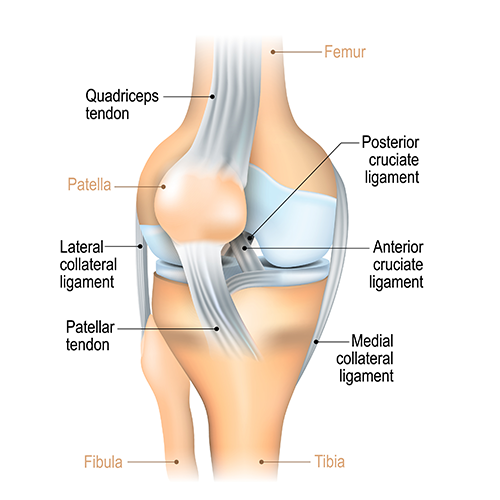
Posterior Cruciate Ligament (PCL) reconstruction is a surgical procedure which restores stability to the knee after a significant injury to the ligament. The PCL is one of the main ligaments inside the knee joint and it ensures that the shin bone (tibia) doesn’t move too far backwards relative to the thigh bone (femur). Injuries to it are often caused by high-impact trauma to the knee. It is commonly associated with car accidents when the dashboard impacts the front of the shin, as part of a multi-ligament injury in motorbike accidents, or in sports trauma. Both hyperextension and hyperflexion of the knee can result in PCL rupture. It is particularly common in rugby, compared to other sports. While the ligament can sometimes heal naturally, it may do so incorrectly, leading to instability, pain, and an increased risk of arthritis. Reconstruction involves replacing the damaged ligament with a graft, typically taken from your own hamstring tendons, or sometimes a donor tendon (allograft) is used to replace the damaged PCL.
Is PCL reconstruction right for me?
This procedure is usually recommended when you have had a more severe tear of the PCL (grade 2 or grade 3), multi-ligament injuries, or active lifestyles that need particularly strong stability in your knee. (Grade 1 tears are well tolerated and rarely need surgical treatment). It will especially be considered if you’ve experienced persistent knee instability, pain, or functional limitations that do not improve with non-surgical treatments such as physiotherapy or bracing. Your consultant will assess your symptoms, imaging results (such as MRI), and personal goals to determine whether surgery is appropriate.
What happens during the PCL reconstruction procedure?
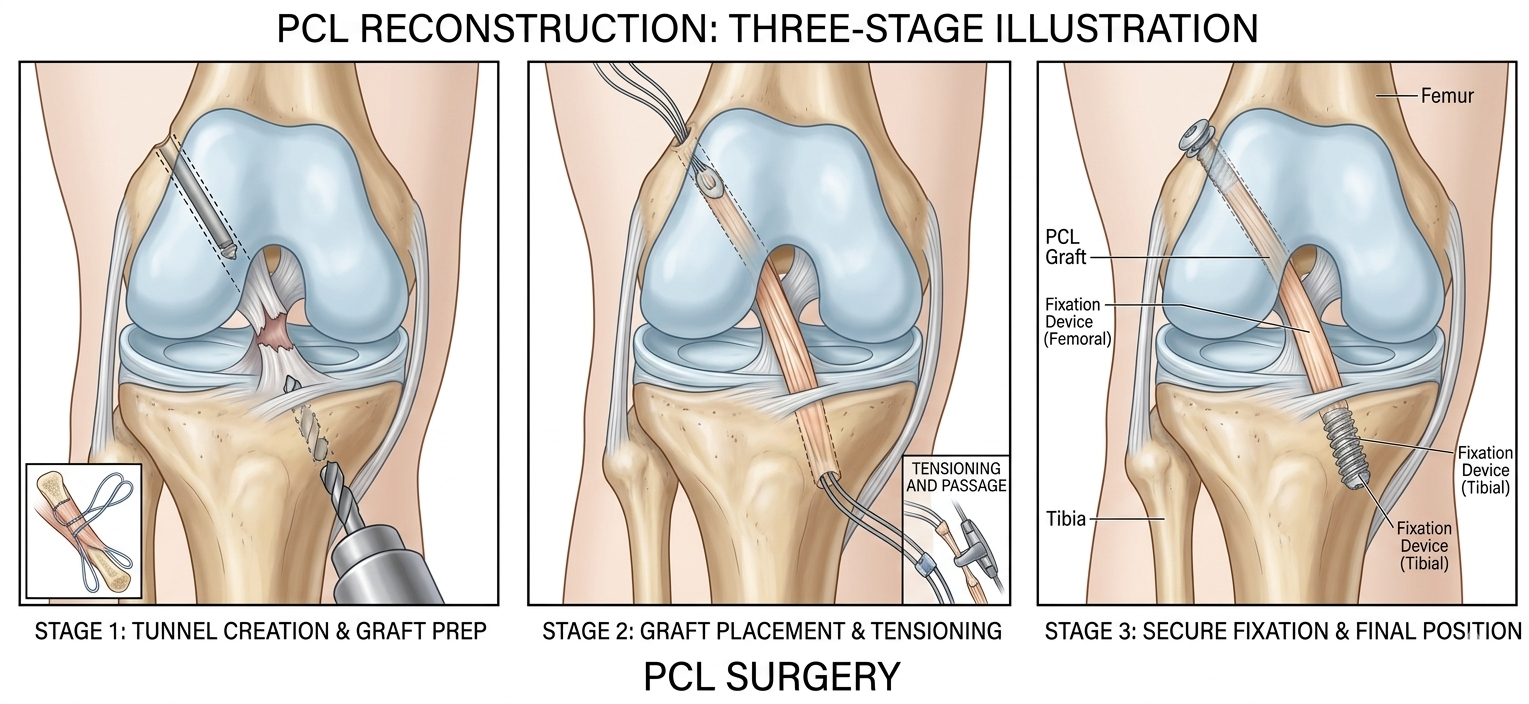
The procedure is typically performed under general or spinal anaesthetic and takes about one and a half hours. It is usually done arthroscopically, meaning the surgeon uses a small camera and instruments inserted through small incisions. The damaged ligament is removed, and a graft, either your hamstring tendon or a donor tendon, is used to reconstruct the PCL. The graft is then secured to the bone using some form of hardware. This can be screws or more frequently nowadays, suspensory devices using a small titanium button. The knee is then bandaged, and a brace will be applied. Unlike following ACL reconstruction where a brace is not usually necessary, PCL reconstruction will always be followed by postoperative bracing. The brace must be worn for a period of a minimum of six weeks. Most patients can go home the same day.
Preparing for posterior cruciate ligament surgery
There are a few things you can do in the weeks leading up to your surgery to help everything go as smoothly as possible and support your recovery:
- Physiotherapy or prehabilitation: To aid recovery, you will be asked to ensure your thigh and hamstring muscles are as strong as possible before having surgery, and you may be referred for physiotherapy to do this.
The physiotherapist will provide a programme of stretching and strengthening to settle your knee down, restore movement, and build strength to prepare you for surgery. This is commonly called ‘prehabilitation’, and by completing this programme, you can expect to be ready for surgery in 3-6 weeks after your injury. In the case of a multi-ligament injured knee, sometimes early surgery (within two weeks) is indicated. - Stop smoking or vaping: Research shows that non-smokers do better following ligament surgery so it is advisable that you stop smoking, ideally six weeks beforehand, as nicotine can affect wound healing.
- Try to maintain a healthy weight: A healthy weight can reduce the strain on your knee.
- Arrange transportation: You won't be able to drive after surgery, so make sure someone can pick you up from the hospital and take you home.
- Arrange support: Ask family and friends to help with essential tasks like driving, cooking and shopping for the first few weeks after you return home.
Find out more about preparing for surgery.
Before surgery
You will have a pre-assessment appointment before your PCL reconstruction with your consultant and healthcare team.
They will review your medical history and may ask you to complete some diagnostic tests, such as X-rays and blood tests.
Be sure to:
- Let your doctor know about any medication you take. They will let you know if you should continue or temporarily stop any medicines before and after your surgery.
- Let your doctor and healthcare team know about any conditions you have such as diabetes and high blood pressure.
Follow any instructions for fasting before your surgery (usually no food or drink for several hours before your surgery).
Find out more about the pre-assessment appointment.
Recovery from PCL reconstruction
Recovery and rehabilitation after PCL reconstruction is vital and begins immediately after surgery. A physiotherapist will guide you through exercises to restore movement and strength and any swelling will be managed with ice and elevation, as well as being prescribed painkillers in order to make you as comfortable as possible. It is advisable to use a home ice compression device for the first 3-4 weeks following surgery. Rehabilitation is gradual and can take several months, with full recovery often lasting 9 to 12 months depending on the individual and the extent of the injury.
The timelines are only guidelines, your recovery will be based more on performance indicators such as range of movement and strength, rather than a strict timeline.
Immediately after surgery
First few weeks
3 - 6 months
6 - 12 months
Focus on regaining range of motion in your knee and gently strengthen your joint and surrounding muscles.
You will be provided a number of stretches and exercises to perform by a physio.
You will be provided a number of stretches and exercises to perform by a physio.
Walk without crutches and fully weight bear through your operated knee.
You will continue to strengthen the muscles around your knee and further improve your range of motion.
You will continue to strengthen the muscles around your knee and further improve your range of motion.
Nine months is the earliest you could expect to return to any sporting activities. This will be based on performance indicators which you and your consultant will discuss to ensure no further damage.
It is important to only increase your activity level when you feel fully confident physically and psychologically.
It is important to only increase your activity level when you feel fully confident physically and psychologically.
What are the benefits of PCL reconstruction?
The main benefits include improved knee stability, reduced pain, and a lower risk of long-term joint damage such as osteoarthritis. Many patients regain the ability to perform daily activities and return to sports or physically demanding work after completing rehabilitation.
How long do the benefits of PCL reconstruction last?
If the surgery and rehabilitation are successful, the benefits can last for many years. However, outcomes depend on factors such as age, activity level, and adherence to physiotherapy. Some patients may experience that linger and may need further treatment. The graft will in some patients gradually stretch out a little in the first few years, but in general, this is well tolerated by the patient.
What are the risks of PCL reconstruction surgery?
As with any surgical procedure, there are risks including pain, bleeding, infection, scarring, and blood clots (deep vein thrombosis). Specific risks related to PCL reconstruction include graft failure and damage to the nerves and blood vessels behind the knee. A general or spinal anaesthetic carries a small risk of difficulty passing urine in the first 24 hours after surgery.
Possible side effects following PCL reconstruction
Common side effects include swelling, bruising, stiffness, and temporary pain around the knee. These usually improve with rest, ice, and prescribed medication. Some patients may experience numbness or tingling near the surgical site.
Potential complications of PCL reconstruction
Complications can include infection, stiffness, deep vein thrombosis, nerve or blood vessel damage, or failure of the new ligament (graft). In rare cases, revision surgery may be needed if the reconstruction does not hold or symptoms persist.
Alternatives to posterior cruciate ligament reconstruction
Non-surgical options include:
- Physiotherapy: If the tear to the PCL is minor or not a full tear, strengthening the surrounding muscles to improve stability can be effective.
- Bracing: Wearing a brace to support the knee.
- Activity modification: Avoiding movements that stress the knee. These may be suitable for partial tears.
How much does PCL reconstruction cost?
Click here and select your local Nuffield Health hospital to find the guide prices for PCL reconstruction. Please note that the guide price stated is an approximate cost of treatment only. You will be given a fixed all-inclusive price for treatment following your initial consultation with a consultant.
FAQS
-
Is a PCL reconstruction painful?
You may experience pain after surgery, especially in the first few days, but this can be managed with painkillers that your healthcare team will advise on as well as icing your knee to help with swelling and pain relief. In addition, your anaesthetist will give you nerve blocks, which are very effective in relieving pain in the first 24-36 hours following surgery. Most people find the discomfort manageable and it improves steadily during recovery.
-
Can a posterior cruciate ligament injury heal on its own?
In some cases, PCL injuries can heal without surgery, but the injured PCL will very likely heal stretched out. This will depend on the severity of the tear though, with partial tears more likely to not require surgery.
Non-surgical treatment will rely heavily on strengthening the surrounding muscles in order help your knee stability. More severe PCL injuries are more likely to require surgery and the surgery may offer more long-lasting results.
-
How soon can I walk after PCL surgery?
You can usually begin walking with crutches the day of your surgery. You can begin to put weight through your operated knee as comfort permits, but your consultant and physiotherapist will advise on how quickly to increase this as your recovery continues.
-
Will I need crutches after a PCL reconstruction?
Yes, crutches are typically used for the first few weeks to support your knee and prevent any additional strain and to prevent aggravating your knee after surgery. In addition, you will be required to wear a protective brace for at least six weeks following surgery. Your physiotherapist will advise when it’s safe to stop using them.
-
How soon can I exercise after PCL reconstruction?
You will be given gentle exercises and stretches shortly after surgery, focusing on range of motion and muscle activation. Physiotherapy rehabilitation is crucial to your recovery from a PCL reconstruction, so these will gradually increase as your recovery continues. More intensive activities like running or sport-specific training usually start around 4 to 6 months post-op, depending on your progress and clearance from your consultant.
-
When can a drive following PCL reconstruction surgery?
If it is your left knee and you have an automatic car, you should be able to drive within a week. If you have a manual car, you will not be able to depress the clutch easily in the first two to three weeks following surgery.
If it is your right knee, you will not be able to carry out an emergency stop for a minimum of four weeks following surgery. After that, your physiotherapist will advise when they think you are safe to drive again.
-
How long will I be off work following PCL reconstruction surgery?
This depends on your job. If your work is sedentary, you may return within 2 to 4 weeks. Physically demanding jobs may require several months off. Your consultant will advise based on your recovery and job requirements.
-
Can a PCL reconstruction fail?
While most surgeries are successful, graft failure can occur due to trauma, poor healing, or overuse. In addition, most grafts will stretch out a little in the first few years following surgery.
-
Will I need physiotherapy after PCL reconstruction?
Yes, physiotherapy is essential for a successful recovery. It helps restore movement, strength, and stability, and supports your return to normal activities and sport.
Ways to pay
Nuffield Health promise
Our prices are all-inclusive. We will equal any comparable price. There are no time limits on your aftercare.
Paying for yourself
There are no hidden costs in our treatment prices. The price you see is the price you pay.
Find out morePersonal medical loan
Spread the cost of your treatment with a 10, 12 or 24 month 0% personal medical loan.
Find out moreMedical insurance
We work with you and your insurance provider to get you the treatment you need quickly.
Find out more