
Colonoscopy at Guildford Hospital
- Overview
A colonoscopy is a procedure that uses a thin, flexible tube with a camera to examine the lining of the large bowel, including the colon and rectum. If you're experiencing symptoms such as abdominal pain, rectal bleeding or changes in bowel habits, a colonoscopy at Nuffield Health Guildford Hospital can help identify the cause and support early diagnosis of bowel conditions.
What is a colonoscopy?
A colonoscopy is a common diagnostic test that enables a medical professional to look inside your colon (large bowel) in real time. It involves inserting a long, thin, flexible tube with a light and camera at the end, called an endoscope, into your bowel through your rectum.
Colonoscopy is valuable for detecting a wide range of bowel issues, from inflammatory bowel diseases such as Crohn’s disease to bowel cancer.
What are the benefits of a colonoscopy?
There are a range of benefits offered by a colonoscopy, including:
- Real-time visualisation of the colon: A colonoscopy is the best way to see inside your colon, as images are shown on a screen in the room in real time. This can help your doctor to provide a diagnosis (if appropriate) for your symptoms, such as Crohn’s disease.
- Cancer prevention: If your colonoscopy reveals polyps or other abnormalities, these can be removed during the procedure. Although bowel polyps are usually benign (non-cancerous), a small percentage do eventually become cancer. Removing these polyps at an early stage could help prevent bowel cancer in the future.
- Same-day investigation/treatment: If your doctor spots anything unusual during your colonoscopy, they will be able to take samples of the tissue at the same time. And some issues, such as bleeding or blockages, may be dealt with right away.
- Peace of mind: If you have a family history of colorectal issues, having a colonoscopy that doesn’t detect any problems could provide you with valuable peace of mind.
What conditions can a colonoscopy detect?
A colonoscopy can help your doctor to diagnose a variety of different conditions, including but not limited to:
- Crohn’s disease
- Ulcerative colitis
- Bowel cancer
- Diverticular disease
- Colorectal cancer
- Precancerous polyps
- Gastrointestinal diseases
- Structural abnormalities
- Blockages
Can a colonoscopy detect cancer straight away?
A colonoscopy can detect a suspected cancer straight away because of how it appears. However, to confirm a diagnosis (and to understand the cancer better, including how advanced it is), a biopsy will be needed. This is where a sample of tissue is taken and looked at under a microscope.
Can polyps be removed during a colonoscopy?
Yes. This is known as a polypectomy and involves using specialised, small tools passed through the scope to perform the removal. These tools usually include a small loop of wire called a snare, which cuts through the polyp and seals the blood supply. Once a polyp has been removed, it will be sent to the lab to check that it’s benign.
Why choose Nuffield Health Guildford Hospital for my colonoscopy?
At Nuffield Health Guildford Hospital, colonoscopy is performed in a dedicated endoscopy unit by consultants who specialise in diagnostic and therapeutic bowel procedures. Located on Stirling Road in Guildford, close to Surrey Research Park, the hospital serves patients across Surrey and Hampshire. You'll be offered sedation or pain relief, and the examination usually takes 30 to 45 minutes. Polyps can be removed and biopsies taken in the same sitting. It's a day case, and your consultant stays with you throughout and explains the findings before you leave. One all-inclusive price covers the procedure and your aftercare, with no time limit.
How to book a colonoscopy at Nuffield Health Guildford Hospital?
To book a colonoscopy, you will need a referral from a healthcare professional. If you have an outpatient consultation with a Nuffield Health consultant, they will refer you for the procedure if clinically appropriate.
If you have a referral from your GP or an external consultant, call us directly on 01483 314 011 or complete the form below, and a member of the team will be in touch to arrange your appointment.
How do I know if I need a colonoscopy?
Your doctor may refer you for a colonoscopy if you are experiencing certain symptoms, including:
- Unexplained bleeding from your bottom
- Blood in your poo
- Unusual or a sudden change in your bowel movements
- Unexplained weight loss and/or fatigue.
In many cases, there won’t be anything serious wrong. However, if you do experience these symptoms, it’s important to make an appointment with your GP to discuss them.
What can happen if a bowel condition is left undiagnosed and untreated?
As with most health conditions, if a bowel condition is left undiagnosed and untreated, there is the potential for it to get much worse. This means that the symptoms could worsen and become more debilitating, affecting your quality of life. And in the case of cancer, failure to get a diagnosis and the appropriate treatment could give it time to spread, which won’t only impact the type of treatment you may need (the more advanced a cancer becomes, the more intense the treatment required), but also the outcome of your treatment.
Who may not be suitable for a colonoscopy?
You may not be suitable for a colonoscopy if you have:
- A diagnosed heart or lung condition, as it may make it unsafe for you to be sedated
- A bleeding or clotting disorder
- A suspected perforation in your bowel
- Severe digestive disease such as acute Diverticulitis.
You may also not be a good candidate if you are over the age of 75, or particularly frail.
Every person has their suitability for any medical procedure, including colonoscopy, assessed on a case-by-case basis.
Can I have a colonoscopy if I am pregnant?
In theory, yes. A colonoscopy is generally considered to be safe in the second and third trimesters of pregnancy. However, as with any procedure, there is a degree of risk involved, so your doctor will only ever perform a colonoscopy during pregnancy if it is agreed that the benefit of the procedure will outweigh the risk.
Can I have a colonoscopy if I have a pacemaker or implanted medical device?
Yes, you can have a colonoscopy if you have a pacemaker or implanted medical device, but special considerations will need to be made during your procedure. This is because the electrical currents used in a colonoscopy, specifically for cutting and removing polyps/tissue samples, have the potential to interfere with the function of some implanted devices. For this reason, we strongly recommend that you provide as many details about your health as possible at your consultation.
What are the alternatives to a colonoscopy?
There are several alternatives to a standard colonoscopy, and you may be offered one of these if it’s not right for you:
- Faecal Immunochemical Test (FIT): A faecal immunochemical test (FIT) is a stool test that detects small amounts of human haemoglobin (blood) in a poo sample. It is often used to screen for bowel cancer and to help decide who needs referral for colonoscopy.
- Virtual colonoscopy: Also known as a CT colonography, this is a variety of investigative test that uses CT technology to take images of inside your bowel. It’s less invasive than a colonoscopy, as only a small tube is inserted partially into your rectum to pump air into your colon. This enlarges it enough for the CT imaging to be effective.
- Flexible sigmoidoscopy: Similar to a colonoscopy, a flexible sigmoidoscopy uses a thin, flexible tube with a light and camera to examine the rectum and the lower part of the colon. In contrast, a colonoscopy examines the entire colon.
Colonoscopy vs endoscopy: what's the difference?
The term endoscopy is actually a broad word to describe any type of procedure that uses a long, thin, flexible tube with a light and camera at the end to examine the inside of your body. A colonoscopy is a specific type of endoscopy that examines the large intestine (the colon). In contrast, a gastroscopy is where the endoscope is used to examine the upper part of your digestive system.
Colonoscopy vs sigmoidoscopy: what's the difference?
These two procedures are also regularly confused. While a colonoscopy investigates the whole of your large intestine, a sigmoidoscopy is designed to look purely at the lower third, often called your sigmoid bowel.
Do I need a GP referral for a colonoscopy at Nuffield Health Guildford Hospital?
Yes, you'll need a referral letter from a GP before you can have a colonoscopy. This ensures your symptoms have been assessed and that you're referred to the most appropriate specialist for your care.
How can I prepare for a colonoscopy?
Preparing for a colonoscopy is an essential part of the process. This is because your bowel needs to be empty so that your doctor can see everything within it clearly. Your consultant will explain exactly what you need to do, which will take place over a few steps – which start two days before your colonoscopy procedure.
Two days before
You’ll be advised to only eat plain foods, such as bread, potatoes and rice. You’ll be given a list of foods that you can and can’t eat, and it’s advisable to stick to this plan as closely as possible.
One day before
This is when you’ll start taking laxatives to help clear out your bowels ready for your colonoscopy. These are usually provided in sachets of powder that you mix with water and drink. Once you’ve had a few, you’ll start to need to use the toilet a lot more – so staying near a loo is strongly advised. Keep hydrated by drinking plenty of water too. You’ll need to fast for at least 12 hours, and after this time only drink clear fluids.
The day of your colonoscopy
On the day of your procedure, you’ll be advised not to drink anything for at least 3 hours before your appointment. If you need to take any regular medications, small sips may be allowed, but this will be discussed with you as part of your pre-procedure planning.
Most procedures are performed using IV sedation. This is where a sedative is delivered into your body intravenously, but rather than putting you fully to sleep, it sends you into a deep relaxation that ensures you remain calm and comfortable. You may also be given Entonox, better known as gas and air, which will further help you to relax and will mean that you aren’t fully aware of what’s happening around you.
The time needed for the procedure itself will vary depending on whether any tissue samples are needed or any polyps are removed, but it typically takes less than an hour.
What should I eat and drink before a colonoscopy?
As we know, preparation for a colonoscopy is key. What you eat and drink in the days before your colonoscopy is vital to be able to carry out the procedure, and for its success.
As we know, you’ll have to start adjusting your diet several days before your procedure. This primarily involves removing as much fibre as possible, and this is because fibre leaves more residue in your bowel than other food groups.
Common low-fibre food options to consider eating in the days before your colonoscopy include:
- White bread, white pasta, plain crackers and white rice
- Potatoes without skin
- Eggs, chicken, turkey, fish and other lean meats
- Well-cooked or canned vegetables without skins, peels or seeds
- Canned fruits with the skin removed
- Dairy produce, like yoghurt, milk and cheese.
The day before your colonoscopy is when you’ll need to move onto a clear diet. This is to help minimise the risk of complications associated with sedation. You may be allowed to eat/drink:
- Water
- Clear fruit juices without pulp
- Clear fizzy drinks
- Clear broths
- Black tea and coffee.
You must always follow the advice and recommendations provided by your Nuffield Health medical team and ask them if you have any questions.
Do I need to stop my medication before a colonoscopy?
It depends on what medication you take. Non-steroidal anti-inflammatories, medicines that contain iron and blood thinners are some of the usual drugs that are recommended to be paused before a colonoscopy. Always tell your doctor exactly what medications you are taking, and they will be able to advise whether you should stop them ahead of your procedure. Always follow their advice.
What happens during a colonoscopy?
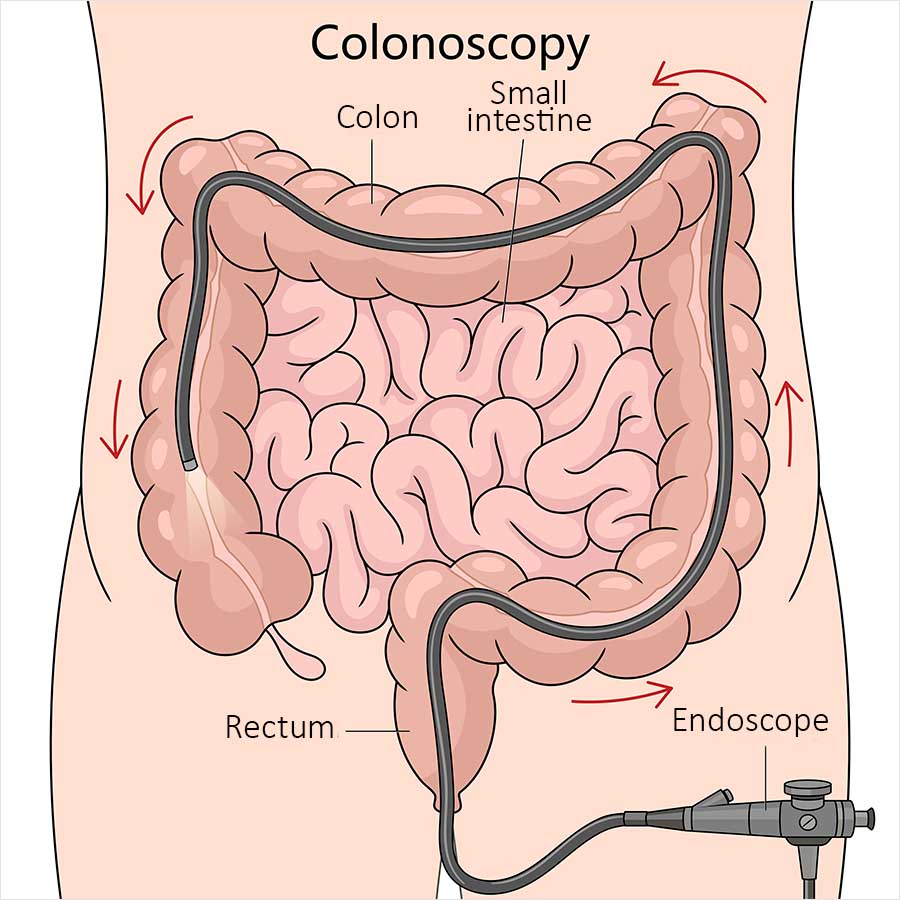
A colonoscopy is a straightforward procedure that takes place using sedation. This helps to ensure that you feel calm and comfortable throughout. You may also be given pain medication and gas and air, but this will be discussed with you before you attend on the day of your procedure.
You’ll need to lie on your side with your knees drawn up, so that your doctor can access your rectum. The scope will then be inserted into your bowel via your rectum. You may feel it, but it shouldn’t be painful. A small amount of air will be pumped in to open up your bowels, which may make you feel slightly bloated but shouldn’t hurt. Your doctor can then visualise the inside of your bowel, with images fed back to a screen in the room. If there are any polyps to be removed, or tissue samples to be taken, this will be done now. Once complete, the scope can be removed, and the procedure is finished.
How long does a colonoscopy take?
A colonoscopy usually takes between 30 and 45 minutes.
Is a colonoscopy painful?
No, a colonoscopy shouldn’t be painful. Many people report that they can feel pressure and movement, but no actual discomfort.
What happens if a biopsy is taken during my colonoscopy?
If your doctor decides to take a biopsy during your colonoscopy, the sample of tissue will be sent to the lab for analysis. This is to determine whether the cells are cancerous or benign. It can take several weeks to get the results of a biopsy.
What happens after a colonoscopy?
Immediately after your colonoscopy, you’ll be taken to a recovery room and monitored while your sedation wears off. Once your medical team are happy to, they will allow you to go home.
Can I drive home after a colonoscopy?
No, you won’t be able to drive yourself home after a colonoscopy. This is because it's not safe to drive for at least 24 hours after sedation. You will need to arrange for someone to drive you home and stay with you. You also won’t be able to do things like operate heavy machinery, drink alcohol or sign any legal documents.
When can I return to normal activities after a colonoscopy?
Most people can return to their usual activities within 24 hours, but always be led by how you are feeling, and follow the advice and guidance of your medical team.
Is it normal to feel fatigued after a colonoscopy?
Yes, it’s quite normal to feel more tired than usual after a colonoscopy. This is normally due to the use of sedation, as well as dehydration and the general physical toll of this procedure. Try to rest as much as you can, drink plenty of water to rehydrate yourself and take your time getting back to your usual activities if you need to.
Is it normal to have no bowel movement after a colonoscopy?
Yes, it can be normal to be a little constipated after a colonoscopy. This is a result of the changes to your diet and bowel emptying as part of the preparation for your procedure. Most people find that their bowel habits return to normal within a few days.
Other things you can do to help get your bowels back on track include:
- Drinking plenty of water to rehydrate your body and bowel
- Gentle exercise
- Gently increasing your fibre intake.
If you’ve got concerns about your bowel movements after a colonoscopy, always speak to your medical team.
How long will I be bloated after a colonoscopy?
Most people report feeling bloated for up to 48 hours after their colonoscopy. This is caused by the air that’s pumped into your bowel to enlarge it.
What are the risks and possible complications of a colonoscopy?
As with any procedure, there are some side effects and complications that it is important to be aware of when you have a colonoscopy. These include, but aren’t limited to:
- Bloating/gassiness after the procedure
- Mild stomach cramps
- Generalised stomach discomfort
- Small amounts of blood in your stool, or from your bottom (this is particularly common if you’ve had a biopsy, or had a polyp removed)
- Nausea/vomiting (reaction to sedation)
- Heavy bleeding
- Tear in the bowel wall
- Infection
- Breathing complications (reaction to sedation)
- Dehydration
If you experience a fever, heavy rectal bleeding, worsening abdominal pain or persistent vomiting after a colonoscopy, seek urgent medical advice by calling 111, 999 or visiting your local emergency department.
How much does a colonoscopy cost at Nuffield Health Guildford Hospital?
Click here to see the guide price for a colonoscopy at Guildford Hospital.
FAQs
-
Is a colonoscopy embarrassing?The type of procedure that a colonoscopy is means that it can be embarrassing to think about. However, it’s a very routine procedure that your medical team will have performed many times previously. They will understand your concerns and will prioritise your privacy and discretion, doing as much as they can to help you feel comfortable throughout. It’s also important to remember that you will be sedated throughout which will mean that you won’t be overly aware of what is happening, and this can make it feel much less embarrassing too.
-
What happens if something abnormal is found during my colonoscopy?If something abnormal is spotted during your colonoscopy, your doctor will investigate further by taking pictures of the abnormality and taking biopsies if required. This will enable your medical team to provide you with an accurate and comprehensive diagnosis.
-
What happens if cancer is found during my colonoscopy?If cancer is detected during your colonoscopy, you will be referred to a specialist team. They will undertake more tests to accurately identify and stage your cancer, see if it’s spread and determine what treatment you’ll need. Don’t worry – they are the experts and will help you with everything that happens next.
-
How frequently can I have a colonoscopy?If you’ve previously had a normal result, you’ll probably be recommended to have another one in 5 to 10 years time. However, your care is personalised and how often you’ll be advised to have a colonoscopy will depend on your own individual health profile.
Colonoscopy consultants at Guildford Hospital
-
Professor Aftab Ala
-
Dr Kalliopi Alexandropoulou
-
Dr Charmian Banks
-
Dr Michelle Gallagher
-
Mr Iain Jourdan
-
Dr Deb (Debabrata) Majumdar Good availability
-
Dr Marinos Pericleous Good availability
-
Mr James Read Good availability
-
Professor Timothy Rockall Good availability
-
Mr Andrea Scala
-
Mr John Stebbing Good availability
-
Mr Tim Worthington Good availability
Stirling Road, Guildford, GU2 7RF
Guide price
| Initial consultation | from £200 | |
|---|---|---|
| Treatment | £3,060 | |
| Pre-assessment | Included | |
| Main treatment | Included | |
| Post-discharge care | Included | |
| Pre-assessment, Main treatment and Post-discharge care | £3,060 | |
| Guide price | £3,260 | |
The guide price stated above is an approximation of the cost of treatment only. The final price may vary according to Consultant fees, prosthesis or drugs used and any pre-existing medical conditions which may alter your care pathway. You will be given a fixed all-inclusive price for treatment following your initial consultation with a Consultant.
Ways to pay
Nuffield Health promise
Our prices are all-inclusive. We will equal any comparable price. There are no time limits on your aftercare.
Paying for yourself
There are no hidden costs in our treatment prices. The price you see is the price you pay.
Find out morePersonal medical loan
Spread the cost of your treatment with a 10, 12 or 24 month 0% personal medical loan.
Find out moreMedical insurance
We work with you and your insurance provider to get you the treatment you need quickly.
Find out more