
Knee replacement (Total knee replacement)
- Overview
Reviewed on Sunday 20 September 2026 by Mr Ahmad Ali, Consultant Orthopaedic and Trauma Surgeon at Nuffield Health Brentwood Hospital.
Knee replacement, or total knee replacement, is a surgical procedure to remove the damaged knee joint and replace it with an artificial joint.
What is a total knee replacement?
If knee pain or stiffness is affecting your daily life and other treatments haven’t helped, a total knee replacement may offer long-term relief.
Also called ‘knee replacement’ or ‘total knee arthroplasty’, the procedure replaces the damaged parts of your knee with a smooth artificial joint made from either metal, ceramic or plastic.
What causes long-term knee pain?
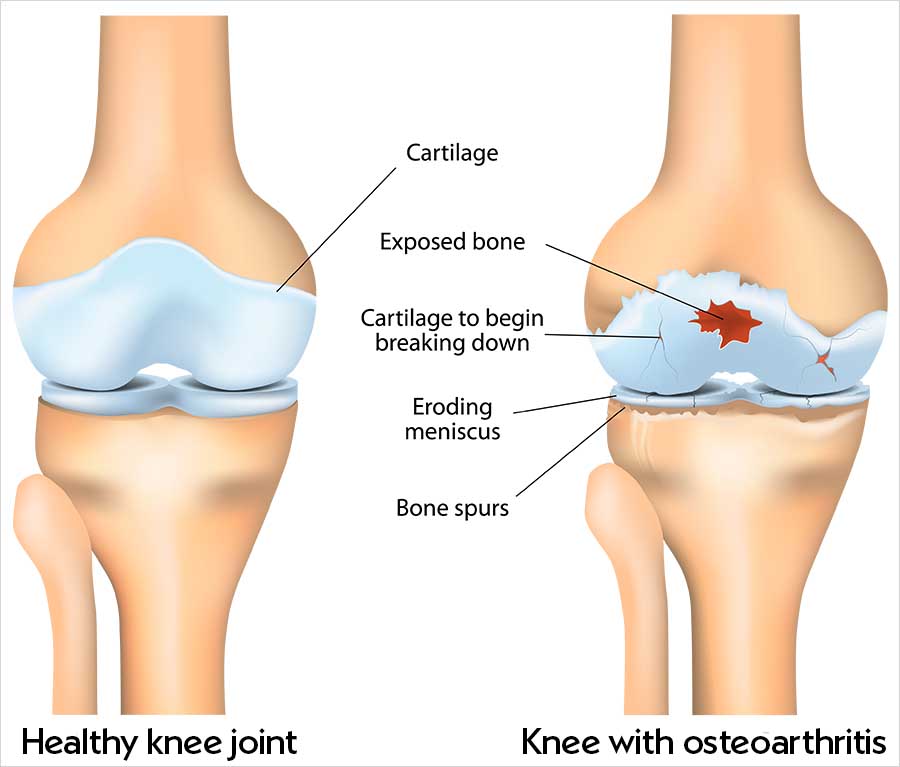
A total knee replacement is usually recommended when the joint is significantly damaged. Common causes can include:
Osteoarthritis: A degenerative joint disease where the protective tissue (cartilage) that cushions the ends of your bones wears down over time, causing pain, stiffness and swelling. Often called “wear and tear” arthritis, it’s more common in older people. Symptoms include knee pain, stiffness, swelling and reduced or limited movement. If your arthritis is minimal, a partial knee replacement may be an option.
Rheumatoid arthritis: An autoimmune condition where the body’s immune system attacks the lining of the joints (synovium), leading to pain, swelling and eventual bone and cartilage loss.
Knee injury: Damage to tissue and bones within the knee joint, commonly caused by sudden falls or repeated strain. Symptoms include pain, swelling, and difficulty walking.
Knee fracture: Also known as patellar fracture, is a break in the kneecap (patella) often caused by direct impact from falls or playing sports, causing severe pain, swelling and difficulty in straightening the knee.
How do I know if I need total knee replacement surgery?
Your consultant may suggest surgery if:
- Everyday activities like walking, getting in and out of chairs, or climbing stairs are painful.
- Pain continues even when you’re resting or sleeping.
- Your knee feels swollen, stiff or unstable and doesn’t improve with rest or medication.
- You’ve tried alternative treatments, such as physiotherapy, pain relief, walking aids or joint injections, and they haven’t helped.
While most people who have a knee replacement are between 60 and 80 years old, many younger patients also benefit from surgery when other treatment options haven't helped.
The decision is made together with your GP and surgeon, but you’ll always have the final say.
Partial or total knee replacement: what is best for me?
Knowing the difference between the two can you help give you a clearer idea of what to expect:
Total knee replacement: All three compartments of the knee (medial, lateral and patellofemoral) are replaced.
Partial knee replacement: Only one compartment of the knee is replaced. This may be suitable for some patients with early-stage osteoarthritis. Your consultant will recommend the most appropriate option based on your symptoms and scans.
What are the alternatives to total knee replacement surgery?
Before considering surgery, your consultant may suggest:
- Pain relief medication to help control the pain.
- Using a walking stick or aid can make walking easier.
- Wearing an elasticated support on your knee can help it feel stronger.
- Regular moderate exercise can reduce the stiffness in your knee.
- Physiotherapy can strengthen weak muscles.
- Losing weight if you’re overweight can reduce the load on your knee.
- Joint injections, such as steroid or hyaluronic acid, can reduce pain and stiffness for several months.
Surgical alternatives include:
- Partial knee replacement: Only one compartment of the knee is replaced. This may be suitable for some patients with early-stage osteoarthritis.
- Knee osteotomy: Reshapes the shinbone or thighbone to shift weight off damaged cartilage. This may be suitable for some patients with early-stage osteoarthritis.
How can I prepare for my surgery?
A little preparation can make your recovery much smoother. Your healthcare team will guide you, but here are some helpful steps:
- Tell your doctor about any medications you take. They will let you know if you should continue or temporarily stop any medicines before and after your surgery.
- If you smoke, stop smoking several weeks before the operation.
- Keep active and maintain a healthy weight.
- Avoid shaving or waxing the surgical area.
- Shower the day before or morning of surgery.
- Prepare your home for your post-surgery recovery. Remove trip hazards and place essential items within easy reach.
- Arrange for transport and support for the first few weeks.
What happens on the day of surgery?
You’ll meet your orthopaedic surgeon to review your medical history, examine your knee and discuss the procedure, risks and recovery. This is your chance to ask questions and feel confident about the operation. Our team is there to help you feel calm, informed and confident.
What to expect during total knee replacement surgery
The operation usually takes 1 to 2 hours and is done under spinal or general anaesthetic. You’ll also receive antibiotics to reduce the risk of infection.
There are different methods used for knee replacement surgery, depending on how badly the joint is damaged:
Traditional total knee replacement
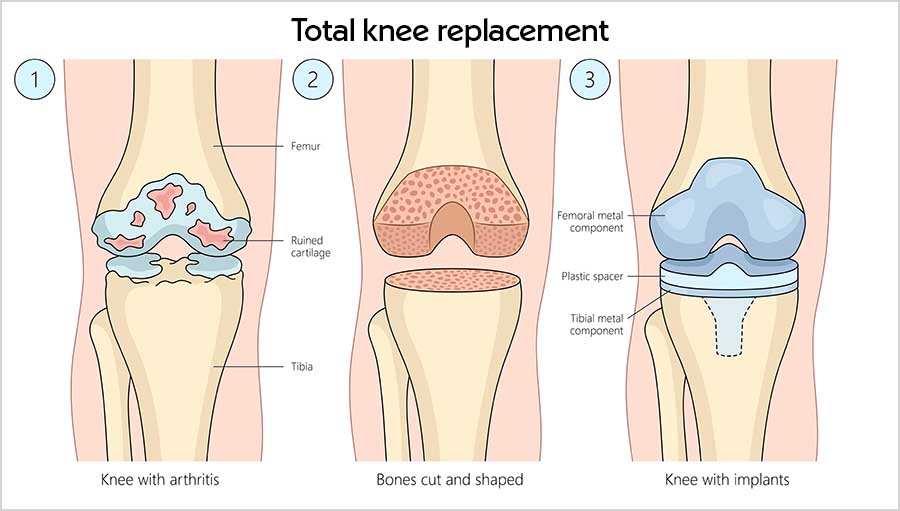
Your surgeon will:
- Make a small cut at the front of your knee.
- Remove the damaged bone and cartilage.
- Shape the bone to fit the implant.
- Insert the artificial joint with a smooth plastic spacer.
- Sometimes resurface the back of the kneecap.
- Secure the implant in place with cement or a special coating.
- Close the incision with stitches or clips.
Robotic-assisted knee replacement
Robotic systems such as Mako® and CORI® help your surgeon plan and perform the procedure with enhanced accuracy. This can improve implant positioning and may support faster recovery.
Your consultant will advise whether robotic assistance is suitable for you.
Find out more about robotic-assisted knee replacement
Is total knee replacement surgery painful?
During the operation itself, you won’t feel anything because you’ll be under spinal or general anaesthetic. After surgery, you’ll have pain relief and support from your healthcare team to keep you as comfortable as possible while you recover.
How long does total knee replacement surgery take?
Total knee replacement surgery usually takes 1 to 2 hours, depending on the technique your surgeon uses.
Once the operation is finished, you’ll be taken to the recovery room where a nurse will monitor you as you wake up. You may have:
- A small tube put in place to drain excess fluid.
- A drip (intravenous infusion) in your arm to keep you hydrated and provide pain relief.
The nurse will regularly check your wound, blood pressure and pulse. When you’re fully awake and stable, you’ll be taken to your room to rest.
How soon can I go home after surgery?
Most people stay in hospital for 1 to 3 days.
Before you leave, you’ll be encouraged to start walking as soon as possible, usually the same day as your operation or the day after. A physiotherapist will teach you how to walk up and down the stairs with crutches and how to get in and out of bed. You won’t be able to drive yet, so you’ll need someone to pick you up from the hospital and take you home.
You’ll be able to go home once:
- Your pain is well controlled, and your surgeon is happy with your recovery
- You can move around safely with crutches or a walking aid.
Watch this video for guidance on getting out of the car with crutches and getting into bed with crutches.
How long does it take to recover after total knee replacement surgery?
Recovery looks a little different for everyone, but it generally takes 10-14 days for your wound to heal. It may take up to 6 weeks to recover from the operation and up to 12 months before you’re back to your normal daily routine.
Before you leave the hospital, your surgeon and healthcare team will give you clear instructions to help you recover confidently at home.
Short-term recovery support
To help your circulation and reduce the risk of blood clots, you may be given:
- Air-inflated boots for the first 2 days.
- Support stockings for 4–6 weeks.
- Daily injections or tablets for up to 6 weeks.
- Blood-thinning medication.
Is it safe for me to drive after total knee replacement surgery?
You should be able to start driving again after 6 to 8 weeks, as long as you can safely control the car, especially in an emergency. Always check with your doctor and your insurance provider before getting back behind the wheel.
When can I take a shower or bathe?
Keep your wound dry for 4 to 5 days. Use a waterproof dressing if you’re showering. If someone is helping you at home, a gentle “dry bath” with a warm cloth is a good option until the wound has healed.
How soon can I walk and get back to normal activities?
To help make your recovery go as smoothly as possible, you’ll need to start getting active and mobile as soon as you are able. We understand you may be nervous about getting up for the first time, but we’ll be there to help you whenever you’re ready. Getting mobile is all about confidence, which is why we help you progress through a range of walking aids until you’re independent. Your physiotherapist will guide you every step of the way.
Day of surgery
- You’ll begin with simple exercises in bed to strengthen your new knee joint.
- A physiotherapist will help you stand and take your first steps using a frame.
Day after surgery
- You’ll have an X-ray to check your new knee and take some routine blood tests.
- You’ll continue practising walking with support until you’re confident to do so on your own.
- Your physiotherapist will help you progress to crutches or a walking stick before giving you some more exercises to increase your mobility.
Managing your recovery at home
It’s completely normal to experience:
- Tiredness – rest often and build up activity slowly.
- Swelling – elevate your leg and use the CryoCuff cold compress or ice packs for 20 minutes every 1-2 hours.
- Pain – take your prescribed medication regularly until you feel pain-free.
Top 5 things to avoid after knee replacement
- Getting the wound wet too early. Keep your wound dry for 4 to 5 days after your surgery, and use a waterproof dressing when you have a bath or shower.
- Stopping your physiotherapy exercises – keep them going, even if you have to use your crutch or walking aid while doing so!
- Heavy lifting or high-impact exercise - low-impact activities like walking are best; gradually increasing the distance of your walks as time goes by.
- Kneeling or twisting your knee.
- Sitting with your legs crossed – avoid for the first 6 weeks.
Call your Nuffield Health healthcare team if you have any questions or concerns. If your calf becomes swollen, inflamed, or painful, call 111 or 999 and seek medical advice as soon as possible.
Knee replacement recovery exercises
Physiotherapy is an essential part of total knee replacement recovery because increasing your range of movement and building up strength in the muscles around your new joint will help you get back to your normal activities.
Your physiotherapist will give you a personalised plan, but here are some exercises we often recommend:
- Stair lunges: Place your operated foot on the first step and gently lunge forward.
- Bed exercise: Push the back of your knee into the bed and hold for 5 seconds.
- Mini squats: Hold onto a stable surface and lower yourself gently.
- Ankle pumps: Wiggle your toes, pump your ankles up and down, and rotate your ankles clockwise and anticlockwise.
- Patella mobilisations: Using your hands, move your kneecap from side to side and up and down to avoid stiffness.
Aim for 3 sets of 10 repetitions each day, unless advised otherwise.
What are the risks and complications of total knee replacement?
Most people recover very well, but as with any surgery, there are some risks. Your surgeon will talk these through with you. They may include:
General risks:
- Bleeding: Some bleeding is expected during and after surgery, but excessive bleeding should be reported to your consultant.
- Infection of the surgical site (wound).
- Allergic reaction to equipment materials and medication. Let your surgeon and healthcare team know if you have any allergies or have reacted to any medicine, test or dressings in the past.
- Blood clots or DVT (deep vein thrombosis): A risk associated with any surgery.
Specific risks to knee replacement surgery:
- Nerve damage: Injury to the nerves around your knee, leading to weakness, numbness or pain in your leg or foot.
- Bone fracture: A crack or split in the bone may occur when the implant is inserted, especially if the bone is weak. Your surgeon may need to fix the fracture or use a different type of knee implant.
- Ligament or tendon damage: Ligaments or tendons near your knee can be damaged during surgery. Your surgeon may need to repair the damage using stitches, a piece of tendon from somewhere else in your body, or an artificial material.
- Infection: Infection around the implant can cause the knee replacement to loosen and fail. You will usually need one or more further procedures to treat the infection and restore joint function.
- Dislocation: Although rare in total knee replacements, the artificial joint can become dislocated and may require correction or revision surgery.
- Persistent discomfort: Some patients may experience knee pain even if the knee implant replacement works well.
- Complex regional pain syndrome: A rare but serious complication involving chronic pain, stiffness and limited use of the knee after surgery.
How much does total knee replacement cost at Nuffield Health? (From £16,914)
The average guide price for total knee replacement surgery at a Nuffield Health hospital is £16,914.
Click here and select your local Nuffield Health hospital to view guide prices for total knee replacement surgery in your area. Please note that the guide price stated is an approximate cost of treatment only. You will be given a fixed all-inclusive price for treatment following your initial consultation with a consultant.
| Initial consultation | from £200 | |
|---|---|---|
| Diagnostics | If needed to determine treatment plan | |
| Treatment | £16,914 | |
| Pre-assessment | Included | |
| Main treatment | Included | |
| Post-discharge care | Included | |
| Pre-assessment, Main treatment and Post-discharge care | £16,914 | |
| Guide price | £17,114 | |
What does guide price mean?
The guide price stated above is an approximation of the cost of treatment only. The final price may vary according to Consultant fees, prosthesis or drugs used and any pre-existing medical conditions which may alter your care pathway. You will be given a fixed all-inclusive price for treatment following your initial consultation with a Consultant.
FAQs
-
Can both knees be replaced at the same time?
Yes, in some cases. Your consultant will advise based on your health and mobility.
-
How far can I walk after 6 weeks?
Most people can walk comfortably with minimal support; however everyone is different so take steps at your own pace and gradually build back up to your normal pace.
-
When can I climb stairs?
You’ll start practising in hospital with your physiotherapist.
-
How long should I wear compression socks?
Usually 2–6 weeks, depending on your recovery.
-
What’s the best sitting position after knee replacement?
A firm chair or upright position in bed with cushions supporting your leg works well.
-
How long does stiffness last?
It varies, but regular movement and exercises help ease stiffness over time.
Ways to pay
Nuffield Health promise
Our prices are all-inclusive. We will equal any comparable price. There are no time limits on your aftercare.
Paying for yourself
There are no hidden costs in our treatment prices. The price you see is the price you pay.
Find out morePersonal medical loan
Spread the cost of your treatment with a 10, 12 or 24 month 0% personal medical loan.
Find out moreMedical insurance
We work with you and your insurance provider to get you the treatment you need quickly.
Find out more