
Epigastric hernia surgery
- Overview
Reviewed on Thursday 9 July 2026 by a Consultant Upper Gastrointestinal (UGI) Surgeon and General Surgeon.
If you’ve noticed a firm lump in the upper midline of your abdomen, you may have an epigastric hernia. Our expert surgeons at Nuffield Health help to relieve your discomfort through epigastric hernia repair surgery.
What is an epigastric hernia repair surgery?
Epigastric hernia repair is an operation to close a weak spot in the abdominal wall between the belly button and the breastbone. Your surgeon returns the herniated tissue to the abdomen and closes the gap with stitches or mesh, strengthening the muscle layer. This can be done through open surgery or keyhole surgery.
What is an epigastric hernia?
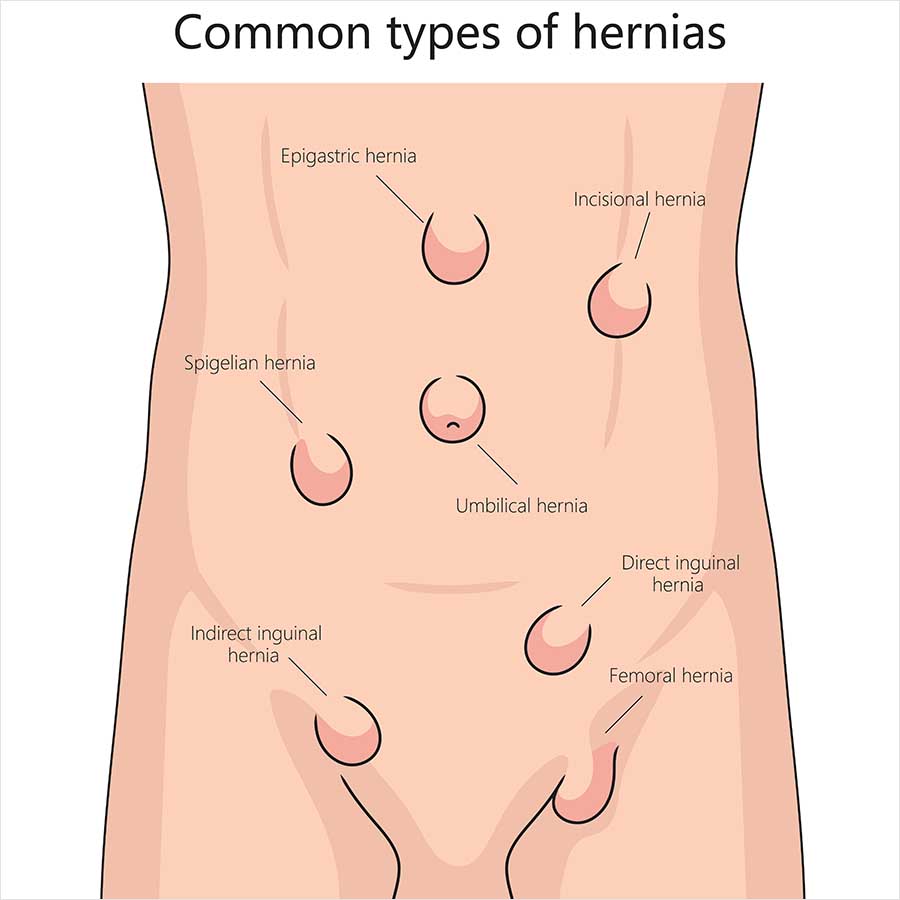
An epigastric hernia, or abdominal (ventral) hernia, is a small, firm lump that appears in the upper midline of the abdomen, between the umbilicus (belly button) and the sternum (breastbone). It develops when a weak spot forms in the abdominal wall, allowing fat or abdominal contents to push through.
Contributing factors can include:
- Persistent or chronic cough
- Pregnancy
- Heavy lifting
- Persistent sneezing
- Straining during bowel movements or urination
- Inherited weakness in the abdominal wall.
If you feel pain around the upper midline of your abdomen or feel a soft bulge that becomes uncomfortable with movement or pressure, then you may want to consider epigastric hernia repair surgery, also known as ventral hernia repair or abdominal hernia repair. Our expert surgeons at Nuffield Health aim to remove the hernia and help strengthen the muscle layer.
Is an epigastric hernia the same as an abdominal hernia?
An epigastric hernia is a type of abdominal hernia. Other types of abdominal hernia are:
- Umbilical hernia: located at or near the belly button
- Incisional hernia: Located at the site of a past surgical scar, where the abdominal wall has not fully healed
- Inguinal hernia: in the groin, above the groin crease.
- Femoral hernia: Located in the lower groin area, just below the groin crease.
What is an epigastric hernia also known as?
An epigastric hernia is sometimes called an upper abdominal hernia or hernia epigastrica.
What's the difference between an epigastric hernia and an umbilical hernia?
Both of these hernias sit in the midline of your tummy, but they are located at different points.
Umbilical hernia: An umbilical hernia occurs at the belly button. This area is naturally a little weaker because it's where the umbilical cord once passed through before birth.
Epigastric hernia: An epigastric hernia appears higher up, between the belly button and the breastbone. It pushes through the linea alba, the fibrous seam running down the middle of your tummy that joins the muscles on either side. These are often small and usually contain fatty tissue rather than bowel.
How is an epigastric hernia diagnosed?
Diagnosis usually involves a physical examination. Your consultant may also recommend:
- Ultrasound: This can be helpful for small or difficult-to-feel hernias
- CT scan: Often used for complex or unclear cases.
What are the symptoms of an epigastric hernia?
Symptoms may include:
- A lump in the upper midline of the abdomen
- Pain or tenderness
- Discomfort when lifting, coughing or straining
- Bloating or a dragging sensation
- Back pain is less common but can occur if the hernia causes muscle strain.
What can be mistaken for an epigastric hernia?
- Lipomas (fatty lumps)
- Muscle strain
- Diastasis recti
- Gastric or digestive discomfort.
Your consultant will help confirm the diagnosis.
What happens if an epigastric hernia is left untreated?
If left untreated, an epigastric hernia may become enlarged, painful or trapped (incarcerated). If the blood supply to the herniated tissue is cut off (strangulation), this can be life-threatening and urgent surgery is required.
Symptoms of strangulation include:
- Severe pain
- A lump that does not go down when lying flat
- Vomiting.
What surgical techniques are used to repair an epigastric hernia?
Open epigastric hernia repair
A small incision is made over the hernia. The hernia sac is freed, the contents returned to the abdomen and the weak spot is closed with stitches or mesh.
Laparoscopic (keyhole) epigastric hernia repair
Several small incisions are made in the abdomen. A camera and instruments are used to repair the hernia from the inside and reinforce the area with mesh.
Open vs laparoscopic repair: which is right for me?
Your consultant will consider:
- Hernia size
- Location
- Previous abdominal surgery
- Your general health
- Risk of recurrence.
Both methods are effective. Keyhole surgery may offer faster recovery for some patients.
How do I know if I need epigastric hernia repair?
Your surgeon will recommend surgery if the hernia is:
- Painful
- Growing in size
- Affecting daily life
- At risk of becoming trapped.
Most adults with a symptomatic hernia are suitable.
Who is not suitable?
Surgery may be delayed if you have uncontrolled medical conditions or a high anaesthetic risk.
Can I have surgery if I am obese?
Yes, but your surgeon may recommend losing some weight first.
Hernia repairs carry a higher risk of complications and of the hernia returning if your BMI (body mass index) is higher. If your BMI is over 35, your surgeon will weigh up your other health conditions, the size and contents of your hernia, the risks of leaving it untreated, and the importance of avoiding an emergency repair, which is riskier still.
You may be asked to follow a pre-operative liver reduction diet. This is a short-term eating plan that helps you lose weight and shrinks the liver, making the operation safer and giving the surgeon a clearer view.
If you take, or are considering, a GLP-1 medicine for weight loss (such as Wegovy or Mounjaro), discuss this with your surgeon and anaesthetist. Do not start or stop it without their advice.
Can I have surgery if I am pregnant?
If you are planning pregnancy, your surgeon may advise delaying surgery unless the hernia is causing problems.
What are the alternatives to epigastric hernia surgery?
There are no long-term alternatives. A hernia truss or support belt may offer temporary comfort, but they do not repair the hernia.
What is watchful waiting for an epigastric hernia?
This means monitoring the hernia without surgery. It’s sometimes appropriate for small, painless hernias but carries a risk of enlargement or complications.
How can I prepare for epigastric hernia surgery?
Your surgeon may advise you to:
- Stop smoking as it slows healing and is one of the main reasons a hernia repair fails or comes back
- Maintain a healthy weight
- Avoid heavy lifting
- Shower the day before or on the day of surgery
- Avoid shaving the surgical area
- Keep blood sugar levels controlled if diabetic
- Tell your team about all medications.
- Report any chest infection or persistent cough before your surgery, as coughing puts strain on the hernia repair.
These steps can help to reduce infection risk and support your recovery.
What happens at the pre-operative assessment?
You’ll meet your healthcare team to review your medical history, discuss anaesthetic options and plan your recovery. You may have blood tests and will receive instructions about fasting and medication.
What happens during epigastric hernia surgery?
The procedure is usually performed under general anaesthetic and can take around 30 minutes. It can be done as an open or laparoscopic surgery. Your surgeon will:
- Make a small incision (cut) over the hernia
- Then, free the hernia sac
- Return the contents to the abdomen
- Close the gap in the muscles with sutures (stitches) or a mesh
- Close the surgical incisions and dress your wounds.
Mesh is often used for larger hernias to reduce recurrence risk.
How long does it take to recover from epigastric hernia surgery?
Short-term recovery
You may go home the same day or stay one night. Pain relief will be provided – it’s important to take it so you can move comfortably.
Activity
- Walk regularly from day one
- Avoid heavy lifting for 6 weeks
- You can return to work after 2–4 weeks (depending on your job)
- Start gentle exercise after a week
- Avoid driving until you can safely control your vehicle.
Diet
You can eat normally unless advised otherwise.
Sleeping and sitting
- Many patients find sleeping slightly elevated to be more comfortable
- Sit upright with good support to avoid straining the abdomen.
Follow-up
You may have a follow-up appointment to check your healing process.
Coughing and constipation
Contact your GP or healthcare team promptly if you develop a chest infection, persistent coughing or constipation after surgery. Coughing and straining to open your bowels increases pressure on the abdominal wall and can strain the hernia repair. Keep well hydrated, eat plenty of fibre, and ask your GP or healthcare team for laxatives if you become constipated.
Red flag symptoms
Contact your healthcare team if you notice:
- Worsening pain
- Fever
- Racing heart
- Nausea or loss of appetite
- Not passing wind or opening bowels
- Abdominal swelling
- Difficulty passing urine.
What are the risks and complications of epigastric hernia surgery?
Every surgical procedure can carry risks. Be sure to discuss any concerns you might have about these risks with your surgeon.
General risks can include:
- Pain
- Bleeding
- Infection
- Blood clots
- Scarring.
Specific risks can include:
- Injury to internal organs
- Haematoma (like a severe bruise) or seroma (clear, pale-yellow fluid build-up under the skin)
- Mesh-related complications
- Hernia recurrence.
Common side effects can include:
- Bruising
- Swelling
- Shoulder pain after keyhole surgery
- Temporary bloating.
Signs of complications
Contact your healthcare team if you notice:
- Worsening pain
- Fever
- Dizziness or shortness of breath
- Nausea that worsens after 1–2 days
- No bowel movements or wind
- Abdominal swelling
- Difficulty passing urine.
How much does epigastric hernia surgery cost at Nuffield Health?
For pricing information, please contact your local hospital. The hospital or your healthcare team will give you a fixed all-inclusive price for the treatment following your initial consultation.
FAQs
-
What questions should I ask my surgeon before epigastric hernia repair?
You may want to ask about the type of repair recommended, whether mesh will be used, recovery time and recurrence risk.
-
Do I need a GP referral to have epigastric hernia repair at Nuffield Health?
A GP referral is usually recommended so your consultant has your medical history, but some hospitals accept self referrals for private consultations.
-
Will I have a scar after epigastric hernia repair?
Yes, but scars usually fade over time.
-
Can an epigastric hernia go away on its own?
No, epigastric hernias do not heal without surgery.
-
How likely is an epigastric hernia to recur after surgery?
Recurrence is uncommon (less than 5%), but it can happen years later.
Ways to pay
Nuffield Health promise
Our prices are all-inclusive. We will equal any comparable price. There are no time limits on your aftercare.
Paying for yourself
There are no hidden costs in our treatment prices. The price you see is the price you pay.
Find out morePersonal medical loan
Spread the cost of your treatment with a 10, 12 or 24 month 0% personal medical loan.
Find out moreMedical insurance
We work with you and your insurance provider to get you the treatment you need quickly.
Find out more