
Umbilical hernia surgery
- Overview
Reviewed on Thursday 9 July 2026 by a Consultant Upper Gastrointestinal (UGI) Surgeon and General Surgeon.
A bulge or swelling near your belly button can be uncomfortable and worrying – especially if it gets in the way of lifting, exercising or simply moving comfortably. You may want to consider umbilical hernia surgery. Our expert surgeons at Nuffield Health can help fix the underlying weakness and help you get back to daily life with confidence.
What is umbilical hernia surgery?
Umbilical hernia surgery is an operation to repair a weak spot in the abdominal wall behind or near the belly button, where tissue from inside the abdomen has pushed through. The surgeon returns the tissue to its proper place and strengthens the weak area with stitches or mesh, either through a single small cut or by keyhole surgery.
What is an umbilical hernia?

An umbilical hernia happens when tissue from inside the abdomen pushes through a natural weak spot behind the belly button. This area is slightly thinner because it’s where the umbilical cord once passed through before birth. When pressure builds, or the muscle weakens further, a soft lump can appear at the navel. Some adults notice it only when standing or straining; others feel discomfort or a dragging sensation.
Umbilical hernias, sometimes called belly button hernias, are very common in newborns – around 1 in 5 babies in the UK are born with one (NHS). In adults, umbilical and paraumbilical hernias are one of the more common types of abdominal hernia, particularly in women after pregnancy and in people who are overweight.
What is a paraumbilical hernia and how is it different?
A paraumbilical hernia appears near the belly button rather than directly on it. These are more common in adults, especially after pregnancy or weight gain, because the abdominal wall in this area can stretch and weaken over time. Paraumbilical hernias rarely close on their own and usually need surgery.
Who is at risk of developing an umbilical hernia?
You may be more at risk if you’re pregnant or have had multiple pregnancies, are overweight, have a persistent cough, lift heavy objects regularly or have a family history of hernias.
Can an umbilical hernia go away on its own?
In children, yes – many close naturally by age 4 years. In adults, however, it’s the opposite – the hernia won’t heal without surgery.
What happens if an umbilical hernia is left untreated?
An untreated hernia can enlarge over time and may become painful. More seriously, the contents of the umbilical hernia can become incarcerated (stuck) or strangulated (blood supply cut off). A strangulated hernia is a medical emergency. Symptoms include severe pain or worsening pain, vomiting, redness or tenderness around the hernia, and a lump that becomes hard or cannot be pushed back in.
How is an umbilical hernia diagnosed?
Diagnosis usually involves a physical examination. If the hernia is small or difficult to feel, an ultrasound may be used. CT or MRI scans are occasionally recommended for complex cases.
What are the benefits of umbilical hernia surgery?
Surgery helps to repair the weak spot in the abdominal wall and prevent the contents of the hernia from becoming trapped or strangulated. With the lump removed, most patients experience relief from discomfort and can return to normal activities after 6 weeks.
What surgical options are there for repairing an umbilical hernia?
Open hernia repair
Your surgeon will make a small incision near the belly button, return the contents of the hernia to the abdomen, and repair the weak spot with stitches or mesh.
Laparoscopic (keyhole) hernia repair
Is performed through several small incisions using a camera and instruments. The abdomen is gently inflated with gas to create space. Mesh is placed over the weak area from the inside. This approach often results in smaller scars and quicker recovery.
Open vs laparoscopic repair – which is right for me?
Your surgeon will consider the size of the hernia, your general health, previous surgeries and your personal preference. Both methods are effective; keyhole surgery may offer faster recovery for some patients.
How do I know if I need umbilical hernia surgery?
If you have a lump at or near your belly button that is painful, growing or causing discomfort, it’s best to have it checked and treated as soon as possible. Surgery is recommended for most adult hernias to prevent complications. If you’re pregnant, your consultant (surgeon) may advise waiting until after childbirth unless the hernia is causing significant problems.
Who is suitable for umbilical hernia repair surgery?
Most adults with a symptomatic hernia are suitable. Your consultant will assess your overall health and discuss the safest approach.
Who is not suitable for umbilical hernia repair surgery?
Surgery may be delayed if you have uncontrolled medical conditions, severe heart or lung disease, or a high anaesthetic risk.
What are the alternatives to umbilical hernia surgery?
Alternatives include:
- Watchful waiting for small, painless hernias
- Hernia truss or support belt for temporary relief.
These options may help manage symptoms but do not repair the hernia.
How can I prepare for umbilical hernia surgery?
You may be advised to:
- Stop smoking as it slows healing and is one of the main reasons a hernia repair fails or comes back
- Maintain a healthy weight and stay active
- Avoid shaving the surgical area in the week before surgery
- Shower the day before or on the day of your operation
- Keep your body warm
- Manage blood sugar levels if you have diabetes
- Practise good hand hygiene in hospital and follow any guidance on face coverings or vaccinations
- Report any chest infection or persistent cough before your surgery, as coughing puts strain on the hernia repair.
What happens at the pre-operative assessment?
You’ll meet the healthcare team to review your medical history, discuss anaesthetic options and plan your recovery. You may have blood tests and will receive instructions about fasting and medication.
What happens during umbilical hernia surgery?
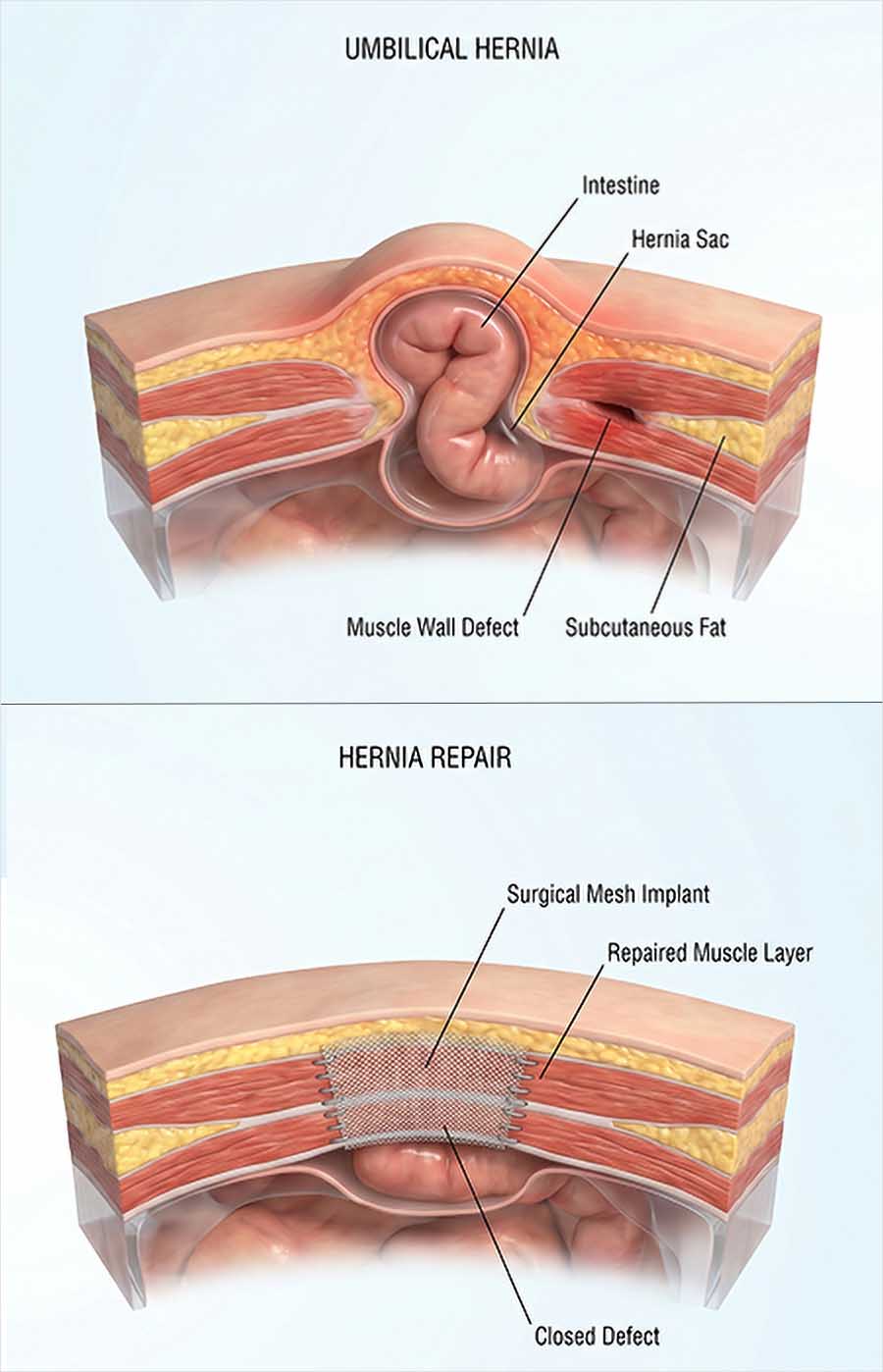
Umbilical hernia repair usually takes around 30 minutes. It’s often performed under general anaesthetic, though other options may be available.
Your surgeon makes a small cut near the navel, frees the hernia sac, returns the contents to the abdomen and repairs the weak spot with stitches or mesh. A small drain may be placed to remove fluid and is usually removed within 1–2 days.
A variety of techniques can be used to close the surgical incisions (cuts) and to dress your wounds. Your surgeon will offer guidance about post-operative wound care.
How long does it take to recover from umbilical hernia surgery?
Short-term recovery
After surgery, you’ll wake up in the recovery area before returning to the ward. Pain relief will be provided to help you move comfortably. Most patients go home the same day.
For the first 24 hours, you’ll need someone to take you home and stay with you. Avoid driving, operating machinery, signing legal documents or drinking alcohol.
Managing recovery at home
Rest for the first day, then gradually increase your activity. Walking helps reduce the risk of blood clots. You can shower after 48 hours, and you may be advised to avoid baths, pools and hot tubs for a few weeks.
It is important not to put any strain on your abdominal wall for 6 weeks after surgery to minimise the chance of the hernia coming back. This includes avoiding strenuous exercise/sports and heavy lifting.
Contact your GP or healthcare team promptly if you develop a chest infection, persistent coughing or constipation after surgery. Coughing and straining to open your bowels increases pressure on the abdominal wall and can strain the hernia repair. Keep well hydrated, eat plenty of fibre, and ask your GP or healthcare team for laxatives if you become constipated.
Driving and work
You need to be able to control the car safely in an emergency, without pain holding you back. After about a week, it is worth sitting in your parked car and testing yourself:
- Practise an emergency stop, using both feet on the pedals
- Turn to look over each shoulder, as you would when checking your blind spot
If you can do both without discomfort, you are usually considered medically fit to drive.
Before you set off, check with your car insurer. Many policies ask you to wait longer after surgery, and driving before then could affect your cover. Your consultant (surgeon) can advise if you are unsure.
Most people return to work after 2–4 weeks, depending on their job. If your job involves manual work, this may take slightly longer, roughly 6 weeks.
What are the risks and complications of umbilical hernia surgery?
Every surgical procedure has a risk of complications. Be sure to discuss any concerns you might have about these risks with your surgeon.
General risks include:
- Pain
- Bleeding during or after the operation
- Infection of the surgical site
- Scarring
- Blood clots or DVT (deep-vein thrombosis).
Specific risks include:
- A lump under the wound
- Haematoma or seroma – a collection of blood or fluid that can build up under your wound
- Persistent groin discomfort
- Injury to your bowel
- Difficulty passing urine
- Infection of the mesh
- Removing your belly button, leaving a scar.
Your healthcare team will do their best to minimise any risks.
How much does umbilical hernia surgery cost at Nuffield Health?
Select your local Nuffield Health hospital to find contact details and guide prices for umbilical hernia surgery. Please note that the stated guide price is only an approximate cost of treatment. You will be given a fixed all-inclusive price for treatment following your initial consultation with a consultant.
FAQs
-
What questions should I ask my surgeon before umbilical hernia surgery?
You may want to ask about the type of repair recommended for you (e.g. open or laparoscopic), whether mesh will be used, how long recovery will take, including what activities to avoid after surgery and what the possible risks are.
-
Do I need a GP referral to have hernia surgery at Nuffield Health?
A GP referral is usually recommended so your consultant has your medical history, but some hospitals accept self referrals for private consultations.
-
Will umbilical hernia repair change the appearance of my belly button?
Most repairs leave the belly button looking very similar to before. In rare cases, if the tissue is severely damaged, the appearance may change slightly. Your surgeon will explain what to expect.
-
Can I have umbilical hernia surgery if I am pregnant?
In most cases, it’s safer to wait until after pregnancy unless the hernia is causing severe symptoms or complications. Pregnancy naturally stretches the abdominal wall and may undo the repair.
Ways to pay
Nuffield Health promise
Our prices are all-inclusive. We will equal any comparable price. There are no time limits on your aftercare.
Paying for yourself
There are no hidden costs in our treatment prices. The price you see is the price you pay.
Find out morePersonal medical loan
Spread the cost of your treatment with a 10, 12 or 24 month 0% personal medical loan.
Find out moreMedical insurance
We work with you and your insurance provider to get you the treatment you need quickly.
Find out more