
Lumbar disc replacement at Wessex Hospital
- Overview
Lumbar disc replacement is the replacement of a damaged or diseased disc in the spine with an artificial disc. At Wessex Hospital, our experienced spinal surgeons will discuss your options, confirm whether lumbar disc replacement is suitable, and, if so, perform the procedure to help reduce pain and maintain normal movement.
What is lumbar disc replacement?
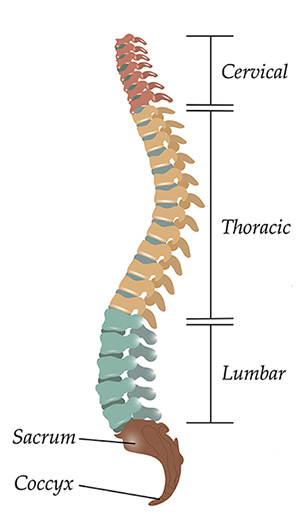
Your spine is made up of a series of small bones called vertebrae, which are stacked on top of each other. Between each vertebra is an intervertebral disc, which acts as a cushion to absorb shock, provide stability, and allow movement of the spine.
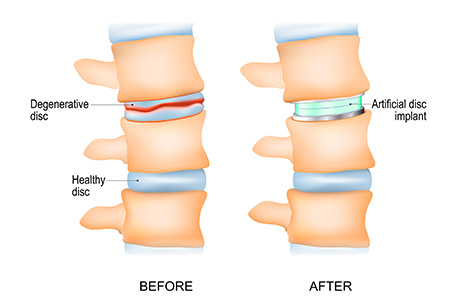
When a disc is damaged or degenerated, it can tear or rupture, trapping nerves and causing inflammation and pain.
Lumbar disc replacement is the replacement of a damaged or diseased disc in the spine with an artificial disc to maintain movement in the treated spine area.
Lumbar refers to the lower back, though disc replacement can also be performed in other regions of the spine. For example, cervical disc replacement is a surgical procedure to replace a worn or damaged disc in your neck.
What is the difference between a lumbar discectomy and a lumbar disc replacement?
A lumbar discectomy is a procedure to remove part or all of a damaged disc. A lumbar disc replacement involves removing the entire damaged disc and replacing it with an artificial disc that mimics the movement and cushioning of a natural disc.
What conditions does lumbar disc replacement treat?
Lumbar disc replacement is primarily used to treat conditions involving damage or degeneration of intervertebral discs in the spine, including:
- Degenerative disc disease - This occurs when the intervertebral discs lose their flexibility, elasticity, and cushioning due to ageing or wear and tear. This can cause pain, stiffness, and loss of mobility.
- Herniated disc - A herniated disc happens when the inner gel-like core of the disc leaks through a tear in the outer layer, potentially compressing nearby nerves and causing pain, numbness, or weakness.
- Sciatica - A damaged disc in the lower back and bone can compress the sciatic nerve, leading to pain that radiates down the legs, along with possible numbness and weakness.
- Spondylolisthesis - Spondylolisthesis is when one spinal bone (vertebra) slips out of place and presses on the bone or nerves below.
- Chronic back pain - Chronic back pain originating from a damaged or degenerated intervertebral disc without significant nerve compression is known as discogenic back pain.
Your consultant will recommend lumbar disc replacement after reviewing your medical history, diagnostic test results (such as X-rays and MRIs), and after non-surgical treatments have been explored.
Why choose Nuffield Health Wessex Hospital for your lumbar disc replacement?
Located in Hampshire, Wessex Hospital offers a comprehensive range of procedures, all carried out by our expert consultants and aided by state-of-the-art medical equipment.
From your initial consultation, we'll make your lumbar disc replacement go as smoothly and efficiently as possible. Your consultant will be with you throughout your treatment journey. You'll stay in a private bedroom with an en-suite bathroom, and our on-site chef will prepare delicious meals tailored to your requirements. Our priority is your comfort, safety and wellbeing.
How to book a consultation at Nuffield Health Wessex Hospital
If you are suitable for lumbar disc replacement, you can arrange a private consultation with one of our consultants today by booking an appointment online, calling 02380 266 377 or by filling in the form below.
What are the benefits of artificial disc replacement?
- Natural spinal movement: artificial disc replacement allows the spine to maintain its natural range of motion. Unlike spinal fusion, which fuses vertebrae and limits movement, artificial disc replacement replaces the damaged disc while preserving flexibility in the affected area.
- Pain relief: Artificial disc replacement reduces pain in those with chronic back or neck pain.
- Less strain on other discs: Because artificial disc replacement maintains mobility in the treated area, there is less stress on the discs above and below the replacement, reducing the risk of adjacent segment degeneration.
- Faster recovery time: Artificial disc replacement typically involves a less invasive procedure than spinal fusion, leading to shorter hospital stays and quicker recovery times.
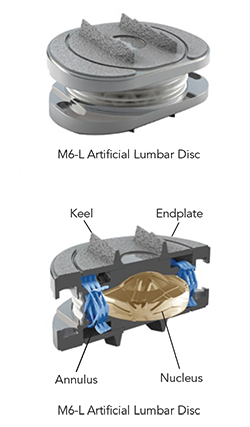
M6-L artificial lumbar disc at Wessex Hospital
There are various types of artificial disc replacements available. At Nuffield Health Wessex Hospital, we provide the M6-L artificial lumbar disc as a treatment option.
The M6-L artificial lumbar disc offers a unique option for disc replacement due to its design that mimics the natural disc. It’s the only disc that includes an artificial nucleus (made of polycarbonate urethane) and a woven fibre annulus (made of polyethene), both designed to replicate the natural movement of a healthy disc. Its artificial nucleus and annulus allow natural movement and compression, helping reduce stress on nearby discs and spinal joints and potentially slowing further degeneration.
The M6-L also has two titanium plates with keels that anchor it to the vertebrae, and a titanium coating that promotes bone growth, ensuring long-term stability.
Speak to your consultant to find out if you are a candidate for the M6-L artificial disc.
How to prepare for lumbar disc replacement surgery?
Your doctor and the hospital team will provide instructions for preparing for surgery, and it is important to follow them carefully. They will review your medical history, and you may be asked to complete diagnostic tests, such as X-rays, MRIs, and blood tests, before your procedure.
Please tell your doctor and pre-assessment nurse about any medications you are taking, including prescription medications and supplements. Your healthcare professional team will let you know if you can still take this before and after your surgery.
If you smoke, you will be asked to stop smoking for your surgery as smoking puts you at greater risk for wound infections and delays healing.
Follow any fasting instructions before your surgery.
You will not be able to drive for 4 to 6 weeks after your surgery, so please arrange for someone to pick you up from the hospital and take you home.
What happens during lumbar disc replacement surgery?
During lumbar disc replacement surgery, you will be placed under general anaesthesia.
You will lie on your back, and your surgeon will make an incision in your abdomen. This approach allows for easier access to the spine while avoiding the need to cut through muscles or nerves.
Your surgeon will remove the damaged or degenerated disc and insert the artificial disc into the space between the vertebrae. After the artificial disc is in place, your surgeon closes the incision.
Recovering from lumbar disc replacement
You may need to stay in the hospital for a few days following surgery, depending on how well you recover. It is normal to feel some pain and discomfort after the surgery, but recovery is typically faster than other back surgeries, as the bones do not need to heal or fuse.
As you recover, you will be encouraged to stand and walk as soon as possible. Your healthcare professional team will provide guidelines for activities and movements. You will also be taught physiotherapy exercises to strengthen your spine and support your recovery.
Full recovery usually takes 6 months, but many people can expect to return to normal activities within 3 months.
Are there alternatives to lumbar disc replacement?
- Spinal fusion surgery is a procedure to connect two or more vertebrae in your spine permanently. By fusing the vertebrae, the surgery restricts movement in the affected area, helping to stabilise the spine and reduce pain.
- Discectomy (or microdiscectomy) is a procedure to remove part or all of a damaged disc. The vertebrae will then fuse on their own, or a spinal fusion may also be performed.
- Laminectomy involves removing part of the vertebra (lamina) and tissue to relieve pressure on the spinal cord or nerve.
- Lumbar decompression is a surgical procedure to relieve pressure on trapped nerves in the lower (lumbar) spine.
- Non-surgical treatments, such as physical therapy, steroid injections, anti-inflammatory drugs (NSAIDs), and muscle relaxants, may reduce and relieve pain.
Are there any risks to lumbar disc replacement surgery?
As with any surgery, lumbar disc replacement carries some risks. However, rest assured that your consultant will weigh up the risks and benefits with you when deciding whether to recommend surgery.
Possible risks of lumbar disc replacement may include:
- Infection of the artificial disc or the area around it
- Implant loosening
- Dislocation of the artificial disc
- Stiffness or the spine
- Narrowing of the spine
- Nerve or spinal cord damage
Image © 2009 Spinal Kinetics.
Lumbar disc replacement consultants at Wessex Hospital
Winchester Road, Chandlers Ford, Eastleigh, SO53 2DW
Monday–Thursday: 08:30–20:30, Friday: 8:30–19:30, Saturday: 08:30–15:00, Sunday: Closed
Ways to pay
Nuffield Health promise
Our prices are all-inclusive. We will equal any comparable price. There are no time limits on your aftercare.
Paying for yourself
There are no hidden costs in our treatment prices. The price you see is the price you pay.
Find out morePersonal medical loan
Spread the cost of your treatment with a 10, 12 or 24 month 0% personal medical loan.
Find out moreMedical insurance
We work with you and your insurance provider to get you the treatment you need quickly.
Find out more