
Endometriosis and fertility

Author: Mr Harish M Bhandari MBBS, MD, FRCOGConsultant Gynaecologist and Sub-specialist in Reproductive Medicine and Surgery, Leeds Teaching Hospitals NHS Trust and Nuffield Hospital, Leeds Treasurer-elect & past Chair of the Policy & Practice sub-committee, British Fertility Society
What is Endometriosis?
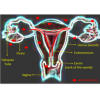
Endometriosis is a common condition where cells similar to the lining of the womb (endometrium) are present elsewhere in the body, usually within the pelvis. During menstrual cycle, these cells respond to the hormones (oestrogen and progesterone) produced by the ovaries in the same way to those in the endometrium, building up and then bleeding, and this process causes inflammation, and scarring in the surrounding tissues.
It is estimated that one in ten women and those assigned female at birth have endometriosis. The prevalence of endometriosis in women with infertility can be as high as to 30–50%.
Endometriosis can affect from puberty to menopause, and regardless of race or ethnicity. Endometriosis can be found on the peritoneum (the lining of the pelvis and abdomen), on the ovaries where cysts called endometriomas (chocolate cysts) can be formed, on or within the fallopian tubes, around or in the area between vagina and bladder or bowel. Less commonly, endometriosis can also be found in other parts of the body including scars following an operation, in the umbilicus (belly button) and covering of the lungs (pleura).
What causes endometriosis?
The exact cause of endometriosis is not known. The risk of developing endometriosis increases if an immediate female member of the family (mother or sister) is diagnosed to have endometriosis.
What are the symptoms of endometriosis?
Endometriosis in many may not cause any symptoms or problems, however, for some it can have a significant impact on their life in many ways. Symptoms can vary in every patient or in the same patient at different times:
- pelvic pain, mainly around the menstrual periods, and may change throughout the menstrual cycle
- pain during or after sexual intercourse
- pain on opening bowels or pass urine - often worse during menstrual periods
- bleeding from back passage or in the urine during your menstrual period
- infertility (difficulty conceiving)
- fatigue or lack of energy
- heavy menstrual bleeding or irregular periods
How does endometriosis affect fertility?
In general, the monthly probability of conception (monthly fecundability rate) is around 20% (i.e., 20 out of 100 heterosexual couple conceive within a month of trying for pregnancy). For women with endometriosis, this reduces to 2-10% depending on the severity of the condition. It is not very clear why some women with minimal endometriosis have difficulty conceiving, while for some women even with severe endometriosis natural conception is possible.
Studies indicate that the likely the effects of endometriosis on fertility are multi-factorial and the condition has been shown to negatively affect each aspect of the normal reproductive health:
- Anatomical distortion and adhesions, especially in advanced disease
- Toxins in peritoneal fluid (naturally occurring fluid within the abdomen/pelvis)
- Reduced egg reserve and egg quality
- Problems with egg release, pick-up and transport down the fallopian tube
- Abnormal immune response
- Negative impact on sperm motility and fertilisation
- Altered endometrial (lining of the womb) receptivity and embryo implantation
Does having endometriosis increases the risk of miscarriage?
Unfortunately, miscarriage is a common problem which occurs in around 1 in 5 pregnancies, and some studies indicate that with endometriosis, the risk increases to around 1 in 4.
Does endometriosis increase the risk of having a pregnancy outside the womb cavity (ectopic pregnancy)?
In general population, ectopic pregnancies occur in around 1 in 80 to 100 pregnancies. Studies indicate that this risk is more than doubled in women with endometriosis.
Does endometriosis cause problems in pregnancy?
There is not enough research at present to substantiate if later pregnancy complications are increased due to endometriosis. Usually, the pain improves in pregnancy but may return after delivery once the menstrual periods resume.
How is the diagnosis of endometriosis made?
Endometriosis is diagnosed through laparoscopy of the pelvis and abdominal cavity, a keyhole surgery carried out under general anaesthetic. Based upon the number of endometriosis lesions, their severity, scarring in the pelvis, chocolate cysts and other organs involvement at laparoscopy, endometriosis is classified as stage 1 (minimal), stage 2(mild), stage 3 (moderate) and stage 4 (severe).
Endometriomas (chocolate cysts) of the ovary and with experience, deep endometriosis can be diagnosed with an ultrasound scan. A trans-vaginal (internal) scan is usually required. Occasionally an MRI scan may be required to assess the extent of the disease, particularly if other organs such as bowel or bladder are involved. A normal result from an ultrasound or MRI scan does not rule out endometriosis, however it will help guide suitable treatment options.
Raised levels of CA 125, a protein in the blood may assist diagnosis, but is not specific to endometriosis. A raised level of CA 125 also does not mean a diagnosis of cancer.
What are the treatment options for women who wish to conceive or have infertility?
There are various treatments available for women with endometriosis wishing to conceive. The use of hot-water bottle and/or pain-relieving medications, ranging from over-the-counter pain killers such as Paracetamol, Ibuprofen, to non-hormonal prescription medications, may help pain symptom. For some patients, a referral to a specialist pain management team that may include physiotherapists and psychologists may be required. Treatment using hormones to suppress endometriosis is practically contraceptive due to the mechanism of action of hormones, and hence not very useful for someone who is trying to conceive.
For individuals with stages 1 - 2 endometriosis there is evidence from good studies that laparoscopic surgery with destruction or excision of endometriosis improves the chances of becoming pregnant naturally if you have had problems conceiving. Laparoscopic surgery has also been shown to improve pain in 70% of the patients if the location of endometriosis treated corresponds to the area of maximum pain. Reduced pain can help couple to have regular sexual intercourse and hence fertility.
For individuals with severe endometriosis, there is lack of evidence from good quality studies on the effect of surgery on pregnancy rates. If surgery for severe endometriosis is needed for pain, this should be undertaken in specialist centres, with support from bladder and bowel specialists as it can be more complex and associated with more risks. It remains unclear if surgical removal of endometriotic cysts is beneficial in improving natural pregnancy due to lack of good quality studies. Removal of ovarian cysts, based on certain factors such as age, pain symptoms, size, etc., may be required in some circumstances, however, surgery on ovarian cysts has been shown to reduce egg reserve (pool of egg containing sacs in the ovaries).
The potential benefits and harms of alternative and complimentary therapies are unclear in women with endometriosis and difficulty conceiving.
Is intra-uterine insemination (IUI) a treatment option for women with endometriosis and infertility?
The European Society of Human Reproduction and Embryology guidelines recommend consideration of IUI with gonadotropins for women with stages 1-2 endometriosis in the absence of sperm abnormality or fallopian tubal pathology, however, the NICE guidelines in the UK do not support routine use of IUI for women with mild endometriosis. Women with moderate to severe endometriosis are likely to have damage to their fallopian tubes, and hence IUI is not a treatment option.
How about IVF treatment for women with endometriosis?
IVF treatment will be an option for women with endometriosis associated infertility either in the presence of additional factors, such as fallopian tubal disease and/or sperm abnormalities or when initial treatment options have not been successful. The chances of a live birth following IVF treatment for women with endometriosis appears to be similar to those women having IVF treatment for other causes of infertility. In other words, endometriosis does not appear to negatively affect IVF success. NHS funding for IVF treatment varies depending on various criteria and may not be available for all patients with endometriosis requiring IVF treatment.
Does any treatment, before, during or after, improves IVF treatment success?
It is uncertain from medical studies if any hormonal therapy before or after, improves IVF success (live-birth or clinical pregnancy). Few months of medical treatment using GnRH analogue injections may be offered prior to frozen embryo treatment. The benefit of laparoscopic surgery for minimal – mild endometriosis before IVF treatment has not been established from good quality studies.
Removal of ovarian cysts before IVF treatment may be required for pain symptoms or to improve access to follicles (egg containing sacs) at egg-retrieval procedure undertaken as part of the IVF treatment.
There are no good quality studies to advise if surgery for severe endometriosis will be beneficial before IVF treatment.
Is fertility preservation an option for women with endometriosis but are not ready to have children?
Freezing of eggs, embryo, and ovarian tissue (fertility preservation) is well established for patients undergoing certain cancer treatment or before gender affirming hormone treatment. Some patients with severe endometriosis may benefit from fertility preservation.
Further information and support available via:
Endometriosis UK charity - https://www.endometriosis-uk.org/
References:
1. K Skorupskaite, HM Bhandari. ‘Endometriosis and Fertility’. Obstetrics, Gynaecology & Reproductive Medicine, Vol 31, Issue 5, p131-136, May 2021 (Further updated version of this article has been accepted for publication in the same medical journal)
2. Skorupskaite, K., Hardy, M., Bhandari, H., Yasmin, E., Saab, W., & Seshadri, S. (2024). Evidence based management of patients with endometriosis undergoing assisted conception: British fertility society policy and practice recommendations. Human Fertility, 27(1). https://doi.org/10.1080/14647273.2023.2288634