
Inguinal hernia repair at Haywards Heath Hospital
- Overview
If you’ve noticed a lump or discomfort in your groin, you may be dealing with an inguinal hernia. Our expert surgeons at Nuffield Health can help fix the underlying weakness in the area with inguinal hernia repair surgery.
What is inguinal hernia repair?
Inguinal hernia repair is an operation to fix a hernia in the groin, where tissue from inside the abdomen has pushed through a weak point in the inguinal canal.
Your surgeon returns the tissue to its proper place and strengthens the weak area with mesh or stitches, using open, keyhole or robotic-assisted surgery depending on what suits you best.
What is an inguinal hernia?
An inguinal hernia is one of the most common types of hernia. It appears as a lump in the groin and may cause discomfort, especially when lifting, coughing or standing. It develops when a weak spot forms in the muscle layer of the abdominal wall, allowing the inner lining and abdominal contents to push through. This creates a visible bulge known as a hernia.
The hernia occurs at the inguinal canal, a narrow passage where nerves and ligaments exit the abdomen. This area is naturally prone to hernias due to genetic causes or other causes including ageing, heavy lifting, chronic coughing, straining, pregnancy or a previous surgery.
You may want to consider inguinal hernia repair surgery to fix an inguinal hernia. Also known as hernioplasty or herniorrhaphy, the goal of the surgery stays the same and that is to remove the lump, stop discomfort and prevent the hernia from becoming trapped or strangulated.
Is an inguinal hernia the same as a groin hernia?
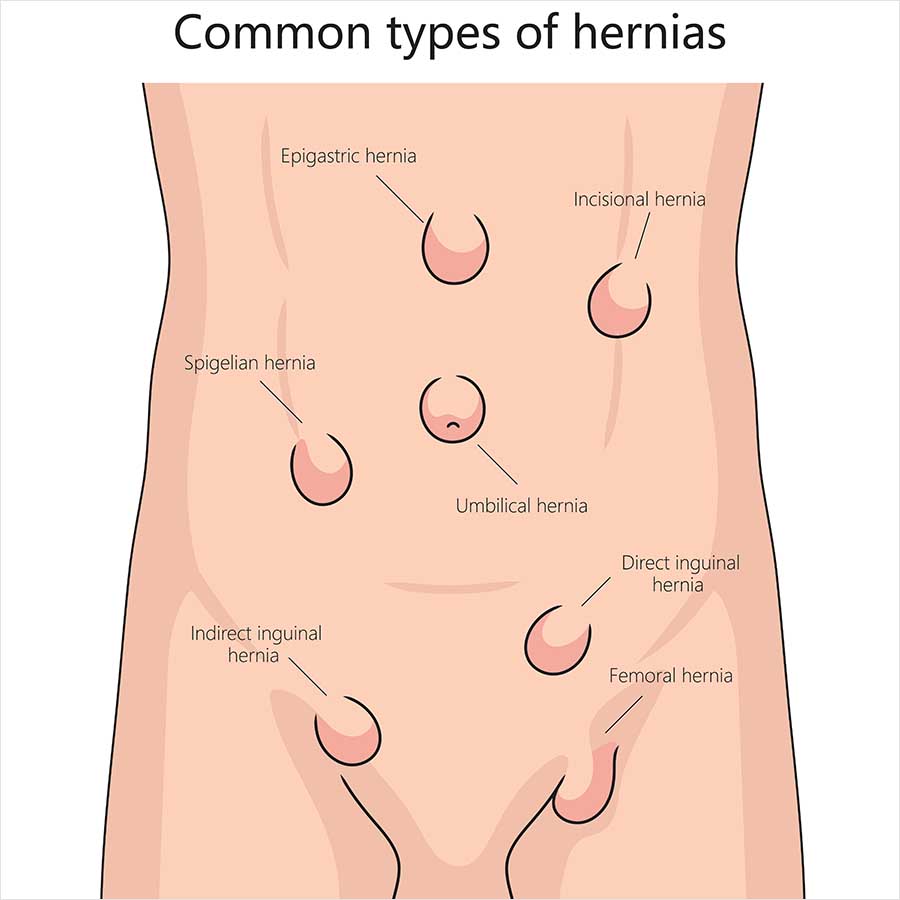
There are two main types of groin hernia: inguinal and femoral.
An inguinal hernia is the most common type of groin hernia. Inguinal hernias occur at the inguinal canal, a natural passage that runs through the muscles of the lower abdomen on each side of the groin. They are more common in men because this passage is wider in men, as it carries the spermatic cord and blood vessels that supply the testicles, leaving a natural weak point where tissue can push through.
Femoral hernias appear slightly lower, just below the groin crease at the top of the thigh. They are less common and occur more often in women.
How serious is an inguinal hernia?
Hernias do not heal on their own. Over time, they may enlarge or become painful. In some cases, the contents of the hernia can become strangulated (blood supply cut off), which is a medical emergency. Symptoms may include severe pain, vomiting and a lump that doesn’t go down when lying flat. Immediate medical attention is essential.
What are the different types of inguinal hernia?
Inguinal hernias can come in a few different forms, but they all involve a weakness in the abdominal wall that allows tissue to push through. The differences mainly relate to how and why that weakness developed.
Direct inguinal hernia: Happens when the abdominal muscles naturally weaken over time. It’s the type we tend to see more often in adults, especially as we get older or after years of lifting, coughing or straining.
Indirect inguinal hernia: This one is slightly different. It’s usually present from birth because a small opening in the abdominal wall didn’t fully close. It can show up at any age, even though the underlying cause has been there since childhood.
Recurrent inguinal hernia: Is simply a hernia that returns after a previous repair. This can happen for several reasons. Either the original hernia may have been too large, the tissue may not have healed strongly, or lifestyle factors (like heavy lifting) may have contributed.
Surgeons often choose a different technique the second time around to reduce the risk of further recurrence. For example, they may use keyhole surgery if the first repair was open surgery.
Bilateral inguinal hernia: This means the hernia has developed on both sides of the groin. It can sound intense, but both sides can often be repaired during the same operation using laparoscopic techniques. The choice depends on your body, the size of the hernias and your surgeon’s recommendation.
What’s the difference between inguinal, femoral, and umbilical hernias?
These hernias all involve a weakness in the abdominal wall, but they appear in different places.
Inguinal hernia: An inguinal hernia sits in the groin, where a natural passageway, called the inguinal canal, runs through the abdominal wall. This is the most common type, especially in men.
Femoral hernia: A femoral hernia appears slightly lower down, where the femoral artery and vein – the major blood vessels that travel from the abdomen into the thigh – pass through a tight space. Femoral hernias are less common but more likely to cause complications, which is why they’re taken seriously.
Umbilical hernia: An umbilical hernia occurs at the belly button. This area is naturally a little weaker because it’s where the umbilical cord once passed through before birth.
How is an inguinal hernia diagnosed?
Most inguinal hernias are diagnosed during a simple physical examination. Your consultant will gently examine the groin area and may ask you to cough or stand to make the hernia more visible. If the hernia is small, difficult to feel or causing symptoms without a clear lump, an ultrasound can help confirm the diagnosis. In more complex cases, a CT or MRI scan may be recommended, but this is less common.
Can an inguinal hernia go away on its own?
No, unfortunately hernias don’t heal without surgery. The opening in the abdominal wall doesn’t close by itself, and the hernia may gradually become larger or more uncomfortable over time.
What are the symptoms of an inguinal hernia?
Symptoms may include:
- A lump or bulge in the groin
- Discomfort when standing, lifting or coughing
- The area may feel achy, heavy or tender
- A “dragging sensation” – a feeling of downward pressure in the pelvis or abdomen
- Groin pain that may radiate to the thigh or testicle
- Occasional urinary symptoms due to pressure from the hernia, e.g. needing to pass urine more often.
What surgical techniques are used to repair an inguinal hernia?
There are three main approaches to repairing an inguinal hernia. Your surgeon will recommend the one that best suits your body, lifestyle and medical history.
Open inguinal hernia repair
This is the traditional method. Your surgeon makes a small incision in the groin, gently returns the hernia contents to the abdomen and strengthens the muscle with stitches. A synthetic mesh is usually placed over the weak spot to reduce the risk of the hernia returning.
Laparoscopic (keyhole) inguinal hernia repair
This minimally invasive technique is performed under general anaesthetic. Several small incisions are made near the belly button, and the abdomen is gently inflated with carbon dioxide to create space. A tiny camera and instruments are inserted to repair the hernia from the inside and place mesh over the weakened area.
Keyhole surgery often results in less pain, smaller scars and a quicker return to normal activities. In around 1 in 100 cases, the surgeon may need to convert to open surgery for safety.
Robotic-assisted inguinal hernia repair
This is a more advanced form of keyhole surgery where the surgeon uses robotic instruments for enhanced precision. It may be recommended for complex or recurrent hernias.
Which inguinal hernia repair technique is right for me?
Your surgeon will consider the type of hernia you have, your age, general health, previous surgeries and whether the hernia is on one or both sides. They’ll also discuss your lifestyle, activity level and recovery goals to help you choose the most suitable approach.
How do I know if I need an inguinal hernia repair?
If your hernia is causing discomfort, getting larger or interfering with daily life then surgery is recommended. Also if the hernia has a higher risk of becoming trapped or strangulated, then it’s best to discuss options as soon as possible.
Who is not suitable?
Surgery may be delayed or avoided if you have uncontrolled medical conditions, severe heart or lung disease or a high anaesthetic risk. Your consultant will discuss the safest options for you.
Is hernia surgery safe for older adults?
Yes. Inguinal hernia repair is commonly performed in older adults and is generally safe when underlying health conditions are well managed.
What are the alternatives to an inguinal hernia repair?
Alternatives include:
- Watchful waiting for small, painless hernias
- Hernia truss or support belt for temporary relief.
These options may help manage symptoms but do not repair the hernia.
How can I prepare for an inguinal hernia repair?
You may be advised to:
- Stop smoking as it slows healing and is one of the main reasons a hernia repair fails or comes back
- Maintain a healthy weight and stay active
- Avoid shaving the surgical area in the week before surgery
- Shower the day before or on the day of your operation
- Keep your body warm
- Manage blood sugar levels if you have diabetes
- Practise good hand hygiene in hospital and follow any guidance on face coverings or vaccinations
- Report any chest infection or persistent cough before your surgery, as coughing puts strain on the hernia repair.
What happens at the pre-operative assessment?
You’ll meet the healthcare team to review your medical history, discuss anaesthetic options and plan your recovery. You may have blood tests, and you’ll receive instructions about fasting, medication and arrival times.
What happens during an inguinal hernia repair surgery?
The operation usually takes less than an hour. You may have general, spinal or local anaesthetic.
The hernia sac is removed, and the abdominal wall is reinforced with stitches and usually mesh. In laparoscopic and robotic-assisted surgery, several small incisions are used instead of one larger cut.
How long does it take to recover from inguinal hernia repair?
In hospital
After surgery, you’ll wake up in the recovery area before returning to the ward. Most patients go home the same day or the next. The team will monitor you for pain, fever, dizziness, abdominal swelling or difficulty passing urine – symptoms that may indicate complications.
At home
If you receive general anaesthetic, a responsible adult should stay with you for 24 hours. Avoid driving, operating machinery, signing legal documents or drinking alcohol during this time.
It is important not to put any strain on your abdominal wall for 6 weeks after surgery to minimise the chance of the hernia coming back.
Contact your GP or healthcare team promptly if you develop a chest infection, persistent coughing or constipation after surgery. Coughing and straining to open your bowels increases pressure on the abdominal wall and can strain the hernia repair. Keep well hydrated, eat plenty of fibre, and ask your GP or healthcare team for laxatives if you become constipated.
Pain and swelling
Mild to moderate pain is normal for a few days. Swelling in the groin or testicle area can last several weeks. Wearing loose, comfortable clothing can help reduce irritation.
Activity
You can return to normal daily activities when comfortable, usually after a week. Avoid strenuous exercise/sports and heavy lifting for 6 weeks. Walking is encouraged from day one.
Driving and work
You need to be able to control the car safely in an emergency, without pain holding you back. After about a week, it is worth sitting in your parked car and testing yourself:
- Practise an emergency stop, using both feet on the pedals
- Turn to look over each shoulder, as you would when checking your blind spot
If you can do both without discomfort, you are usually considered medically fit to drive.
Before you set off, check with your car insurer. Many policies ask you to wait longer after surgery, and driving before then could affect your cover. Your consultant (surgeon) can advise if you are unsure.
If your job is desk-based work, then you may resume work after a week. If it involves manual work, then this may take slightly longer, roughly 6 weeks.
Follow-up
You may have a follow-up appointment to check healing and discuss any ongoing symptoms.
What are the risks and complications of an inguinal hernia repair?
Every surgical procedure has a risk of complications. Be sure and discuss any concerns you might have about these risks with your surgeon.
General risks include:
- Pain
- Bleeding during or after the surgery
- Infection of the surgical site
- Scarring
- Blood clots DVT (deep-vein thrombosis).
Specific risks include:
- A lump under the wound
- Haematoma or seroma – a collection of blood or fluid that can build up under your wound
- Persistent groin discomfort
- Testicular pain or swelling
- Infection of the mesh
- Difficulty passing urine
- Rare injury to the testicle’s blood supply
- Recurrence of the hernia.
Keyhole surgery may also cause temporary surgical emphysema (trapped air or gas in fatty layers under your skin), rare bowel injury or extremely rare gas embolism (trapped air or gas in a blood vessel).
How much does an inguinal hernia repair cost at Nuffield Health?
Select your local Nuffield Health hospital to find contact details and guide prices for inguinal hernia repair. Please note that the stated guide price is only an approximate cost of treatment. You will be given a fixed all-inclusive price for treatment following your initial consultation with a consultant.
FAQs
-
What questions should I ask my surgeon before an inguinal hernia repair?
It can help to ask about the type of repair recommended for you (e.g. open, laparoscopic or robotic), whether mesh will be used, what recovery will look like, how soon you can return to work or exercise, and the risks specific to your health. You may also want to ask about recurrence rates and what to expect if you develop symptoms in the future.
-
Do I need a GP referral to have an inguinal hernia repair at Nuffield Health?
A GP referral is usually recommended so your consultant has your medical history, but some hospitals accept self referrals for private consultations.
-
Is an inguinal hernia repair more complicated for women?
Inguinal hernias are less common in women, and symptoms can sometimes be harder to diagnose because groin lumps are less obvious. Women are also more likely to have femoral hernias, which sit slightly lower in the groin. This means surgeons may take extra care to rule out a femoral hernia and choose the most appropriate repair technique.
-
Can an inguinal hernia come back after surgery?
Yes, although recurrence is uncommon, there is still the possibility it can come back. Factors such as the size of the hernia, the strength of your abdominal muscles, smoking, being overweight and certain medical conditions can increase the risk. Most repairs last many years, and recurrence rates are low when mesh is used.
-
Will an inguinal hernia repair affect my fertility?
It’s very unlikely. The structures involved in fertility sit close to the hernia, but surgeons take great care to protect them. Temporary swelling or discomfort can happen, but long term fertility problems are rare.
-
Can an inguinal hernia affect my testicles?
Yes, but usually only in the short term. Some men notice aching or swelling in the testicle before or after surgery because the hernia sits close to the spermatic cord. This normally settles as you heal.
-
How can I tell if my inguinal hernia repair has failed?
A recurrent hernia usually appears as a new lump or bulge in the groin, often with discomfort when standing, coughing or lifting. If you notice these changes, speak to your surgeon or GP for an assessment.
Inguinal hernia repair consultants at Haywards Heath Hospital
Burrell Road, Haywards Heath, RH16 1UD
Guide price
| Initial consultation | from £160 | |
|---|---|---|
| Diagnostics | If needed to determine treatment plan | |
| Treatment | £4,100 | |
| Pre-assessment | Included | |
| Main treatment | Included | |
| Post-discharge care | Included | |
| Pre-assessment, Main treatment and Post-discharge care | £4,100 | |
| Guide price | £4,260 | |
The guide price
stated above is an approximation of the cost of treatment only. The final price
may vary according to Consultant fees, prosthesis or drugs used and any
pre-existing medical conditions which may alter your care pathway.
You will be given a fixed all-inclusive price for treatment following
your initial consultation with a Consultant.
Ways to pay
Nuffield Health promise
Our prices are all-inclusive. We will equal any comparable price. There are no time limits on your aftercare.
Paying for yourself
There are no hidden costs in our treatment prices. The price you see is the price you pay.
Find out morePersonal medical loan
Spread the cost of your treatment with a 10, 12 or 24 month 0% personal medical loan.
Find out moreMedical insurance
We work with you and your insurance provider to get you the treatment you need quickly
Find out more