
Thoracic facet joint injection
- Overview
Reviewed on Thursday 6 August 2026 by a General Practitioner (GP).
When your mid back feels tight, sore or endlessly achy, it’s easy to forget how good comfortable movement can feel. A thoracic facet joint injection helps calm inflammation in the facet joints, easing pain and helping you return to the rhythm of daily life.
What is a thoracic facet joint injection?
A thoracic facet joint injection, also known as a thoracic facet joint block, places local anaesthetic and sometimes steroid medication into or around one of the facet joints in your mid-back. These joints can become painful due to arthritis, inflammation or degeneration.
You may find that many facet joint injections include a corticosteroid, which is why they’re also commonly known as steroid injections for back pain.
A thoracic facet joint injection offers a targeted way for our expert consultants at Nuffield Health to diagnose and ease mid-back pain, helping to reduce your inflammation and provide longer-lasting relief.
What is a facet joint?
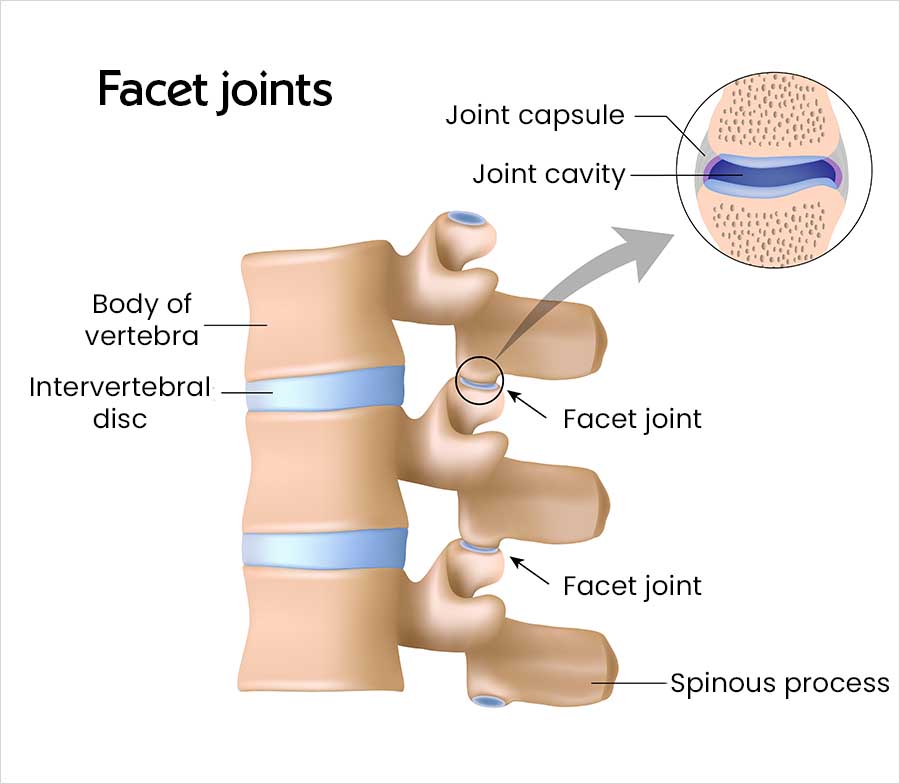
Your spine is made up of a column of bones called vertebrae. Each vertebra is connected to the next by:
- Facet joints: Which guide movement and help stabilise your spine.
- Intervertebral discs: Which act as cushions between the bones.
Thoracic facet joints sit in pairs at the back of the spine. Because your ribs give extra support, this part of the spine moves less than your neck or lower back, mainly allowing gentle twisting and bending. As you get older, wear and tear (osteoarthritis) can develop in these joints. Injury or strain can also affect them. This can cause pain and stiffness in the mid-back or refer pain around the ribs or into the chest wall.
A thoracic facet joint injection helps your consultant at Nuffield Health confirm whether these joints are responsible for your symptoms, with the aim of helping reduce your inflammation and provide longer-lasting relief.
What types of thoracic facet joint injection are there?
- Diagnostic facet joint injection: This uses local anaesthetic only. If your pain improves immediately, it confirms the facet joint as the source.
- Intra-articular facet joint injection: Uses local anaesthetic and steroid to reduce inflammation and provide longer-lasting relief.
- Medial branch block: Targets the small nerves (medial branches) that supply the facet joints rather than the joint itself.
What conditions can a thoracic facet joint injection treat?
A thoracic facet joint injection may help diagnose or relieve:
- Facet joint syndrome
- Facet joint arthritis (osteoarthritis)
- Facet joint degeneration
- Mid-back pain caused by inflamed thoracic facet joints
- Pain that worsens with twisting or bending.
It’s not typically used for nerve compression or pain radiating into the legs.
What causes thoracic facet joint pain?
Facet joints in the mid-back can become painful due to:
- Age-related wear and tear
- Osteoarthritis
- Inflammation
- Repetitive strain
- Poor posture (including prolonged sitting or screen use)
- Previous back injury.
How serious is thoracic facet joint pain?
Most cases are not dangerous, but they can significantly affect daily activities, sleep and quality of life. Persistent or worsening pain should be assessed by a specialist.
What are the symptoms of thoracic facet joint pain?
Symptoms of thoracic facet joint pain may include:
- Localised mid-back pain
- Pain that becomes worse when twisting or leaning backwards
- Stiffness, especially in the morning
- Pain radiating around the ribs or into the upper back
- Discomfort when sitting or standing for long periods.
Who is at risk?
- Adults over 40
- People with arthritis
- Those with desk-based or repetitive movement jobs
- Individuals with poor posture
- Anyone with previous back trauma.
Can thoracic facet joint pain go away on its own?
Yes, it can. Many cases improve with rest, exercise and physiotherapy. A thoracic facet joint injection is considered when symptoms persist despite conservative treatment.
When might I need a thoracic facet joint injection?
Your consultant may recommend a thoracic facet joint injection if:
- Your symptoms suggest facet joint involvement
- Physiotherapy or medication hasn’t improved your condition
- Imaging shows facet joint degeneration
- A diagnostic block (a type of medical procedure) is needed to confirm the pain source
- You require pain relief to support rehabilitation.
Who is suitable for a thoracic facet joint injection?
You may be suitable if:
- You have persistent mid-back pain for more than 6–12 weeks
- Your pain is aggravated by twisting or extending your back
- You have localised tenderness over the facet joints
- You have no red flag symptoms such as severe weakness or numbness.
Who is not suitable?
A thoracic facet joint injection may not be recommended if:
- You have a bleeding disorder
- You have an active infection
- You have uncontrolled diabetes
- You are allergic to local anaesthetic or steroids
- You are pregnant (depending on clinical assessment)
- You have significant spinal instability.
Your consultant will discuss the safest option for you.
What are the alternatives to a thoracic facet joint injection?
Alternatives may include:
- Physiotherapy and exercise programmes
- Pain-relieving medication
- Medial branch block
- Radiofrequency ablation
- Lifestyle changes such as posture correction
- Manual therapy.
Facet joint injection vs medial branch block: what’s the difference?
- A facet joint injection places medication inside the joint.
- A medial branch block places anaesthetic on the nerves that supply the joint.
Facet joint injections can be both diagnostic and therapeutic. Medial branch blocks are mainly diagnostic and are often used before radiofrequency ablation.
Facet joint injection vs radiofrequency ablation: what’s the difference?
- Facet joint injection provides temporary relief using anaesthetic and steroid.
- Radiofrequency ablation (RFA) uses heat to disrupt the medial branch nerves, offering longer lasting relief (often 6–12 months). It’s usually considered after a successful medial branch block.
How can I prepare for a thoracic facet joint injection?
Tests and assessments before your procedure
You’ll attend a pre-procedure assessment where the team will:
- Review your medical history
- Check your medications, including blood thinners
- Discuss anaesthetic options
- Explain the procedure and answer questions.
Preparing in the days before your injection
- Follow any fasting instructions if advised
- Keep warm and let the team know if you feel unwell
- If you smoke, stopping now reduces complications
- Keep diabetes well controlled, if applicable.
Can I take my normal medication?
Most medications can be continued, but you may need to stop:
- Blood-thinning medication
- Certain anti-inflammatory drugs.
Your consultant will advise you on this.
What should I expect during a thoracic facet joint injection?
A thoracic facet joint injection usually takes 15–30 minutes and is performed using local anaesthetic.
During the procedure:
- You’ll be helped into a comfortable position
- The area of skin is cleaned with antiseptic
- Local anaesthetic is injected to numb the area
- A fine needle is guided into the facet joint using X-ray or ultrasound
- A small amount of contrast dye may be used to confirm the needle position
- The anaesthetic and steroid are then injected.
You may feel pressure or temporary discomfort during the procedure, but you’ll be monitored throughout.
How long does it take to recover after a thoracic facet joint injection?
Going home
Most people go home shortly after the procedure. You will not be able to drive, so please arrange for someone to take you home.
Support at home
- Make sure to rest if you feel any fatigue or tiredness, it’s important to not overdo any chores or daily tasks.
- Avoid driving, operating machinery or cooking until full movement and coordination return
- Avoid alcohol for 24 hours.
Driving and daily activities
- You can usually drive again after 24 hours
- Most people return to work the next day, depending on their job
- Avoid heavy lifting or strenuous activity for 48–72 hours
- Build up gentle exercise gradually.
Flying
You may be able to fly after 24–48 hours – make sure to double check with your consultant before doing so.
What to avoid:
- Heavy lifting
- High-impact exercise
- Prolonged or awkward back positions (such as slouching or twisting) on the same day.
What are the benefits of a thoracic facet joint injection?
- Helps confirm the source of your pain
- Reduces inflammation
- Provides pain relief
- Supports physiotherapy and rehabilitation
- Improves mobility and quality of life.
How soon will I feel the benefits?
- Local anaesthetic works within minutes
- Steroid may take 2–7 days to take full effect.
What are the risks and complications of a thoracic facet joint injection?
Complications are uncommon but may include:
- Failure of the injection to relieve pain
- Temporary worsening of pain
- Bruising or soreness at the injection site
- Allergic reaction to local anaesthetic.
Rare complications may include:
- Infection
- Nerve injury
- Bleeding
- Headache
- Blood clots.
Seek medical advice urgently if you develop:
- Fever or chills
- Increasing redness or swelling
- Severe pain
- A new sense of numbness or weakness.
How much does a thoracic facet joint injection cost at Nuffield Health?
For pricing information, please get in touch with your local hospital. The hospital or your healthcare team will give you a fixed, all-inclusive price for the treatment following your initial consultation.
FAQS
-
Can a thoracic facet joint injection be repeated?
Yes. Injections can be repeated, usually up to three times per year, depending on your initial response to the injection.
-
Do I need an MRI scan before a thoracic facet joint injection?
Not always. MRI can be helpful but is not essential if your symptoms clearly suggest facet joint pain.
-
Why has my pain got worse after a thoracic facet joint injection?
A temporary flare up can occur as the local anaesthetic wears off before the steroid takes effect. This usually settles within a few days.
-
How long do the effects of thoracic facet joint injection last?
Relief may last weeks to several months, depending on the individual.
-
Do I need to keep a pain diary after a thoracic facet joint injection?
It can be helpful. Tracking your symptoms helps your consultant assess how well the injection has worked.
-
Will I need physiotherapy after a thoracic facet joint injection?
Physiotherapy is often recommended to strengthen your back and prevent recurrence.
-
Will I need someone to take me home after the injection?
Yes, you must not drive immediately after the procedure.
Ways to pay
Nuffield Health promise
Our prices are all-inclusive. We will equal any comparable price. There are no time limits on your aftercare.
Paying for yourself
There are no hidden costs in our treatment prices. The price you see is the price you pay.
Find out morePersonal medical loan
Spread the cost of your treatment with a 10, 12 or 24 month 0% personal medical loan.
Find out moreMedical insurance
We work with you and your insurance provider to get you the treatment you need quickly.
Find out more