
Gastric sleeve surgery (sleeve gastrectomy)
- Overview
Reviewed on Wednesday 10 June 2026 by a Consultant Upper Gastrointestinal and Bariatric Surgeon.
Gastric sleeve surgery (sleeve gastrectomy) is one of the most commonly performed weight loss procedures in the UK. By creating a smaller stomach and reducing appetite, our expert surgeons at Nuffield Health can help you lose weight and improve conditions such as sleep apnoea, joint pain and Type 2 diabetes.
What is gastric sleeve surgery?
A gastric sleeve, also known as a sleeve gastrectomy or vertical sleeve gastrectomy, is a weight loss procedure that permanently removes most of the stomach. The remaining stomach forms a narrow tube or “sleeve.”
Because the new stomach is much smaller:
- You feel full after a small amount of food and stay fuller for longer
- Your hunger hormone, ghrelin, drops, reducing your appetite
- You naturally eat fewer calories.
Unlike gastric bypass, the digestive tract is not rerouted, so nutrient absorption is not affected significantly in a sleeve gastrectomy compared to gastric bypass.
What health conditions can a gastric sleeve help with?
Many obesity related conditions improve significantly after sleeve gastrectomy, including:
- Type 2 diabetes
- High blood pressure
- High cholesterol
- Obstructive sleep apnoea
- Joint pain and mobility issues
- Non alcoholic fatty liver disease (NAFLD)
- Acid reflux (GORD) – although in some people, reflux can worsen after surgery.
Who is suitable for gastric sleeve surgery?
You may be suitable if:
- Your BMI is over 40, or
- Your BMI is over 35 and you have a weight-related condition (e.g., Type 2 diabetes, high blood pressure, sleep apnoea).
- You’ve tried other weight loss methods without success
- You’re committed to long-term lifestyle changes.
Your surgeon will confirm your BMI and carry out a detailed assessment, including your medical history and your motivation to follow a new eating and exercise plan.
Can I have gastric sleeve surgery if I have Type 2 diabetes?
Yes, many people with Type 2 diabetes benefit significantly from gastric sleeve surgery.
Who may not be suitable?
You may be advised to delay or avoid surgery if you:
- Have severe heart or lung disease
- Have untreated mental health conditions or eating disorders
- Are pregnant
- Cannot commit to long-term follow-up and dietary changes
- Smoke – you’ll be asked to stop smoking before surgery, as smoking increases the risk of complications and slows the healing process.
What are the alternatives to gastric sleeve surgery?
Non-surgical alternatives include:
- Endoscopic sleeve gastroplasty (ESG): A minimally invasive procedure that reduces stomach size without surgery.
- Gastric balloon: A temporary balloon placed in the stomach for 4–9 months. Weight loss is slower and usually less than with surgery, and long-term results are less predictable.
Surgical alternatives include:
- Gastric bypass: Reduces stomach size and reroutes the bowel.
Gastric sleeve vs gastric bypass: what’s the difference?
A gastric sleeve reduces stomach size only. A gastric bypass reduces stomach size and reroutes the bowel. A gastric bypass may offer slightly greater weight loss but sleeve gastrectomy avoids malabsorption.
How can I prepare for gastric sleeve surgery?
Psychological assessment
You may be asked to meet with a psychologist to ensure you’re emotionally prepared and understand the lifestyle changes required. This depends on your mental health history and is indicated only if you have significant mental health problems.
Dietetic assessment
You will be seen by a dietitian who will go through your dietetic history and advise you regarding healthy eating and diet. You will be followed up by the dietitian after surgery who will help you to make modifications to your diet and assist in your post-operative recovery.
Pre-operative (liver shrinkage) diet
Most patients follow a low-calorie diet for two weeks before surgery. This reduces the fat content of the liver and makes keyhole surgery safer.
Medication
Make sure to notify your surgeon and healthcare team about all medications you’re taking, including:
- Blood thinners
- Herbal remedies
- Supplements
- Over-the-counter medicines.
You may need liquid medication or crushed tablets for a few weeks after surgery.
Exercise
Regular exercise helps prepare your body for surgery and supports recovery.
Reducing infection risk
- Don’t shave or wax the surgical area for a week before surgery
- Shower the day before or on the day of surgery
- Keep warm
- Keep blood sugar controlled if you’re diabetic
- Wash hands regularly and wear a face covering if asked.
What to bring on the day
- Comfortable clothing
- Any medications you take
- Your CPAP machine (if you use one)
- A list of questions for your surgeon.
What happens during gastric sleeve surgery?
Gastric sleeve surgery is usually performed under general anaesthesia and takes around 2 to 4 hours. Most procedures are done using laparoscopic (keyhole) surgery.
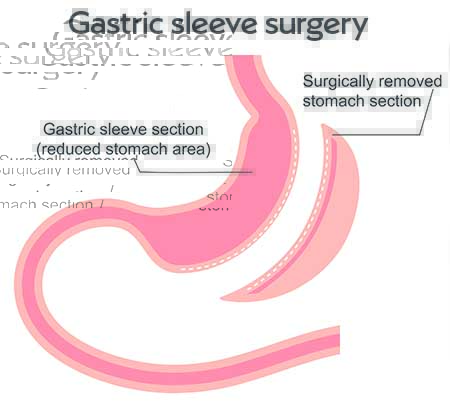
Your surgeon will:
- Make several small incisions in your abdomen
- Insert a camera and surgical instruments
- Free the part of the stomach to be removed
- Use a bougie (a guiding tube) to size the new stomach
- Staple and divide the stomach to create the sleeve
- Remove the excess stomach
- Reinforce the staple line if needed
- Test for leaks
- Remove instruments and close the cuts.
Clips, staples and implants used during surgery do not react with the body and can remain safely in place for life.
If keyhole surgery isn’t possible, the operation may be converted to open surgery.
After surgery, you’ll be taken to recovery, monitored closely and encouraged to move around gently.
How long does it take to recover from gastric sleeve surgery?
In hospital
You’ll start with a liquid-only diet, taking small sips to protect the new stomach. You may have a CT scan to check for leaks. Most patients go home after 2 to 3 days.
Red flag symptoms
Contact your healthcare team urgently if you notice:
- Worsening or severe pain
- Fever
- Racing heart
- Feeling faint or short of breath
- Persistent nausea or loss of appetite
- Not passing wind or opening your bowels
- Abdominal swelling
- Difficulty passing urine.
Your diet after surgery
Your diet progresses in stages:
- A liquid-only diet is administered for your first several weeks
- After this timeframe, soft foods can be introduced
- You’ll be able to consume solid foods after 4–6 weeks.
Your dietitian will guide you through each stage.
Vitamins and supplements
You will need lifelong vitamin and mineral supplements and regular blood tests, which will be done under the supervision of your GP. Your GP will be informed about you undergoing the surgery and the need for lifelong follow-up and care.
Activity
- Walking is advised from day 1 of your operation
- An exercise programme will be given to you after 1 week
- You’ll be able to go back to work around 2 to 4 weeks
- Avoid heavy lifting for several weeks
- You can drive once you can safely control your vehicle. Check with your insurer and surgeon before driving again
- You may need to delay flying – it’s best to check with your airline or national aviation authority about any restrictions.
Long-term expectations
A safe amount of weight to lose is around 0.5–1 kg per week for the first year so you’re still maintaining muscle mass while losing body fat. Most patients lose over half of their excess body weight. It is important to follow a healthy diet and lifestyle to maintain weight loss, as weight regain after surgery in the long term is a recognised problem if this is not adhered to.
Some people do not lose as much weight as expected, often due to grazing, high-calorie foods or liquid calories.
Women are usually advised to wait one year before trying to become pregnant.
What are the risks and possible complications of gastric sleeve surgery?
Sleeve gastrectomy is generally safe, but all surgery carries risks. Your surgeon will discuss the risks with you.
General surgical risks
- Bleeding
- Infection
- Allergic reactions
- Acute kidney injury
- Scarring
- Blood clots (DVT)
- Hernia at the incision site.
Keyhole surgery risks
- Surgical emphysema (trapped gas under the skin)
- Damage to bowel, bladder or blood vessels
- Hernia at port sites
- Gas embolism (very rare)
- Conversion to open surgery.
Specific sleeve gastrectomy risks
- Staple line bleeding
- Staple line leak (serious but uncommon)
- Sleeve narrowing (stenosis)
- Worsening acid reflux
- Nutritional deficiencies.
How much does gastric sleeve surgery cost at Nuffield Health?
For pricing information, please contact your local hospital. The hospital or your healthcare team will give you a fixed all-inclusive price for the treatment following your initial consultation.
Making the right decision
Choosing to have gastric sleeve surgery is a personal decision. At Nuffield Health, you’ll never be rushed. Our surgeons will help you understand what’s achievable, what to expect and how to prepare, so you feel confident every step of the way.
FAQS
-
How much of my stomach is removed with a gastric sleeve?
Around 70–85%.
-
an a gastric sleeve be converted to a gastric bypass?
Yes, if needed due to reflux, weight regain or complications.
-
How long does a gastric sleeve last?
It is permanent.
-
Can I regain weight after gastric sleeve surgery?
Yes you can, but long-term weight regain is less likely with healthy habits and follow up support.
-
Can I drink alcohol after gastric sleeve surgery?
Alcohol is absorbed more quickly; moderation is essential.
-
an I take ibuprofen or anti-inflammatory painkillers after gastric sleeve surgery?
NSAIDs (like ibuprofen) are usually avoided because they can increase the risk of getting an ulcer.
-
Can I get pregnant after gastric sleeve surgery?
Yes, but it’s best to wait 12–18 months.
-
Will I experience hair loss?
Temporary hair thinning can happen during rapid weight loss.
-
Can gastric sleeve surgery be reversed?
No, it’s not reversible.
-
Is gastric sleeve surgery available on the NHS?
Yes. It’s available for patients who meet strict criteria.
Ways to pay
Nuffield Health promise
Our prices are all-inclusive. We will equal any comparable price. There are no time limits on your aftercare.
Paying for yourself
There are no hidden costs in our treatment prices. The price you see is the price you pay.
Find out morePersonal medical loan
Spread the cost of your treatment with a 10, 12 or 24 month 0% personal medical loan.
Find out moreMedical insurance
We work with you and your insurance provider to get you the treatment you need quickly.
Find out more