
Haemorrhoidectomy (piles removal surgery) at Leeds Hospital
- Overview
If haemorrhoids are causing itching, pain or bright-red bleeding, a haemorrhoidectomy may help provide lasting relief. At Nuffield Health Leeds Hospital, our experienced colorectal surgeons offer expert assessment and treatment for persistent or severe haemorrhoids, supported by modern facilities and personalised care throughout your treatment and recovery.
What is a haemorrhoidectomy?
A haemorrhoidectomy, also known as piles removal surgery, is a surgical procedure to remove haemorrhoids (piles) when they are large, prolapsed, painful or causing persistent bleeding.
What are haemorrhoids?
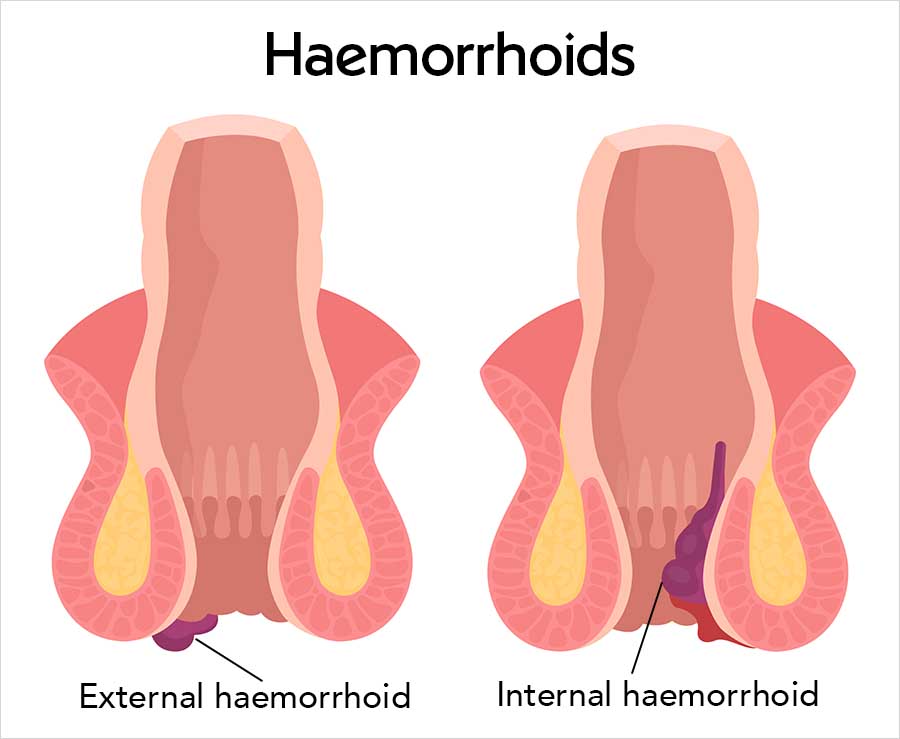
Haemorrhoids, commonly known as piles, are soft, fleshy lumps that develop inside or around the anus (back passage). They form when the veins in the anal canal become swollen and enlarged.
Internal haemorrhoids develop inside the anus, while external haemorrhoids form under the skin around the anal opening. Haemorrhoids can also prolapse (bulge outside the anus) or become thrombosed (when a blood clot forms inside them).
Internal haemorrhoids are graded from Grade I to Grade IV:
- Grade I: No prolapse, but may bleed
- Grade II: Prolapse during bowel movements but go back in on their own
- Grade III: Prolapse and need to be pushed back in
- Grade IV: Permanently prolapsed and cannot be pushed back in.
Haemorrhoids often develop gradually and may cause itching, discomfort, mucus discharge, or bright‑red bleeding when passing a bowel movement. They have a rich blood supply, which is why bleeding is often fresh and bright red. They are commonly linked to constipation, straining, pregnancy, prolonged sitting, and a family history of piles.
What are the different types of haemorrhoidectomy?
There are several types of haemorrhoidectomy. The most common are:
- Closed haemorrhoidectomy (Ferguson technique): Where the wound is stitched closed.
- Open haemorrhoidectomy (Milligan–Morgan technique): Where the wound is left open to heal naturally.
- Stapled haemorrhoidectomy: In some cases may be used to lift prolapsing haemorrhoids back into the anal canal using a circular stapling device.
- Laser haemorrhoidectomy: May be offered in selected cases.
Your consultant (surgeon) will recommend the most appropriate approach based on the size, grade and location of your haemorrhoids.
Why choose Nuffield Health Leeds Hospital for my haemorrhoidectomy?
As Yorkshire's largest private hospital, Nuffield Health Leeds Hospital offers patients access to specialist haemorrhoid treatment within a well-established healthcare setting known for delivering outstanding patient care. Situated in the heart of Leeds city centre, the hospital brings together experienced colorectal surgeons, advanced medical facilities and a personalised approach to treatment, helping patients feel informed, supported and confident throughout their care.
With 80 beds and a wide range of specialist services under one roof, the hospital is designed to provide a smooth and comfortable patient experience. If your haemorrhoidectomy requires an overnight stay, you'll recover in a private en-suite room with complimentary Wi‑Fi, freshly prepared meals and access to an on-site pharmacy.
How to book a consultation at Nuffield Health Leeds Hospital?
Haemorrhoid symptoms such as pain, itching and bleeding can affect your comfort and quality of life. At Nuffield Health Leeds Hospital, our experienced colorectal surgeons offer personalised haemorrhoid treatment, including haemorrhoidectomy surgery where appropriate. Book an online consultation, call us on 0113 3227251 or complete the enquiry form below to find out which treatment is right for you.
Who is suitable for a haemorrhoidectomy?
Your surgeon may recommend a haemorrhoidectomy if:
- Your lifestyle changes, such as increasing fibre and fluids, haven’t helped
- Less invasive treatments, such as banding or injections, haven’t worked
- Your haemorrhoids are large, prolapsed, painful or bleeding
- You have thrombosed haemorrhoids causing you severe discomfort.
You may not be suitable for surgery if you have certain medical conditions that increase surgical risk, or if you are pregnant, in which case treatment is usually delayed unless symptoms are severe.
What are the non-surgical alternatives to a haemorrhoidectomy?
Many haemorrhoids can be treated without surgery. Options include:
- Rubber band ligation: Placing a small band around the haemorrhoid to cut off its blood supply
- Sclerotherapy: Injecting a solution to shrink the haemorrhoid
- Infrared coagulation: Using heat to seal the haemorrhoid
- Lifestyle changes: Increase fibre, drink more water, and avoid straining.
Banding and injection treatments are successful in around 7 in 10 people, although they may need to be repeated. Surgery is usually only suggested once these options have been tried and other causes of bleeding have been ruled out.
How should I prepare for a haemorrhoidectomy?
At your pre‑operative consultation, your consultant will examine your symptoms, discuss your treatment options and review your medical history. You may be asked about your bowel habits, diet and any previous treatments you’ve tried.
Before surgery, it can help to:
- Increase fibre and fluid intake
- Avoid straining when opening your bowels
- Follow any dietary advice given by your consultant
- Stop smoking
- Let the team know about all medications you take, including supplements and over‑the‑counter remedies.
You can reduce your risk of infection by:
- Having a bath or shower the day before or on the day of surgery
- Keeping warm around the time of the procedure
- Keeping blood sugar controlled if you are diabetic
- Washing your hands regularly and wearing a face covering if asked.
Your consultant may recommend surgery if lifestyle changes and less invasive treatments haven’t helped, or if your haemorrhoids are causing significant pain or bleeding.
What happens during a haemorrhoidectomy?
A haemorrhoidectomy is usually performed under general anaesthetic and typically takes around 20 minutes. During the operation:
- Your surgeon will examine your back passage and lower bowel.
- Haemorrhoids may be removed by cutting them away, or by using a device that identifies and stitches the blood vessels supplying them.
- Prolapsing haemorrhoids may be lifted back into the anal canal using stitches or a stapling device.
- Your surgeon will ensure all blood vessels have stopped bleeding.
- A dressing may be placed inside the back passage – this will dissolve or fall out when you next open your bowels.
You may also receive local anaesthetic injections to help with pain afterwards, and antibiotics may be given to reduce the risk of infection.
How long does haemorrhoidectomy recovery take?
Short‑term recovery
Back in your room, the nurses will monitor you and check your wound. Some bleeding is normal, and you’ll be given pads to wear. Painkillers will be provided to keep you comfortable.
You can usually go home the same day, although some may need to stay a little longer.
For the first 24 hours
- Someone must take you home and stay with you
- Avoid driving, operating machinery or doing anything risky
- Don’t drink alcohol or sign legal documents.
Managing your recovery at home
- Rest for the first day, then stay gently active to reduce the risk of blood clots
- Take pain relief as prescribed
- Drink plenty of fluids and increase fibre
- Take any laxatives provided to keep stools soft
- Wear pads until the wounds have healed
- Sitz baths (warm shallow baths) after bowel movements can ease discomfort
- Exercise regularly once comfortable.
You’ll usually have a bowel movement within 2–3 days, which may be uncomfortable at first. Some bleeding is normal and should gradually improve.
The wounds typically take 2–3 weeks to heal. During this time, they may bleed, feel sore or produce a small discharge.
Time off work
Most patients return to work within 3–4 weeks, depending on their job and how they feel.
Follow‑up appointments
You’ll return to clinic after about a week so your healthcare team can check your healing.
What are the benefits of a haemorrhoidectomy?
A haemorrhoidectomy is one of the most effective treatments for severe haemorrhoids. It can:
- Relieve pain, bleeding and discomfort
- Treat prolapsed or thrombosed haemorrhoids
- Provide long‑term results.
Most people experience lasting improvement, although haemorrhoids can occasionally recur if underlying causes (such as constipation or straining) continue.
What are the risks and possible complications of a haemorrhoidectomy?
As with any surgery, complications can occur, although they are uncommon.
General surgical risks
- Bleeding (early or delayed)
- Infection
- Allergic reactions
- Blood clots.
Specific risks of haemorrhoidectomy
- Incomplete removal of haemorrhoids
- Difficulty passing urine
- Anal stenosis (narrowing of the anal canal)
- Skin tags
- Anal fissure
- Faecal incontinence (usually temporary)
- Perforation (very rare, associated with stapled techniques)
- Recurrence of haemorrhoids.
Your consultant will discuss these risks with you and answer any questions you may have.
How much does a haemorrhoidectomy cost at Nuffield Health Leeds Hospital?
For more information about haemorrhoidectomy costs at Nuffield Health Leeds Hospital, call our healthcare team on 0113 3227251. After assessing your symptoms and medical history, your consultant will provide a tailored treatment plan along with a fixed all-inclusive price for your care and recovery.
FAQs
-
Is haemorrhoidectomy a major surgery?
It’s considered a minor to intermediate procedure but still requires anaesthetic and recovery time.
-
Can haemorrhoids come back after a haemorrhoidectomy?
Yes, but recurrence is less common when underlying causes are managed.
-
Will I need a follow-up appointment after my haemorrhoidectomy?
Yes, usually around one week after surgery.
-
What is the first bowel movement like after a haemorrhoidectomy?
It may be uncomfortable and may cause some bleeding, but this improves over time.
-
Do the stitches need to be removed after a haemorrhoidectomy?
Most techniques use dissolvable stitches or leave the wound open to heal naturally.
-
How long will I be in pain after a haemorrhoidectomy?
Pain is usually worst in the first few days and improves steadily over 1–2 weeks.
-
Can I get a haemorrhoidectomy on the NHS?
Yes you can, but eligibility varies depending on local referral criteria.
Haemorrhoidectomy (piles removal surgery) consultants at Leeds Hospital
2 Leighton Street, Leeds, LS1 3EB
All self paying and insured patients and their guests can park of free of charge in our underground car park. Patients are also entitled to a 30% discount on parking at Q-Park, The Light, which must be pre-booked prior to arrival. Book your space and use promotional code NUFFLDS by following this link: https://www.q-park.co.uk/en-gb/cities/leeds/the-light/
Ways to pay
Nuffield Health promise
Our prices are all-inclusive. We will equal any comparable price. There are no time limits on your aftercare.
Paying for yourself
There are no hidden costs in our treatment prices. The price you see is the price you pay.
Find out morePersonal medical loan
Spread the cost of your treatment with a 10, 12 or 24 month 0% personal medical loan.
Find out moreMedical insurance
We work with you and your insurance provider to get you the treatment you need quickly
Find out more