
Rubber band ligation for haemorrhoids
- Overview
Reviewed on Thursday 30 July 2026 by a General Practitioner (GP).
Living with haemorrhoids can be uncomfortable and frustrating. Our experts at Nuffield Health offer rubber band ligation - a simple, non‑surgical way to shrink the swollen tissue and ease symptoms quickly.
What is rubber band ligation?
Rubber band ligation, also known as haemorrhoid banding, is a minimally invasive procedure used to treat internal haemorrhoids that are causing bleeding, discomfort, itching or prolapse.
It’s one of the most commonly used treatments for internal haemorrhoids and is often recommended when lifestyle changes haven’t helped or when symptoms keep returning.
What are haemorrhoids (piles)?
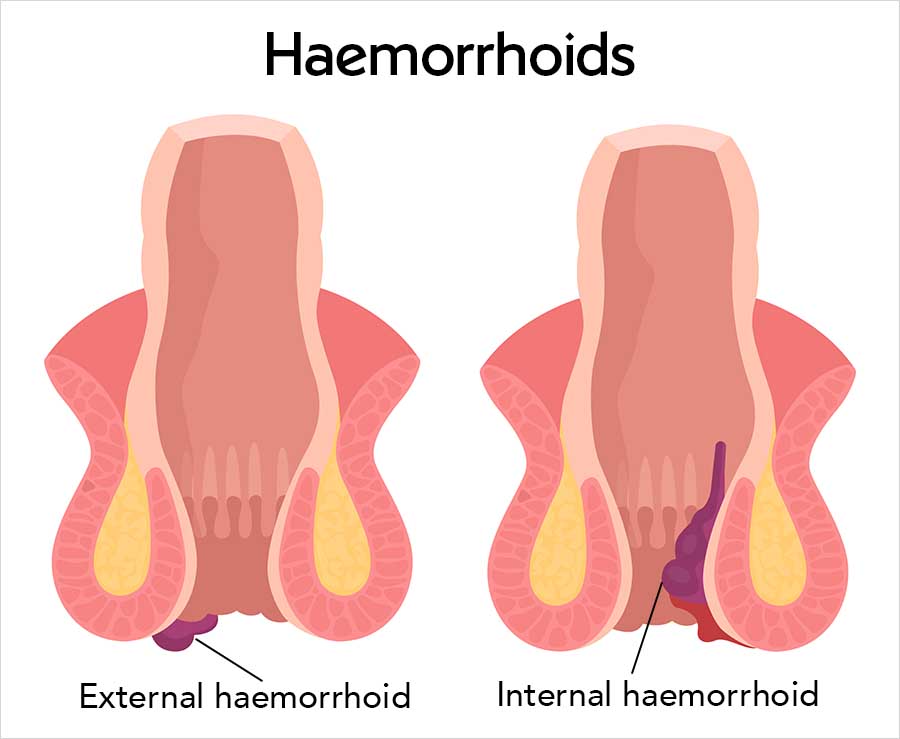
Haemorrhoids, commonly known as piles, are soft, fleshy lumps that develop inside or around the anus (back passage). They have a rich blood supply and bleed easily, often causing fresh, bright‑red blood when you pass a bowel movement. Larger haemorrhoids can prolapse through the anus, feeling like a lump when you clean yourself. They may also cause itching, discomfort or mucus discharge.
Haemorrhoids develop gradually and are commonly linked to constipation, straining, pregnancy, prolonged sitting and a family history of piles.
What are the different types of haemorrhoids?
- Internal haemorrhoids: Form inside the anal canal.
- External haemorrhoids: Form under the skin around the anus.
- Prolapsed haemorrhoids: Are internal haemorrhoids that bulge outside.
- Thrombosed haemorrhoids: Are haemorrhoids that contain a blood clot.
Internal haemorrhoids are graded from Grade I to Grade IV:
- Grade I: No prolapse, but may bleed.
- Grade II: Prolapse during bowel movements but go back in on their own.
- Grade III: Prolapse and need to be pushed back in.
- Grade IV: Permanently prolapsed and cannot be pushed back in.
Rubber band ligation is most effective for Grade I–II haemorrhoids, and selected Grade III haemorrhoids.
Who is suitable for rubber band ligation?
You may be suitable for rubber band ligation if:
- You have internal haemorrhoids causing bleeding or discomfort
- Your lifestyle changes, such as increasing fibre and fluids, haven’t helped
- Less invasive treatments haven’t worked
- Your haemorrhoids are Grade I–III.
Who is not suitable?
Banding may not be recommended if:
- You are pregnant (treatment is usually delayed unless symptoms are severe)
- You are taking blood‑thinning medication
- You have external or thrombosed haemorrhoids
- You have inflammatory bowel disease or certain anal conditions.
Your consultant will assess your suitability during your consultation.
What are the alternatives to rubber band ligation?
If banding is not suitable or doesn’t work, alternative options include:
- Haemorrhoidectomy: The surgical removal of haemorrhoids.
- Stapled haemorrhoidopexy: Lifting prolapsed haemorrhoids back into place.
- Injection sclerotherapy: Injecting a solution to shrink the haemorrhoid.
- Lifestyle changes: Increase fibre, drink plenty of fluids and avoid straining.
Some surgeons may also use ultrasound‑guided ligation, where blood vessels supplying the haemorrhoid are tied off with stitches.
How should I prepare for rubber band ligation?
At your pre‑procedure consultation, your consultant will:
- Review your symptoms
- Examine your back passage and lower bowel
- Discuss your treatment options
- Check your medications, including blood thinners, supplements and herbal remedies.
To help you prepare, it’s important you:
- Increase your fibre and fluid intake
- Avoid straining when opening your bowels
- Follow any advice given about managing constipation
- Shower or bathe on the day of the procedure
- Keep warm and let the team know if you feel unwell.
What happens during rubber band ligation?
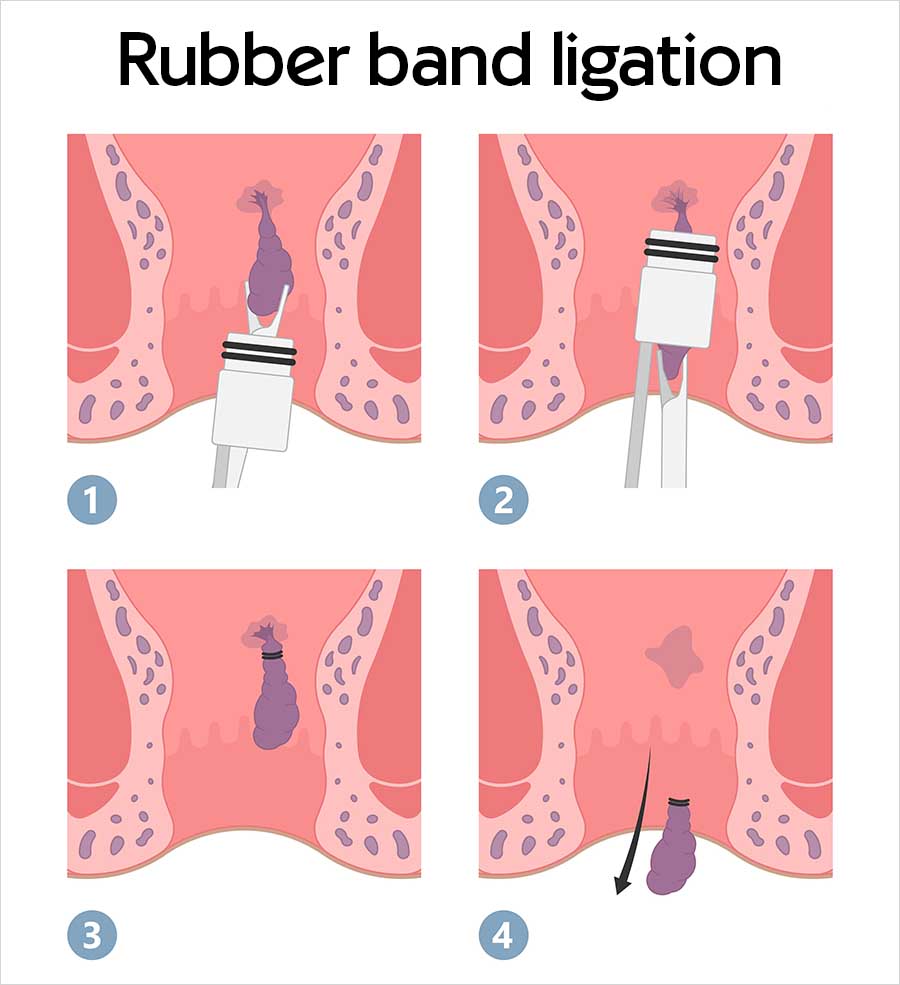
Rubber band ligation is a quick outpatient procedure that usually takes 5–10 minutes.
During the procedure
- You will not need an anaesthetic – there are no pain‑sensing nerves at the top of the anal canal.
- Your consultant will examine your back passage using a small telescope.
- A device is passed through the telescope to place a silicone band around the base of the haemorrhoid.
- You may be asked if you feel any pain. If so, the band can be repositioned.
- The band blocks the blood supply, causing the haemorrhoid to shrink.
- The banded haemorrhoid falls off naturally within 7–14 days. Most patients, however, do not feel the band come off.
How long does it take to recover from haemorrhoid banding?
Going home
You can go home shortly after the procedure. A little bleeding, discomfort or feeling faint is common and usually settles quickly. Do not drive if you feel light‑headed.
Returning to normal activities
- Most patients return to work the next day
- You can drive once you feel comfortable and alert
- Flying is usually safe, but check with your consultant if you have concerns.
Diet and bowel habits
- Drink plenty of fluids
- Increase fibre to keep stools soft
- Avoid straining
- Take any laxatives recommended by your consultant.
What to expect
- Mild discomfort or pressure for a day or two
- Light bleeding when the band falls off
- A feeling of fullness in the back passage.
Haemorrhoids can come back, but you can reduce this risk by avoiding constipation and straining.
If symptoms continue, especially bleeding, it’s important to make your doctor aware immediately.
What are the benefits of rubber band ligation?
Rubber band ligation is:
- Quick and minimally invasive
- Performed without anaesthetic
- Effective for many internal haemorrhoids
- Associated with minimal downtime
- Can be repeated if needed.
Around 5 in 10 people experience significant improvement after one treatment, and some may need more than one session.
Results can be long‑lasting, especially when bowel habits are well‑managed.
What are the risks and possible complications of rubber band ligation?
Complications are uncommon, but may include:
- Infection
- Bleeding (especially when the band falls off)
- Pain or discomfort
- Feeling faint or light‑headed
- Urinary issues
- Recurrence of haemorrhoids.
Banding doesn’t usually affect bowel control. If symptoms persist, your consultant may recommend further treatment.
How much does rubber band ligation cost at Nuffield Health?
Select your local Nuffield Health hospital to find contact details and guide prices for rubber band ligation for haemorrhoids. Please note that the stated guide price is only an approximate cost of treatment. You will be given a fixed all-inclusive price for treatment following your initial consultation with a consultant.
FAQs
-
Can haemorrhoids come back after rubber band ligation?
Yes, recurrence is possible, especially if constipation continues.
-
Will I need more than one rubber band ligation treatment?
Some people need repeat banding sessions for best results.
-
What is the first bowel movement like after rubber band ligation?
It may feel slightly uncomfortable and may cause light bleeding.
-
How quickly do haemorrhoids fall off after rubber band ligation?
Usually within 7–14 days.
-
Is it normal to see the rubber band in your stool?
Yes, most people don’t notice it, but it may appear in the toilet.
-
Can I take ibuprofen after rubber band ligation?
Your consultant will advise on suitable pain relief.
-
Can I get rubber band ligation on the NHS?
Yes, you can. Availability varies by region and referral criteria.
Ways to pay
Nuffield Health promise
Our prices are all-inclusive. We will equal any comparable price. There are no time limits on your aftercare.
Paying for yourself
There are no hidden costs in our treatment prices. The price you see is the price you pay.
Find out morePersonal medical loan
Spread the cost of your treatment with a 10, 12 or 24 month 0% personal medical loan.
Find out moreMedical insurance
We work with you and your insurance provider to get you the treatment you need quickly.
Find out more