
Removal of eyelid cysts, lumps, bumps and tumours
- Overview
Reviewed on Tuesday 4 August 2026 by a General Practitioner (GP).
What is eyelid cyst, lump, bump or tumour removal?
Like any other part of your body, eyelids can develop cysts, lumps, bumps, and even tumours. In fact, they are very common. While some can disappear on their own, sometimes you need to remove them to prevent irritation, vision problems, or, in some cases, more serious consequences. This is usually done in a simple outpatient procedure, enabling you to go home the same day.
What are the different types of eyelid cysts, lumps, bumps and tumours and how are they treated?
There are many different types of eyelid growths, with individual characteristics and causes, including but not limited to:
Chalazion
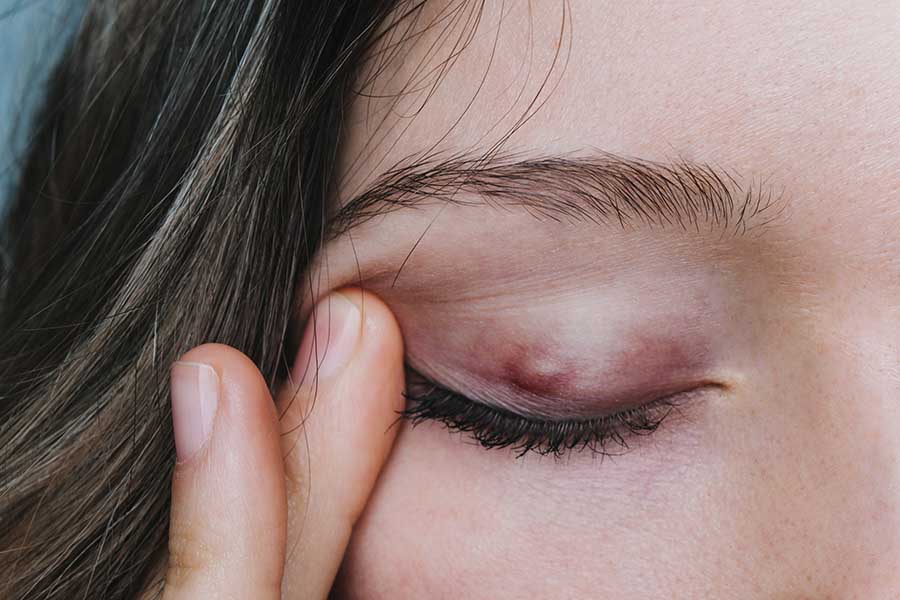
A chalazion cyst is a small, painless lump found on your eyelid. It’s caused by a blocked oil gland, called a meibomian gland. For this reason, it’s also sometimes called a meibomian cyst. It looks like a firm bump in your upper or lower eyelid. When the bump first appears, you may feel discomfort or tenderness, and sometimes it can grow large enough to interfere with your vision.
How to treat a chalazion eyelid cyst
Most chalazion cysts go away on their own without any treatment. However, a warm compress, gentle massage and good eyelid hygiene can help to reduce the blockage and help it clear more quickly. In rare cases, it may be necessary to drain a chalazion cyst to completely remove it.
Xanthelasma
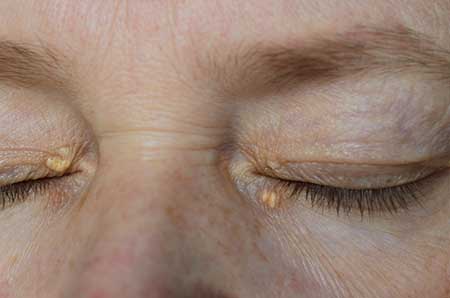
Xanthelasma is a yellow-tinted plaque that appears on or around your eyelids. It’s caused by cholesterol deposits that collect under your skin, which can suggest that you may have high cholesterol or other health conditions. It’s usually painless and appears as flat or raised patches, usually near the inner corners of your upper eyelids.
How to treat xanthelasma
Treatment for xanthelasma is usually more to ease its appearance, rather than because there is a medical need. However, it may also trigger a referral to another health specialist to determine the cause of your condition. Treatment usually takes the form of laser therapy, cryotherapy or surgery, and sometimes several sessions are needed.
Stye
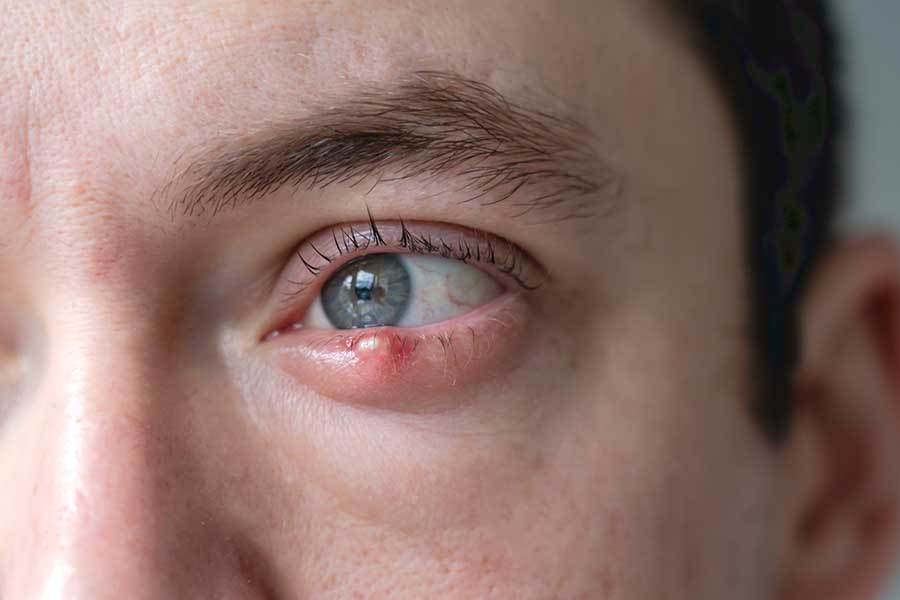
A stye is one of the most well-known types of eye cyst, located on the edge or inside of the upper or lower eyelid. It looks like a red lump on your eyelid, and it’s usually painful when you touch it and may even hurt when you don’t. It may have a head, like a pimple or boil, and may contain pus. It normally only affects one eye, but with poor eye hygiene, it could spread to the other.
Styes are caused by a bacterial infection in one or more of your eyelash follicles, or in one of the small oil glands found in your eyelid. If the swelling starts to press on your eye, it could cause irritation, tearing, grittiness and mild blurred vision.
How to treat a stye
Good eye hygiene is crucial for treating the infection. You should keep your eyelids clean and stop wearing eye makeup and contact lenses. Always use a fresh cotton pad to clean each eye; never share one between the two. Warm compresses can also help relieve discomfort. In some cases, you may need a course of topical or oral antibiotics to treat the infection.
Milia
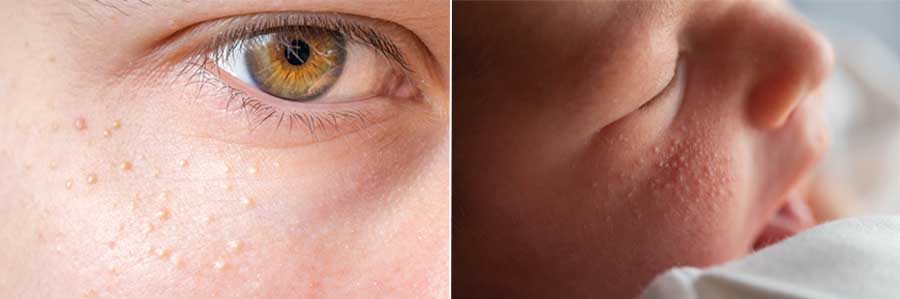
Milia are tiny, white or pearlescent bumps that form under the skin around your eyes. They aren’t itchy or contagious and may form in patches. They can also be found in other areas of your body, including your forehead and chin. Milia is most common in newborn babies but can occur at any age. They are caused by a skin protein called keratin becoming trapped and forming little cysts.
How to treat milia
Milia usually go away on their own without any intervention, although it can take several months. It’s important not to pick them or squeeze them, as this could cause an infection.
Papilloma
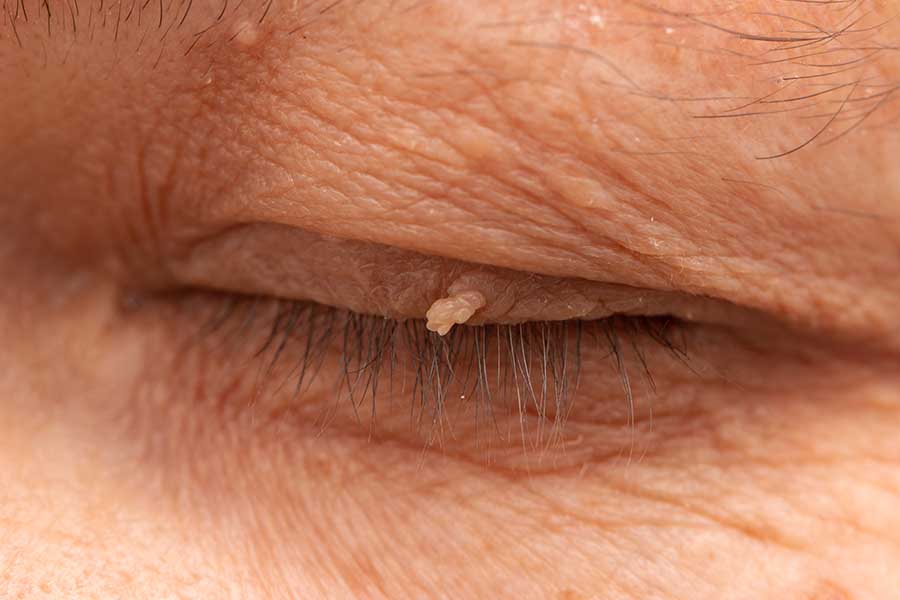
A papilloma is the term used to describe a non-cancerous tumour that forms either on your eyelid or the white surface of your eye. It can appear like a skin-coloured lump or slightly raised bump. Papillomas can be smooth or rough and are often attached by a stalk. They are more common in middle-aged or older adults, although in some cases they are caused by a virus, such as human papillomavirus (HPV).
How to treat papilloma
Most eyelid papillomas don’t need treatment and can be safely observed, especially if they’re small and not causing any bother. If the bump is irritating, growing, cosmetically unwanted, or there’s any doubt about the diagnosis, an ophthalmologist or dermatologist can remove it in a quick outpatient procedure under local anaesthesia.
Hidrocystoma/cyst of Moll
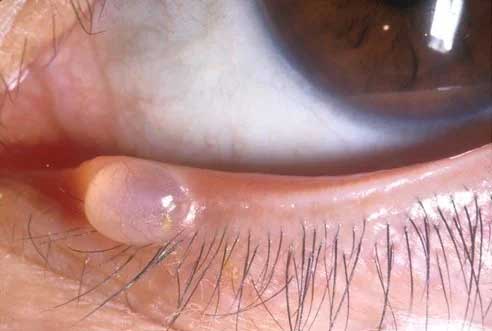
A hidrocystoma, also known as a cyst of Moll, is a benign (non-cancerous), fluid-filled cyst that appears as a small, round and shiny growth. It can be flesh-coloured, clear or appear blue-grey, and usually forms on the edge of the eyelid. They are caused by an obstruction of a sweat gland.
How to treat hidrocystoma
In most cases, minor surgery is used to remove the cyst if it is causing discomfort or obstructing your vision. Alternative treatments include laser therapy and sclerotherapy.
Malignant eyelid tumours
Malignant eye tumours are rare, accounting for less than 10% of all skin cancers. The most common types are known as basal cell carcinoma (BCC) and squamous cell carcinoma (SCC). BCC tumours generally look like pearly or waxy-coloured bumps, while SCC tumours can appear as red, scaly, crusted patches.
Malignant eyelid tumours can be caused by several factors, but the most common, like other skin cancers, is cellular damage from UV radiation. Other causes include a weakened immune system, viral infections such as those seen in human papillomavirus (HPV) and a family history of malignant eyelid tumours.
How to treat malignant eyelid tumours
Exactly what treatment looks like for a malignant eyelid tumour will depend on your individual circumstances, including the type, size and location of your tumour, and the recommendations of your medical team. Treatment could include surgery to remove the tumour, radiotherapy, chemotherapy and immunotherapy.
Can eyelid cysts be cancerous?
Yes, eyelid cysts can be cancerous, although it’s very rare. Studies estimate that up to 90% of reported eyelid cysts, lumps and bumps are benign.
Can an eyelid cyst go away on its own?
Some types of eyelid cysts go away on their own. However, since self-diagnosing one correctly can be extremely difficult, we strongly recommend that if you develop an unusual lump, bump or lesion on your eyelid, you make an appointment to get it checked with your doctor.
Who is suitable for eyelid cyst, lump, bump or tumour removal?
Everyone is different, and you’ll need to have a consultation to determine the type of cyst you have before discovering whether removing it is the best course of action.
Not all recommendations for eyelid cyst removal are medical. Sometimes people choose to undergo treatment to improve the appearance of their eyes, such as in the case of xanthelasma. And some people need treatment to remove a cyst that is affecting their vision.
Can children have eyelid cyst removal surgery?
Yes, children may be able to have eyelid cyst removal. However, each case is judged on an individual basis.
Who may not be suitable for eyelid cyst removal surgery?
You may not be suitable for eyelid cyst removal surgery if:
- your cyst isn’t causing you any bother
- you have an active infection or eye inflammation
- you have an uncontrolled bleeding disorder, or you are on blood-thinning medication
- you have poorly controlled health conditions like diabetes or heart disease
- you will be unable to follow the specific aftercare instructions provided.
How should I prepare for eyelid cyst, lump, bump or tumour removal?
As with any surgery, it’s important to follow any pre-operative instructions provided by your medical team. This is known as prehabilitation and can help to minimise your risk of complications during surgery and accelerate how quickly you recover.
You may be advised to:
- temporarily stop taking regular medications
- stop smoking, as smoking is proven to increase your risk of complications and delay the recovery process
- limit your alcohol intake
- arrange for someone to bring you to your appointment and drive you home after your procedure
- arrive at your surgery appointment with a clean face that is free from makeup
- stop eating and drinking a certain number of hours before your surgery.
What happens during eyelid cyst, lump, bump or tumour removal?
Exactly what happens during your removal will depend on your individual growth. Local anaesthetic is used wherever possible, meaning you’ll be awake but unable to feel anything. You may also be given sedation to help keep you feeling calm and relaxed.
Typically, you’ll be given anaesthetic eye drops to numb the area, which are sometimes accompanied by anaesthetic injections into the eyelid. A clamp will be used to position your eyelid and keep it still so you can’t blink, while your surgeon uses tiny instruments to remove the cyst and any surrounding inflamed tissue. Some of the tissue that is removed, along with the tumour, is likely to be sent to the lab for evaluation.
Stitches, if needed, are usually dissolvable. You’ll be given a protective eye pad to keep over your eye to prevent you from inadvertently touching it. Once your surgery is complete, you’ll be able to go home the same day.
How long does eyelid cyst removal take?
It depends on the complexity of the removal, but most procedures take less than an hour.
Is eyelid cyst removal painful?
No, it shouldn’t be painful. You’ll be given anaesthetic to keep you as comfortable as possible. Some people report feelings of pressure, but not pain.
Will I be awake during the procedure?
Yes, your procedure requires general anaesthetic, which is rare. Children may be given a general anaesthetic to ensure that they remain still for the duration of their procedure.
How long does recovery take after eyelid cyst, lump, bump or tumour removal?
Recovery after eyelid cyst removal surgery is usually fairly fast and straightforward, with most people able to return to their usual activities within a few days.
A typical recovery timeline looks like this:
The first 24 hours after surgery
You may experience some mild swelling, bruising and soreness and may want to take some pain relief to help you manage your discomfort. You’ll be given an eye pad to wear to protect the area and help keep it clean, and you can remove this after a few hours or wear it overnight if it’s more comfortable to do so. You’ll also need to arrange for someone to drive you home after your appointment. Antibiotic eyedrops will be prescribed for you, and you should take these exactly as directed.
The first week
If you continue experiencing discomfort, you can take over-the-counter pain relief to help. You should be able to go back to work and virtually all other regular activities, but your eyes may still appear puffy and bruised. You won’t be able to wear contact lenses or eye makeup for at least a week, and you should continue to take your antibiotic eyedrops. Avoid swimming or getting water into your eyes for at least a week.
Four weeks and beyond
By four weeks after your surgery, most of the swelling and bruising should have subsided, and the incisions should be fully closed so you will be able to resume swimming. It could take several months for all the residual inflammation to go down, to reveal the final cosmetic result of your treatment.
Will eyelid cyst removal leave a scar?
Although eyelid cyst removal can leave a scar, it’s usually very small and barely noticeable. Wherever possible, your surgeon will try to make the incision on the inner surface of the eyelid, or in a natural crease to hide any scarring.
What are the risks and complications of eyelid cyst, lump, bump or tumour removal?
As with any surgery, there are always some risks and complications that you should be aware of, even if they are very rare. For eyelid cyst, lump, bump or tumour removal they include, but aren’t limited to:
- swelling around your eyelid
- bruising
- infection at the site of the incision
- minor bleeding from your eye
- keloid scar formation
- temporary skin changes at the site of the incision.
What happens if an eyelid cyst or lump is left untreated?
It depends on the type of eyelid lump you have. In some cases, an eyelid bump may disappear on its own. In other cases, such as a malignant eyelid tumour, it is essential to have it removed as soon as possible to prevent further health consequences.
How much does eyelid cyst, lump, bump or tumour removal cost at Nuffield Health?
Please select your local Nuffield Health hospital to find contact details and guide prices.
Please note that the stated guide price is only an approximate cost of treatment. You will be given a fixed all-inclusive price for treatment following your initial consultation with a consultant.
FAQs
-
Can I wear contact lenses after eyelid cyst removal?
Yes, but you will have to wait at least a week. This is to allow your incisions time to heal, and to reduce the risk of developing an infection.
-
Can I wear makeup after eyelid cyst removal?
Yes, but again, you should wait until your incisions are fully healed. This is because makeup can become contaminated with bacteria, which could transfer to your eyes and cause an infection.
-
Will I need to wear an eye patch after the procedure?
You will be advised to wear an eye patch following your eye cyst removal. This will help protect the incisions during the initial healing stage, minimise the risk of infection, and prevent you from inadvertently touching or rubbing your eye.
-
How do I prevent eyelid cysts from coming back?
You can’t necessarily prevent eyelid cysts from coming back. Again, it depends on the type of lump that forms, but good eye hygiene can help reduce the risk of meibomian gland cysts and eye infections developing.
Ways to pay
Nuffield Health promise
Our prices are all-inclusive. We will equal any comparable price. There are no time limits on your aftercare.
Paying for yourself
There are no hidden costs in our treatment prices. The price you see is the price you pay.
Find out morePersonal medical loan
Spread the cost of your treatment with a 10, 12 or 24 month 0% personal medical loan.
Find out moreMedical insurance
We work with you and your insurance provider to get you the treatment you need quickly.
Find out more