
Lumpectomy (breast-conserving surgery)
- Overview
Reviewed on Thursday 30 July 2026 by a General Practitioner (GP).
A lumpectomy offers a safe and effective way to treat breast cancer while keeping your breast intact, removing only the affected area and helping you move forward with confidence.
What is a lumpectomy?
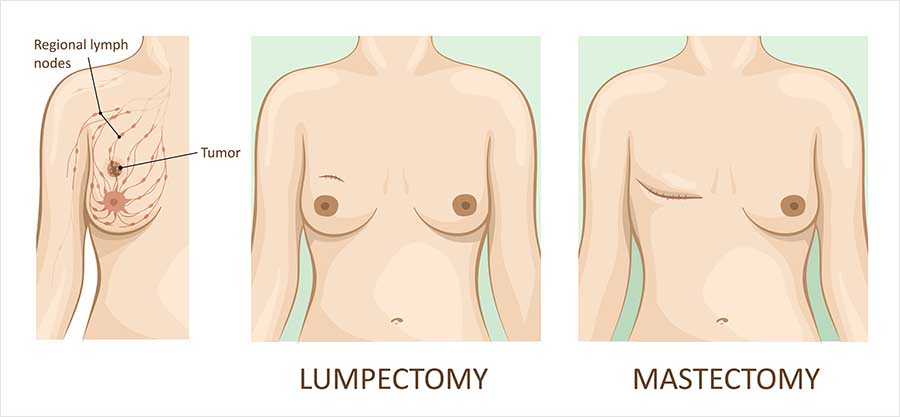
A lumpectomy, also known as breast-conserving surgery or wide local excision, is an operation to remove a breast cancer together with a margin of surrounding healthy tissue. Unlike a mastectomy, which removes the whole breast, a lumpectomy aims to conserve as much breast tissue as possible while ensuring the cancer is fully removed. Your surgeon may also remove lymph nodes from your armpit to check whether cancer cells have spread, which helps guide any further treatment.
Lumpectomy is expertly carried out at Nuffield Health to treat many types of early breast cancer, including ductal cancers, invasive cancers and some non-invasive cancers such as Ductal carcinoma in situ (DCIS).
What are the benefits of lumpectomy?
Surgery offers the best chance of being free of early breast cancer. When combined with radiotherapy, breast conserving surgery is as effective as mastectomy for many early stage cancers.
The removed breast tissue and any lymph nodes are examined under a microscope to confirm the cancer has been fully removed and to determine whether additional treatment is needed.
Why might I need a lumpectomy?
Your consultant may recommend a lumpectomy if:
- You have early breast cancer that can be safely removed without removing the whole breast
- Imaging shows a single area of disease
- You prefer to preserve your breast shape
- You are suitable for radiotherapy after surgery.
What types of breast cancer can be treated with a lumpectomy?
Lumpectomy is commonly used for:
- Early invasive breast cancer
- Ductal carcinoma in situ (DCIS)
- Small or moderate-sized tumours relative to breast size
- Cancers that have not spread widely through the breast
Your breast care team will advise whether lumpectomy is appropriate for your specific diagnosis.
Diagnosis usually involves a combination of the following:
- A mammogram
- An ultrasound
- A needle biopsy
- An MRI (in selected cases)
These tests help your surgeon plan the operation and determine whether lymph nodes need to be checked.
Who is suitable for a lumpectomy?
You may be suitable if:
- The cancer is small relative to your breast size
- There is only one area of disease
- You’re able to have radiotherapy after surgery
- You prefer breast conserving treatment.
Who is not suitable?
Lumpectomy may not be recommended if:
- The tumour is large or involves several areas of the breast
- You have previously had radiotherapy to the breast
- You’re pregnant (radiotherapy may need to be delayed)
- Clear surgical margins cannot be achieved safely.
Your surgeon will discuss the best option for you.
What are the alternatives to lumpectomy surgery?
Alternative options include:
- Mastectomy: Involves the removal of the whole breast.
- Lumpectomy with reconstruction: Involves reshaping the breast at the same time
- Non-surgical treatments: Such as hormone therapy, chemotherapy or biological therapy – these may shrink or control cancer but rarely cure it alone.
Lumpectomy vs mastectomy: what’s the difference?
For early breast cancer, lumpectomy followed by radiotherapy is just as effective as mastectomy. Mastectomy may still be recommended depending on tumour size, location or personal preference.
How should I prepare for a lumpectomy?
Tests and assessments before surgery
Before your operation, you'll have a pre-operative assessment with your healthcare team. This is a chance for them to go through your medical history and check the medicines you take, including any blood thinners, vitamins or herbal supplements, and hormone replacement therapy (HRT), as some of these may need to be paused beforehand.
The team will talk through your anaesthetic options (the medicine that keeps you comfortable and, in most cases, asleep during the operation) and confirm whether your lymph nodes will need to be removed. Lymph nodes are small glands under the arm that breast cancer can spread to first. If any further scans are needed, these can usually be done at the same visit or soon after. Please bring a list of your medicines, and do ask the team any questions you have.
Preparing in the days before surgery
- Avoid shaving or waxing the breast or armpit for a week before surgery, as small nicks in the skin can increase the risk of infection
- Shower the day before or on the day of surgery
- Keep warm and let the team know if you feel unwell, even something minor like a cold or cough
- If you smoke, stop now as it lowers the chance of complications and helps your wound heal
- If you take HRT, your surgeon may advise stopping it for a period of time before the operation
- If you are diabetic, keep blood sugar well controlled.
What to bring on the day
- A comfortable, supportive bra
- Loose clothing
- Your medication list
- Any questions you want to ask your surgeon.
What happens during a lumpectomy?
A lumpectomy is usually performed under general anaesthetic and can take about 1 hour.
During the procedure:
- Your surgeon makes a cut in the breast, depending on the tumour’s location
- The cancer is removed with a rim of healthy tissue
- An X-ray of the removed tissue may be taken to ensure the cancer has been fully excised
- Lymph nodes may be removed through the same cut or a separate incision:
i. Sentinel node biopsy — 1–2 targeted nodes
ii. Axillary sampling — 4–5 nodes
iii. Axillary clearance — most lymph nodes - The wound is closed with stitches, clips or glue
- A drain may be inserted to remove excess fluid.
If the surgical margins are not clear (i.e. cancer cells were found close to the edge of the tissue that was removed), then you may need another operation.
My recovery after a lumpectomy
Going home
Most patients go home the same day. You may feel sore, tired or swollen, but rest assured this is normal.
Support at home
If you had a general anaesthetic:
- A responsible adult must take you home and stay with you for 24 hours
- Do not drive, operate machinery or cook for 24 hours
- Avoid alcohol and signing legal documents.
Pathology results
Your results are usually available 2–4 weeks after surgery. You’ll return to the hospital to discuss them and any further treatment.
Driving and daily activities
- Do not drive until you can safely control your vehicle and wear a seatbelt comfortably
- Check your insurance policy before driving
- Avoid heavy lifting or strenuous activity for 3 weeks
- Build up gentle exercise gradually
- Wear a soft, supportive bra day and night for comfort.
Flying
You may need to wait before flying – double-check with your airline or national aviation authority before booking.
Returning to work
Most patients return to work within 1–2 weeks, depending on their job and how they feel.
Showering
You can usually shower after 48 hours, but check with your breast care team.
What to avoid
- Heavy lifting
- High impact exercise
- Upper body weight training
- Activities that strain the chest or shoulder.
What are the risks and complications of a lumpectomy?
Complications are uncommon but may include:
- Pain or shooting sensations in the breast
- Infection
- Bleeding or bruising
- Blood clots (Deep vein thrombosis, DVT)
- Seroma (the collection of fluid at the surgical site)
- Haematoma (the collection of blood at the surgical site)
- Fat necrosis (firm lump caused by damaged fat tissue)
- Stiff shoulder
- Numbness or nerve irritation
- Lymphoedema (arm swelling), especially if lymph nodes are removed.
When to seek help
Contact your breast care team urgently if you develop:
- Fever or chills
- Increasing redness or swelling
- Pus from the wound
- Heavy bleeding
- Severe pain
- Shortness of breath or chest pain
How much does a lumpectomy cost at Nuffield Health?
For pricing information, please contact your local hospital. The hospital or your healthcare team will give you a fixed all-inclusive price for the treatment following your initial consultation.
FAQs
-
Can cancer come back after lumpectomy?Yes, but radiotherapy can significantly reduce this risk.
-
Will I need chemotherapy or hormone therapy after a lumpectomy?Your team will advise based on your pathology results.
-
Will I need radiotherapy after a lumpectomy, and when does it start?Most patients do; it usually starts a few weeks after surgery.
-
Does breast tissue grow back after lumpectomy?Breast tissue doesn’t regrow, but swelling settles over time.
-
How will a lumpectomy affect the appearance of my breast?Your breast may look slightly different; this often improves as swelling settles.
-
Will a lumpectomy leave me with a scar?Yes, but scars usually fade over time.
-
Can I have breast reconstruction after a lumpectomy?Yes, you can. Options include reshaping the breast or balancing surgery on the other breast.
-
What follow-up care will I receive?You’ll have a follow-up appointment with your consultant to discuss results and any further treatment.
Ways to pay
Nuffield Health promise
Our prices are all-inclusive. We will equal any comparable price. There are no time limits on your aftercare.
Paying for yourself
There are no hidden costs in our treatment prices. The price you see is the price you pay.
Find out morePersonal medical loan
Spread the cost of your treatment with a 10, 12 or 24 month 0% personal medical loan.
Find out moreMedical insurance
We work with you and your insurance provider to get you the treatment you need quickly.
Find out more