
Lens replacement surgery (refractive lens exchange)
- Overview
Reviewed on Monday 18 May 2026 by a Consultant Ophthalmologist.
If you're tired of relying on glasses or contact lenses to see clearly, lens replacement surgery could offer a lasting solution - a procedure to correct common vision problems by replacing your eye's natural lens with an artificial one. At Nuffield Health, our eye surgeons are experienced at performing lens replacement surgery, offering personalised care, modern techniques and clear guidance at every step.
What is lens replacement surgery?
Lens replacement surgery, also known as refractive lens exchange (RLE), is a type of eye operation that is used to correct refractive eye errors that result in vision problems such as near- or farsightedness.
The procedure involves removing the natural lens of your eye and replacing it with an artificial alternative called an intraocular lens (IOL). It’s often confused with cataract surgery, which also involves replacing the lens of the eye. However, they aren’t quite the same.
Lens replacement surgery offers a permanent alternative to laser eye surgery and wearing glasses or contact lenses. It should be viewed as cosmetic surgery because your vision can be improved with glasses or contact lenses, so the surgery is not essential like cataract surgery.
What are refractive eye errors?
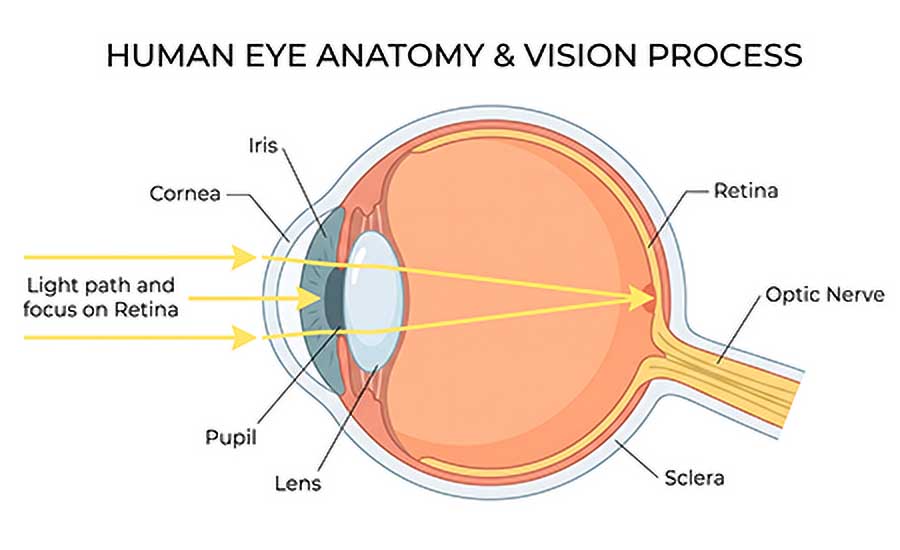
To better understand how lens replacement surgery works, it’s also important to understand how refractive eye errors occur. Refractive eye errors take their name from the fact that they are caused by issues with the way that light is focused on your eye.
How your eye works is fairly straightforward. Light enters the front part of your eye, passing through your cornea (the dome-like transparent covering) and pupil to reach the lens, which is a disc-shaped structure that sits behind your iris (the coloured part of your eye). The purpose of the lens is to focus the light onto your retina, which is the area of light-sensitive cells at the back of your eye. In refractive errors, the light is focused incorrectly, leading to your vision appearing blurred.
Refractive errors can be broken down as follows:
- Nearsightedness (myopia): you can see nearby objects, but those further away appear increasingly blurry.
- Farsightedness (hyperopia): you can see objects that are further away, but those closer to you appear blurred. In some cases of higher prescriptions, everything is blurred.
- Astigmatism: your vision can appear blurred and distorted at all distances. This happens if you have a cornea that is shaped more like a rugby ball than a football.
- Presbyopia: caused by the natural hardening of the lens of your eye which prevents it from focusing properly; this normally starts setting in around the age of 40 and means that you start to need reading glasses.
How common is lens replacement surgery in the UK?
Lens replacement surgery is very common in the UK – whether that’s as part of cataract surgery, or as a treatment for a refractive error. It’s considered safe, effective and suitable for a wide range of people.
What are the benefits of lens replacement surgery?
There are several benefits associated with lens replacement surgery. These include but aren’t limited to:
Permanent vision correction
If you’re fed up with wearing glasses or contact lenses, but you aren’t a good candidate or don’t want to go down the route of laser vision correction, RLE could be a great alternative. And unlike laser vision correction which can need to be repeated, the artificial lens won’t deteriorate, change shape or lose its focusing power, meaning it's a permanent treatment for refractive errors like myopia and astigmatism.
Cataract prevention
Since IOLs are made from artificial material, they can’t develop cataracts in the same way that a natural lens can. This means if you have IOLs, you won’t ever develop cataracts or need cataract surgery.
No need for glasses and contact lenses
Getting artificial replacement lenses can severely reduce or even eliminate your need for prescription eyewear, saving you money and hassle.
Fast recovery
It’s natural to have concerns about recovering from eye surgery, but with refractive lens exchange, you can normally see clearly enough to get back to your usual activities in just a couple of days. And with the procedure being fast and painless, it’s a lot easier than most people expect.
What conditions can lens replacement surgery treat?
Lens replacement surgery can be used to treat all types of refractive eye error, including nearsightedness (myopia), farsightedness (hyperopia), astigmatism and presbyopia. Intraocular lenses can also be used following cataract surgery.
What causes the lens in the eye to deteriorate?
The main cause of deterioration in the natural lens of the eye is the ageing process. As you get older, your eyes undergo lots of normal changes. This includes the lens starting to become harder and stiffer, affecting its ability to focus light correctly. The lens also contains proteins, and as you get older, these start to clump together, causing cloudy patches called cataracts.
Who is suitable for lens replacement surgery?
You may be a suitable candidate for lens replacement surgery if you:
- Are over the age of 50, as this is when most age-related eye problems start to cause symptoms
- Have a stable refractive eye error such as myopia or astigmatism (your prescription isn’t changing all the time)
- Have a diagnosis of cataracts and they are affecting the quality of your vision
- Are unsuitable for laser vision correction, such as LASIK
- Have healthy eyes, including a healthy cornea, retina and optic nerve.
Who is not suitable for lens replacement surgery?
You may not be able to have lens replacement surgery if you have:
- Any active eye infections
- Moderate to advanced glaucoma, dry eye or macular degeneration
- Uncontrolled diabetes
- Don’t have realistic expectations for the outcome of your surgery.
Can I have lens replacement surgery if I have astigmatism?
Yes, you can have lens replacement surgery if you have astigmatism, but you’ll need a specialist type of IOL called a toric IOL. These are designed to correct the curve of your eye so that light is focused onto one single point on your retina rather than multiple locations. Research shows that with toric lenses, the number of patients who never need glasses rises from approximately 15% to 85%.
What are the alternatives to lens replacement surgery?
Lens replacement surgery tends to be the last line of treatment, with any alternatives usually having been tried already. They include glasses and/or contact lenses, or laser eye surgery such as LASIK.
There are also a few more surgical alternatives to refractive lens exchange. They include:
- Implantable Collamer Lens (ICL): Instead of removing the natural lens, an implantable collamer lens sits on top of it. It’s permanent yet can be removed if necessary. ICL’s are more commonly reserved for younger patients.
- Intacs: Intacs are small prescription-strength inserts which are placed directly into the eye to improve vision.
Lens replacement surgery vs laser eye surgery - which is right for me?
Many people confuse laser eye surgery with lens replacement surgery, but they aren’t the same. Laser vision correction is a procedure to reshape your cornea, which is transparent, domed outer layer of your eye to correct your vision. Meanwhile, lens replacement surgery exchanges the old lens for a new, artificial one.
Which is right for you will depend on your individual circumstances, but age tends to be one of the biggest differentiating factors, with people under the age of 45 often opting for laser vision correction over refractive lens exchange.
If you’ve had laser eye surgery previously, your eye surgeon will need to take this into account when planning what intraocular lens you’ll need as part of your refractive lens exchange.
Can vision problems be corrected without surgery?
Yes, vision problems can be corrected with non-surgical treatments such as glasses or contact lenses. However, these don’t provide any sort of permanent change. Laser vision correction, cataract surgery and lens replacement surgery all offer a permanent solution for an array of visual errors.
How should I prepare for lens replacement surgery?
As with any medical procedure, taking steps to prepare can help ensure that everything goes as smoothly as possible, reduce your risk of complications and support a swift recovery.
Your surgical team will advise you what you can do ahead of your appointment, but this usually involves eating a healthy, balanced diet, staying hydrated, getting regular exercise and generally optimising your wellbeing as much as you can. If you smoke, try to stop. Not only is it bad for your overall health, but it can increase your risk of complications and make it take longer to heal.
What assessments and eye tests will I need beforehand?
You’ll need to undergo a variety of tests and assessments to evaluate your suitability for surgery, and to plan for which intraocular lens will be best for you.
Some of these tests may include:
- Visual acuity testing: this looks at how good your vision is at different distances.
- Dilated fundus exam: which checks your retina, optic nerve and macula for issues which could affect the outcome of your surgery.
- Biometry: this refers to tests that measure the shape and size of the various elements of your eye to help plan which IOL you need.
- Corneal topography: a map of the shape and thickness of your cornea.
- Tonometry: a pressure test that checks your risk of glaucoma.
Your eye doctor will be able to explain what to expect from each of these tests and allow you to ask any questions you may have.
What happens during lens replacement surgery?
Lens replacement surgery is usually fast and straightforward. It’s performed as a day case procedure, meaning you’ll be able to go home the same day.
The actual procedure of a refractive lens exchange surgery usually takes less than 30 minutes. However, with preparation and post-operative monitoring time, you should really allow around half a day for your surgery.
Your surgery will start with anaesthetic eye drops which will numb your eye to help keep you as comfortable as possible. You may also have an anaesthetic injection around the eye.
Once your eye is numb, a small incision will be made into your cornea. This is used to access the natural lens of your eye. A tiny probe is inserted into the incision. This emits sound energy to break down the natural lens, the pieces of which are removed via light suction.
Your chosen IOL is then passed through the incision where it unfolds and slips into place. And since the incision is so small, it should heal on its own, without the need for stitches.
What are the different types of intraocular lens (IOL)?
There are a variety of different types of intraocular lens implants, including:
- Monofocal lenses: Monofocal IOLs offer clear vision at one specific distance – usually far away. They are the most common type of IOL but you still need reading glasses if you choose strong distance vision.
- Multifocal lenses: Also known as bifocal lenses, these IOLs can be used to correct your vision at two distances - near and far. They do this by having different zones within the lens, and your eye adjusts to looking through the correct zone based on the distance you’re viewing. They are ideal for people over the age of 40/45 who require prescription lenses to read clearly as well as see distances. Multifocal IOLs have a success rate of between 90% and 96% of people achieving 20/40 vision or better.
- Trifocal lenses: These IOLs include an intermediate section, enabling you to see more clearly at all distances. They are very effective, with 90% to 95% of people achieving visual acuity that they are happy with.
- Extended Depth of Focus (EDOF) lenses: These are another type of multifocal lens that provide some near vision but reduce disturbances such as glare and halos of light, which can be a problem with other types of multifocal lenses.
- Toric lenses: Toric lenses are specifically designed to treat astigmatism. They do this by having different powers in different parts of the lens which compensate for the unusual curve of the lens seen in astigmatism. They too have a high success rate, with studies showing 70% to 80% effectiveness in reducing astigmatism. Toric versions of all the above lenses are available to correct your vision completely.
Will I be awake during lens replacement surgery?
Yes, lens replacement surgery is almost always carried out using local rather than general anaesthetic. This means that you’ll be awake for the duration of your treatment.
Is lens replacement surgery painful?
Lens replacement surgery shouldn’t be painful. It’s carried out using local anaesthetic, which numbs the eye. You’ll need to wear a cover over your eye to make sure you don’t rub or scratch it, just in case it does feel irritated.
How long does it take to recover from lens replacement surgery?
One of the most popular benefits of lens replacement surgery is that it has a very swift recovery time. You may experience mild irritation, watering and blurred vision for up to 48 hours, but then this should very quickly improve.
How soon will I notice an improvement in my vision after lens replacement surgery?
Most people find that their vision starts to improve in as little as 24 hours after surgery, with optimal improvement reached at around a month after surgery. If you’ve got any concerns about your rate of recovery, always speak to a member of your surgical care team.
When can I watch TV or use a screen after lens replacement surgery?
It’s usually advisable to let your eyes rest for at least 24 hours after surgery. This can help kickstart the healing process and ensure that you aren’t putting them under any unnecessary stress or strain. However, always follow the guidance of your healthcare team.
When can I return to work after lens replacement surgery?
It depends on the type of job you have. If you work in an office, or have a very sedentary role, you may be able to go back to work in as little as 48 hours. However, you’ll need to be mindful to avoid any environments which could irritate your eyes, such as very cold, dry or dusty spaces.
If you have a job that involves more intense physical activity, it’s usually recommended to take at least four to six weeks off. Your consultant will be able to advise you.
When can I drive after lens replacement surgery?
You’ll need to be given the all-clear by your eye doctor to resume driving again after your lens replacement surgery, but most people can get back behind the wheel within 5 days. You’ll need to make sure you meet the minimum standard for driving and ensure you feel comfortable behind the wheel.
When can I exercise after lens replacement surgery?
You’ll be advised to avoid any strenuous exercise such as high-impact, aerobic activities like running, cycling and contact sports for at least four weeks. However, you can take part in light activities like walking 24 hours after your procedure.
You should also avoid getting water in your eyes for at least the first 3 days, to give them time to heal and reduce your risk of infection. Swimming should be avoided for a month after surgery.
What are the risks and complications of lens replacement surgery?
Lens replacement surgery is generally considered to be very safe, with a low risk of complications or side effects. However, as with any surgery, there are some risks you should be aware of. These include but aren’t limited to:
- Infection
- Visual disturbances, such as glare and haloes around lights
- Light sensitivity
- Dry, gritty-feeling eyes
- Retinal detachment
- Posterior capsular opacification (when the membrane holding the IOL becomes cloudy)
- Dislocated IOL.
Your surgeon will explain these ahead of your procedure, including what to do if you have any concerns. No surgery is completely safe, and there is a 1 in 1000 risk of blindness after any eye surgery.
What happens if I leave my vision problem untreated?
If you’ve only got refractive eye errors, leaving them untreated could allow them to get progressively worse. This could lead to changing prescriptions and the need for increasing strength in your glasses or contact lenses. However, there are rarely any serious complications.
If you have cataracts and leave them untreated, your vision will also get progressively worse. However, since prescription changes can only treat cataracts to a point, and there’s no known cure, eventually you’ll need to have surgery to replace the cloudy lens, or your vision will be irreparably compromised.
How much does lens replacement surgery cost at Nuffield Health?
For pricing information, please contact your local hospital. The hospital or your healthcare team will give you a fixed, all-inclusive price for the treatment following your initial consultation.
FAQs
-
Is lens replacement surgery permanent?Yes, lens replacement surgery is permanent as the natural lens of your eye will be removed. However, the lens can be replaced again in the future in the unlikely event that you need it to be done. Occasionally you will develop some clouding of the bag that the new lens is supported by within the eye, called posterior capsular opacification, this is treated with a simple laser procedure in clinic called a YAG capsulotomy.
-
Will lens replacement surgery prevent me from getting cataracts?Yes. Intraocular lenses are made from artificial materials meaning that they can’t form cataracts.
-
Can lens replacement surgery be performed on both eyes at the same time?Yes, lens replacement surgery can be performed on both eyes at the same time. However, many people choose to have the procedure on one eye at a time to prevent their vision being compromised in both eyes while they heal. Speak to your eye doctor if you are considering having surgery on both eyes on the same day.
-
Will I still need glasses after lens replacement surgery?Potentially, yes. It’s important to have realistic expectations about lens replacement surgery. Many patients do achieve vision that enables them to be free of glasses and contact lenses, but there are some people who still have low reliance on prescription eyewear.
Ways to pay
Nuffield Health promise
Our prices are all-inclusive. We will equal any comparable price. There are no time limits on your aftercare.
Paying for yourself
There are no hidden costs in our treatment prices. The price you see is the price you pay.
Find out morePersonal medical loan
Spread the cost of your treatment with a 10, 12 or 24 month 0% personal medical loan.
Find out moreMedical insurance
We work with you and your insurance provider to get you the treatment you need quickly.
Find out more