
Ganglion cyst removal
- Overview
Reviewed on Tuesday 6 October 2026 by Mr Simon Harrison, Consultant Orthopaedic Surgeon at Nuffield Health Edinburgh Hospital.
A ganglion cyst is a harmless, fluid-filled lump that forms near a joint or tendon, most often on the wrist or hand. Many settle on their own, but some cause pain, limit movement or press on a nerve. Ganglion cyst removal is a short operation to remove the cyst and its root, and most people go home the same day. At Nuffield Health, our consultants can assess your symptoms, discuss your options and support your recovery.
What is ganglion cyst removal?
Ganglion cyst removal, also known as excision of a ganglion or ganglionectomy, is an operation to remove a ganglion. A ganglion is a fluid-filled lump that forms near a joint or tendon. Your surgeon aims to remove the whole cyst, including the small root that connects it to the joint or tendon underneath. It is usually a short procedure and you can often go home the same day.
What are the different methods of ganglion cyst removal?
There are two main ways to remove a ganglion:
- Open surgery: the surgeon makes a small cut directly over the cyst.
- Keyhole surgery: Some cysts near the wrist can be removed by keyhole surgery, called arthroscopy, using a camera and thin instruments passed through tiny cuts.
What is a ganglion cyst?
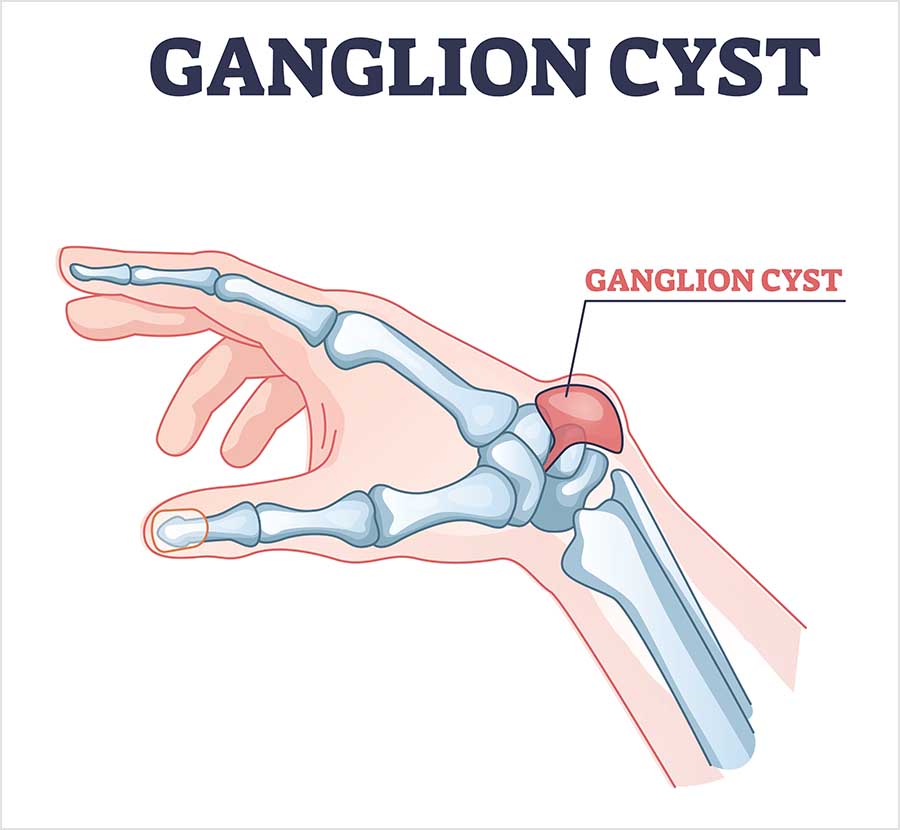
A ganglion cyst is a smooth lump that sits just under your skin, filled with a clear jelly-like fluid. It is often associated with a joint or a tendon. That fluid is akin to synovial fluid, the same fluid that cushions and lubricates your joints.
Ganglion cysts are not cancer and are harmless. They can range in size from being smaller than a pea to a few centimetres across.
Where on the body can a ganglion cyst occur?
Ganglion cysts usually form near a joint or tendon. The wrist is the most common place, with cysts forming on or near the wrist. They can also appear on the hand and fingers, and around the foot, ankle or knee.
What causes ganglion cysts?
The exact cause of a ganglion cyst is not entirely understood. There is often no precipitating cause, but some may appear after an injury, such as a sprain. It is thought that a ganglion forms when fluid leaks from a joint or tendon through a narrow channel and collects under the skin.
Who is most at risk of developing a ganglion cyst?
Ganglion cysts are the most common lump seen in the hand and wrist. Anyone can develop one. Sometimes there is a link with:
- A previous injury to a joint or tendon.
- Arthritis in a nearby joint.
- Activities that put repeated strain on the joint.
They are more common in women than in men and often appear between the ages of 20 and 50.
What are the symptoms of a ganglion cyst?
The main sign is a smooth lump under the skin, most often on the wrist or hand. It may be painless, or it may ache or hurt when you move the nearby joint. Often it changes in size and can come and go. If the cyst presses on a nerve, you may notice tingling, numbness, weakness or restricted movement in the area.
When should I see a doctor about a ganglion cyst?
See a GP if you are worried about a lump, if a lump gets bigger, or if it feels hard and does not move. Ask for an urgent GP appointment, or get help from NHS 111, if a lump becomes very painful, hot or red, as redness can be harder to see on brown and black skin.
When is surgery recommended for a ganglion cyst?
Surgery is usually suggested when a ganglion is causing you problems, such as pain, difficulty moving the joint, or pressure on a nerve. It may also be recommended if simpler treatments like draining the ganglion fluid have not helped, or if the cyst keeps accumulating. If your ganglion is not troubling you, it is often best to leave it alone.
Who is suitable for ganglion cyst removal surgery?
Ganglion cyst removal tends to suit people whose cyst is painful, limits movement or affects daily tasks, especially when non-surgical options have not worked. Your surgeon will look at your symptoms, general health and personal circumstances before recommending it.
Can I have ganglion cyst removal for cosmetic reasons?
Ganglion surgery is mainly offered when the cyst causes pain or restricts movement. Surgery may be considered if the appearance of the cyst bothers you or makes you feel self-conscious. However, with any surgery, the risks and benefits need to be weighed up. Your surgeon can talk through whether surgery is the right choice in your situation.
Who may not be suitable for ganglion cyst removal?
If your ganglion is not causing pain or getting in the way, surgery may not be recommended, as many cysts settle if left alone. Your general health and fitness for an anaesthetic are assessed beforehand. Your surgeon will discuss any personal reasons the operation might not be right for you.
What are the non-surgical alternatives to ganglion cyst removal?
Several options can help before or instead of surgery:
- Watchful waiting, leaving the cyst alone and keeping an eye on it, as many settle on their own.
- Painkillers or other non-steroidal anti-inflammatory drugs (NSAIDs) to ease pain and swelling.
- A wrist support, splint or brace to rest the joint and reduce discomfort.
- Aspiration, where a needle is used to draw off the fluid.
- A steroid (cortisone) injection to reduce swelling.
These treatments can relieve symptoms, but the cyst often returns because the root is still there.
Ganglion cyst removal vs aspiration: what's the difference?
Aspiration uses a needle to draw the fluid out of the cyst. It is quick, less invasive and can be done in a clinic, and it eases discomfort for a while, but the cyst often comes back because only the fluid is removed and the root stays in place. Surgery aims to remove the whole cyst, including the root, so the cyst is less likely to return.
How can I prepare for ganglion cyst removal?
Your medical team will give you advice on how to prepare. This may include:
- Telling your medical team about all your medicines, including blood thinners, NSAIDs, herbal remedies, supplements and anything bought over the counter, and mention any allergies.
- Follow their advice about stopping any medicines before the operation.
- If you are having a general anaesthetic, you will need to stop eating and drinking several hours before surgery.
- It is important to remove all jewellery prior to any procedure on the hand or wrist.
- Do not shave or wax the area in the week before surgery as these can increase the risk of infection.
- Stopping smoking and keeping to a healthy weight lower your risk of complications.
- Arrange for someone to take you home afterwards.
What happens at my pre-operative assessment?
At your first appointment, your consultant asks about your symptoms and general health and examines the lump, sometimes pressing on it or shining a light through it. You may have tests to confirm the diagnosis, such as an ultrasound, an MRI scan, or a needle sample of the fluid. Your anaesthetic options will be discussed with you, and you may be asked to stop taking some medicines before the day.
What happens during ganglion cyst removal?
A typical ganglion cyst removal follows these steps:
- You are given a local or general anaesthetic so you do not feel pain during the operation.
- Your surgeon makes a small cut over the ganglion.
- They separate the cyst from the nearby tendons, nerves and blood vessels.
- They remove the cyst along with the root that attaches it to the joint or tendon.
- The cut is closed with stitches or glue and covered with a dressing.
Because the root can sit deeper than the lump you can feel, the cut is sometimes larger than expected.
How long does ganglion cyst removal take?
The operation usually takes 15–30 minutes once the anaesthetic has taken effect.
Is ganglion cyst removal painful?
The anaesthetic means you should not feel pain during the operation. Afterwards you may have some pain or discomfort, which is controlled with painkillers, and you may be given local anaesthetic injections to help with pain once the operation is over. Take any pain medicine as advised so you can move around comfortably.
Will I need a general or local anaesthetic?
Both are possible, and your options will be discussed with you. Many ganglion operations are done under local anaesthetic, where you stay awake and the area is numbed. A general anaesthetic, where you are asleep, may be used depending on where the ganglion is and how deep it is.
How long does it take to recover from ganglion cyst removal?
Most people go home the same day and keep the treated limb raised to help swelling settle. Keep the wound dry for 4–5 days and cover it for a bath or shower. A sling usually comes off after about 48 hours and any splint after around 5 days, and full recovery generally takes 2–6 weeks.
You will normally have a follow-up appointment about 2 weeks after surgery, where your medical team checks the wound and advises on any stitches.
When can I return to work and normal activities after ganglion cyst removal?
This depends on your job and how your recovery is going. If your work involves heavy lifting, manual tasks or driving, you may need some time off. Your surgeon and medical team will tell you when it is safe to return to work and normal activities.
When can I drive after ganglion cyst removal?
You cannot drive yourself home, so we recommend you arrange a lift. If you had a general anaesthetic or a sedative, do not drive for at least 24 hours.
As the driver of the vehicle, you are responsible for the vehicle. Only drive once you can safely control the vehicle, including in an emergency stop. Always follow your surgeon's advice and check your car insurance.
When can I exercise after ganglion cyst removal?
Gentle movement of the fingers and wrist, or the toes and ankle, is encouraged early on to keep the joint supple. Build up your activity gradually as your surgeon advises, keeping in mind that full recovery usually takes 2–6 weeks. Your medical team can give you specific guidance based on your health and the type of surgery you had.
What should I avoid after ganglion cyst removal?
To protect your recovery:
- Do not drive, use machinery, or do anything potentially dangerous, including cooking, for at least 24 hours after a general anaesthetic or sedative.
- Do not drink alcohol or sign legal documents for at least 24 hours.
- Keep the wound dry for 4–5 days.
- Avoid wearing jewellery on the treated hand or foot until you have seen your surgeon at your follow-up.
- Do not try to burst or pop the area.
What are the risks and possible complications of ganglion cyst removal?
Ganglion cyst removal is safe when performed by experienced surgeons, but complications can happen.
General risks of an operation include:
- Bleeding during or after the operation
- Infection of the wound
- An allergic reaction to equipment, materials or medication
- A blood clot in the leg or lung, known as venous thromboembolism (VTE)
- A chest infection, with lower risk if you have stopped smoking.
Risks more specific to this operation include:
- Damage to an artery if the ganglion is on the front of your wrist
- Damage to small nerves, which can leave a numb patch of skin or a painful scar
- Continued aching or stiffness where the cyst was
- Complex regional pain syndrome (CRPS), causing lasting pain and stiffness
- The cyst coming back.
Your surgeon will explain how these risks apply to you.
What is the success rate of ganglion cyst removal?
Surgery is an effective way to relieve pain and restore movement, and it gives the best chance of stopping the cyst from returning.
Can a ganglion cyst come back after surgery?
Yes, a ganglion can sometimes return, though this is less likely after surgery than after having the fluid drained. Around 1 in 10 ganglion cysts return after surgery. If it does come back, you may need a further procedure, but this can be discussed with your surgeon.
How much does ganglion cyst removal cost at Nuffield Health?
For pricing information, please get in touch with your local Nuffield Health hospital. The hospital or your healthcare team will give you a fixed all-inclusive price for the treatment following your initial consultation.
Ways to pay
Nuffield Health promise
Our prices are all-inclusive. We will equal any comparable price. There are no time limits on your aftercare.
Paying for yourself
There are no hidden costs in our treatment prices. The price you see is the price you pay.
Find out morePersonal medical loan
Spread the cost of your treatment with a 10, 12 or 24 month 0% personal medical loan.
Find out moreMedical insurance
We work with you and your insurance provider to get you the treatment you need quickly.
Find out more