
Femoral hernia repair
- Overview
Reviewed on Tuesday 8 September 2026 by Mr Ahmed Hamouda, Consultant Upper GI (Gastrointestinal) Consutlant at Nuffield Health Tunbridge Wells Hospital.
A femoral hernia can appear as a small lump low in the groin, often causing discomfort or a dragging sensation. Our expert surgeons at Nuffield Health aim to gently repair the weakened area and help prevent the hernia from becoming stuck or painful.
What is femoral hernia surgery?
Femoral hernia repair is surgery to repair a weak spot in the groin where tissue from inside the abdomen has pushed through. The surgeon returns the tissue to its proper place and strengthens the weak area with stitches or mesh, either through a small cut in the groin or by keyhole surgery.
What is a femoral hernia?
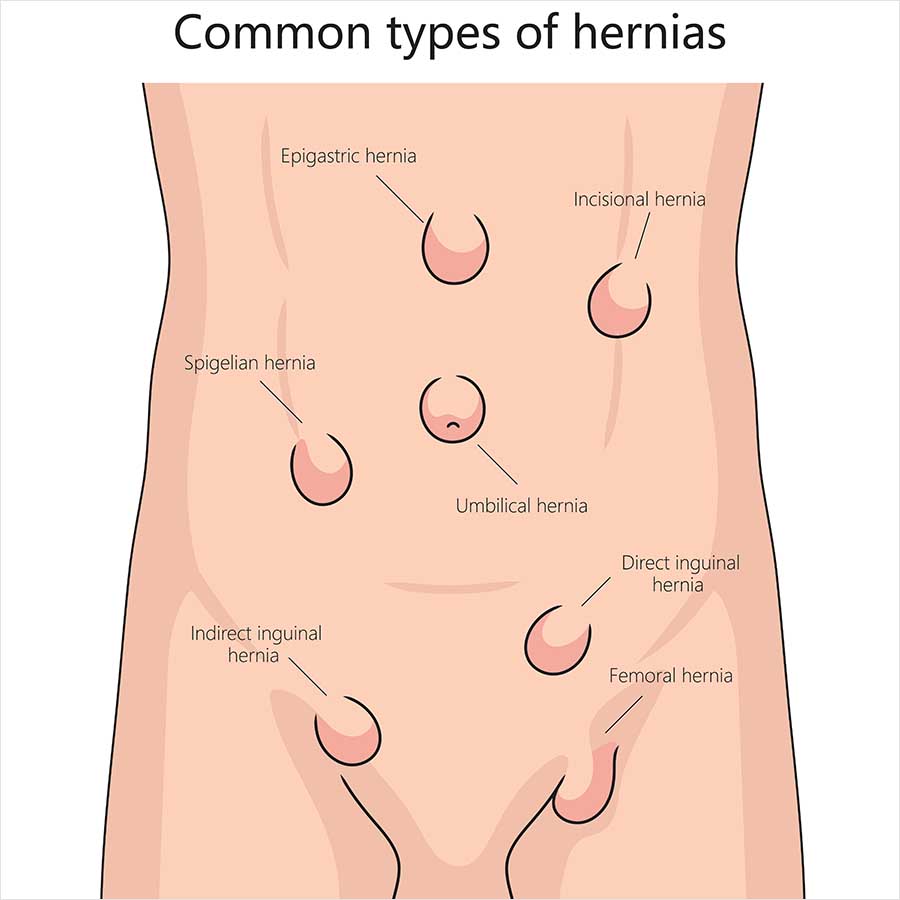
A femoral hernia is a type of groin hernia that occurs when tissue, often part of the bowel, pushes through a natural opening in the lower abdominal wall called the femoral canal. This canal is the passageway where the femoral artery and vein travel from the abdomen into the leg. If the muscle around this area weakens, a small lump can appear low in the groin.
Femoral hernias are more common in women, partly because the female pelvis is naturally wider and the femoral canal slightly larger. The hernia may appear after pregnancy or periods of increased abdominal pressure.
Contributing factors can also include:
- Childbirth
- Chronic coughing
- Heavy lifting
- Straining (constipation)
- Being underweight or older (due to weaker muscle strength).
If you feel like you may have a femoral hernia, then you might want to consider femoral hernia surgery, where a surgeon will aim to remove the discomfort caused by the femoral hernia.
What does a femoral hernia look like?
A femoral hernia usually appears as a small, firm lump low in the groin or upper thigh, just below the crease. It may be more noticeable when standing, coughing or straining, and may disappear when lying down.
What is the difference between a femoral hernia and an inguinal hernia?
There are two main types of groin hernia: femoral and inguinal. Both occur in the groin, but:
- Inguinal hernias appear higher up, where the inguinal canal runs - a natural passage that runs through the muscles of the lower abdomen on each side of the groin.
- Femoral hernias appear lower down, just below the groin crease at the top of the thigh, where the femoral canal sits.
What happens if a femoral hernia is left untreated?
If left untreated, a femoral hernia may become enlarged and painful. The contents of the femoral hernia can become trapped (incarcerated) or strangulated (blood supply is cut off). If this happens, urgent surgery is required. A hernia strangulation can be life-threatening if not treated quickly.
What are the most common types of femoral hernia?
- Reducible femoral hernia: The lump can be pushed back into the abdomen, or it may disappear when lying down.
- Incarcerated (irreducible) femoral hernia: The hernia is stuck and cannot be pushed back in.
- Strangulated femoral hernia: The blood supply is cut off – this is a medical emergency.
- Obstructed femoral hernia: Part of the bowel becomes blocked, causing pain, nausea or vomiting.
How is a femoral hernia diagnosed?
Diagnosis usually involves a physical examination. Because femoral hernias can be small or difficult to feel, your consultant (surgeon) may recommend:
- Ultrasound: Often the first-line test where femoral hernias can clearly be seen, especially in women
- CT scan: This type of scan is helpful for complex or unclear cases
- MRI: Is used occasionally.
What are the signs that a femoral hernia has become strangulated?
Seek urgent medical help if you notice:
- Sudden or severe groin pain
- A lump that becomes hard, tender or cannot be pushed back in
- Redness or warmth over the lump
- Vomiting or nausea
- Fever.
These symptoms may indicate a strangulated hernia.
What are the symptoms of a femoral hernia?
Symptoms may include:
- A lump low in the groin or upper thigh
- Pain when standing, lifting or straining
- A dragging or heavy sensation
- Sudden severe pain (if strangulated).
Where does a femoral hernia cause pain?
Pain is usually felt:
- Low in the groin
- In the upper thigh
- Occasionally radiating to the hip or lower abdomen.
What surgical techniques are used to repair a femoral hernia?
Open femoral hernia repair
Your surgeon makes a small incision in the groin, reduces (pushes back) or removes the hernia sac and strengthens the muscle with stitches. A synthetic mesh is usually placed over the weak spot. The femoral canal is narrowed to allow space only for the femoral artery and vein.
Laparoscopic (keyhole) femoral hernia repair
Several smaller incisions are made in the abdomen. A camera and instruments are used to repair the hernia from the inside and place mesh over the defect. This approach often results in less pain and quicker recovery.
Recurrent femoral hernia repair
If a hernia comes back, it can still be repaired using open or keyhole techniques. Your surgeon will choose the safest approach based on your previous surgery and the size of the recurrence.
Open hernia repair vs laparoscopic hernia repair – which surgery is right for me?
Your consultant will consider:
- The size and type of hernia
- Your age and general health
- Previous abdominal surgery.
Both methods are effective; keyhole surgery may offer faster recovery for some patients.
How do I know if I need femoral hernia surgery?
Surgery is usually recommended for all femoral hernias, even if they are small or painless, because of the higher risk of strangulation.
Who is suitable for femoral hernia surgery?
Most adults with a femoral hernia are suitable. Your consultant will assess your overall health and anaesthetic risk.
Who is not suitable for femoral hernia surgery?
Surgery may be delayed if you have uncontrolled medical conditions or a high anaesthetic risk.
Can I have femoral hernia surgery if I am pregnant?
If you’re pregnant, your consultant will advise the safest timing. Urgent surgery may still be needed if the hernia becomes trapped.
What are the alternatives to femoral hernia surgery?
There are no long-term alternatives. A hernia truss or support belt may offer temporary comfort, but they do not repair the hernia.
What is watchful waiting for a femoral hernia?
Because femoral hernias have a higher risk of complications, watchful waiting is not usually recommended.
How can I prepare for femoral hernia surgery?
Your surgeon may advise you to:
- Stop smoking as it slows healing and is one of the main reasons a hernia repair fails or comes back
- Maintain a healthy weight
- Avoid heavy lifting
- Avoid shaving the area in the week before surgery, as small cuts can cause an infection
- Shower the day before or on the day of surgery
- Avoid shaving the surgical area in the week before surgery
- Keep blood sugar levels controlled if you have diabetes.
These steps can help to reduce infection risk and support your recovery.
What happens at the pre-operative assessment?
You’ll meet your healthcare team to review your medical history, discuss anaesthetic options and plan your recovery. You may have blood tests and will receive instructions about fasting and medication.
What happens during femoral hernia surgery?
The operation usually takes less than an hour. You may have general, spinal or local anaesthetic.
Your surgeon will:
- Make a small incision in the groin
- Then they will remove the hernia sac
- Next, they will narrow the femoral canal using stitches or mesh
- Once complete, they will close the skin.
Clips, staples or mesh used during surgery do not react with the body and can remain safely in place for life.
How long does it take to recover from femoral hernia surgery?
In hospital
You’ll wake in the recovery area before returning to the ward. Most patients go home the same day.
At home
If you had sedation or general anaesthetic, a responsible adult should stay with you for 24 hours. Avoid driving, operating machinery, signing legal documents or drinking alcohol during this time.
Pain and swelling
Mild to moderate pain is normal for a few days. Pain relief will be provided – it’s important to take it so you can move comfortably.
Activity
You’ll be encouraged to walk from day one. Most people return to normal daily activities within a week. Avoid heavy lifting for at least 6 weeks.
Driving and work
You can drive once you can safely control your vehicle, without pain holding you back. After about a week, it is worth sitting in your parked car and testing yourself:
- Practise an emergency stop, using both feet on the pedals
- Turn to look over each shoulder, as you would when checking your blind spot.
If you can do both without discomfort, you are usually considered medically fit to drive.
Before you set off, check with your car insurer. Many policies ask you to wait longer after surgery, and driving before then could affect your cover. Your consultant (surgeon) can advise if you are unsure.
Most patients return to work after 2–4 weeks, depending on the nature of their job. You can discuss with your surgeon a suitable timeframe.
Follow-up appointments
You may have a follow-up appointment to check how your recovery and healing process is going.
What are the risks and complications of femoral hernia surgery?
Every surgical procedure can carry risks. Be sure to discuss any concerns you might have about these risks with your surgeon.
General risks can include:
- Pain
- Bleeding
- Infection
- Blood clots
- Scarring.
Specific risks can include:
- Haematoma or seroma – a collection of blood or fluid that can build up under your wound
- Injury to structures within the hernia
- Injury or narrowing of the femoral vein (rare)
- Difficulty passing urine
- Temporary leg weakness
- Nerve injury causing numbness or discomfort
- Hernia recurrence
- A lump under the wound.
How much does femoral hernia surgery cost at Nuffield Health?
For pricing information, please contact your local hospital. The hospital or your healthcare team will give you a fixed all-inclusive price for the treatment following your initial consultation.
FAQs
-
Can a femoral hernia affect my menstrual cycle?
No. The hernia sits below the pelvic organs and does not affect menstrual cycles.
-
Will femoral hernia surgery affect my fertility?
No, femoral hernia surgery does not affect your fertility.
-
What questions should I ask my surgeon before femoral hernia surgery?
You may want to ask about the type of repair recommended, whether mesh will be used, recovery time and when you can return to work or exercise.
-
Do I need a GP referral to have hernia surgery at Nuffield Health?
A GP referral is usually recommended, but some hospitals accept self-referrals.
-
Can a femoral hernia go away on its own?
No, femoral hernias do not heal without surgery.
-
How likely is a femoral hernia to recur after surgery?
Recurrence is uncommon, but it can happen years later.
Ways to pay
Nuffield Health promise
Our prices are all-inclusive. We will equal any comparable price. There are no time limits on your aftercare.
Paying for yourself
There are no hidden costs in our treatment prices. The price you see is the price you pay.
Find out morePersonal medical loan
Spread the cost of your treatment with a 10, 12 or 24 month 0% personal medical loan.
Find out moreMedical insurance
We work with you and your insurance provider to get you the treatment you need quickly.
Find out more