
Endovenous laser ablation (EVLA) for varicose veins
- Overview
Reviewed on Monday 22 June 2026 by a Consultant Vascular Surgeon.
If your varicose veins are causing aching, swelling or discomfort, endovenous laser ablation (EVLA) at Nuffield Health may help. It's a minimally invasive procedure that uses laser energy to close the faulty vein from the inside, through a tiny puncture rather than a surgical cut.
What is endovenous laser ablation for varicose veins?
Endovenous laser ablation (EVLA) is a minimally invasive procedure used to treat varicose veins caused by reflux in a superficial truncal vein, such as the great saphenous, small saphenous or accessory saphenous vein. It uses laser energy, delivered under ultrasound guidance, to close the faulty vein and redirect blood into healthier veins. It can be performed as an outpatient procedure, meaning you can go home the same day. The visibly bulging varicose veins may also require additional treatment, such as phlebectomy or foam sclerotherapy, either at the same appointment or later.
What is endovenous laser ablation also known as?
You may also hear of endovenous laser ablation referred to as endovenous laser treatment or EVLA for short.
What are varicose veins?
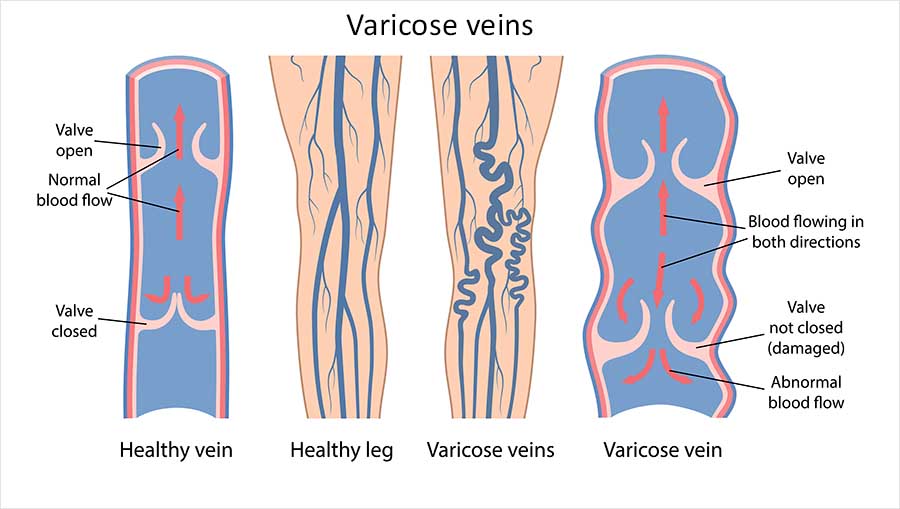
Varicose veins are large, sometimes twisted veins that most often occur in your leg. They occur when the valves that control blood flow in your legs weaken and don’t close properly, allowing blood that should be flowing in one direction to flow back into them. The blood pools, causing the veins to become larger and develop bulges that enable them to be seen under your skin.
You’re more likely to develop varicose veins if you’re overweight or pregnant. They also run in families and are more likely to affect women than men.
What are the symptoms of varicose veins?
The most common symptoms of varicose veins include:
- Visible purple, bulging, lumpy veins
- Changes in skin colour
- Skin ulcers
- Aching or heaviness in your legs
- An itchy or burning feeling in the skin over your veins
- Restless legs
- Swollen feet and ankles
- Cramps in your legs, usually at night.
Can varicose veins be dangerous if left untreated?
Although some people are mainly concerned by the appearance of varicose veins, they can also cause aching, heaviness, swelling, itching, skin changes, bleeding, superficial thrombophlebitis and, in more advanced cases, venous leg ulceration. Deep vein thrombosis is less common, but patients should seek urgent advice if they develop a suddenly swollen, painful calf or breathlessness.
Who is suitable for endovenous laser ablation for varicose veins?
You may be a good candidate for EVLA if you have symptomatic varicose veins and a duplex ultrasound scan confirms reflux in a truncal superficial vein suitable for endothermal ablation. Symptoms may include aching, heaviness, swelling, itching, eczema, skin discolouration, bleeding, superficial thrombophlebitis or ulceration. Some patients choose treatment partly for appearance, but your doctor will first assess whether EVLA is clinically appropriate for your veins.
Who may not be suitable for endovenous laser ablation for varicose veins?
You may not be suitable for endovenous laser ablation for varicose veins if you:
- Are pregnant; elective varicose vein treatment is usually deferred until after pregnancy and recovery
- Have arterial disease
- Have active deep vein thrombosis, a recent significant venous thrombosis, or a clotting disorder that requires individual specialist assessment
- Have an active skin infection
- Have significant peripheral arterial disease, which may make compression or venous treatment unsuitable without further vascular assessment
- Have significant mobility issues, since walking after treatment is important to reduce the risk of thrombosis and aid recovery
- Have veins that are too heavily scarred, or are too close to the skin’s surface.
What are the alternatives to endovenous laser ablation for varicose veins?
There are a couple of alternatives to endovenous laser ablation for varicose veins.
Endovenous laser ablation vs radiofrequency ablation for varicose veins
Endovenous laser ablation and radiofrequency ablation (RFA) are both endothermal treatments that close the faulty vein from the inside. The main difference is the energy source: RFA uses radiofrequency energy, while EVLA uses laser energy. NICE guidance places endothermal ablation, including EVLA and RFA, as the first-line interventional treatment for confirmed truncal reflux when suitable.
Endovenous laser ablation vs foam sclerotherapy for varicose veins
Endovenous laser ablation and foam sclerotherapy are both minimally invasive treatments for varicose veins, but they work differently. EVLA uses laser energy to close the faulty vein, while foam sclerotherapy uses an injection to make the vein collapse and seal shut. EVLA is usually better for larger main veins, while foam is often used for smaller veins, or as an option when a heat-based treatment is not suitable.
What are the surgical alternatives to endovenous laser ablation for varicose veins?
The main surgical alternative to endovenous laser ablation is vein stripping and ligation, where the faulty vein is tied off and removed through small cuts. EVLA closes the vein from the inside using heat energy, while vein stripping surgery removes the vein altogether. EVLA is usually less invasive, with less scarring and a faster recovery.
How can I prepare for endovenous laser ablation for varicose veins?
As a minimally invasive procedure usually performed under local anaesthetic, getting ready for endovenous laser ablation is usually straightforward. You may be advised to keep well hydrated. Avoiding alcohol before treatment is sensible, especially if sedation is planned. You can usually eat normally unless your hospital gives different instructions. You should shower before you arrive, as you may be advised to keep the treatment area dry for at least 24 hours afterwards. Do not put moisturiser on the treatment area, and do not shave unless specifically asked to.
You should arrange for someone to take you home after your appointment. Local anaesthetic does not usually cause drowsiness, but your leg may feel numb or uncomfortable, dressings may restrict movement, and sedation or other medication, if used, can make it unsafe to drive.
Will I need a duplex ultrasound scan before endovenous laser ablation?
This is a non-invasive imaging appointment that combines standard and Doppler ultrasound to show your doctor the structure of your veins, whether the valves are leaking, the extent of truncal reflux and how blood is flowing through the superficial and deep veins. The scan is used to confirm the diagnosis and plan the safest and most appropriate treatment.
What happens during endovenous laser ablation for varicose veins?
EVLA treatment is usually carried out under local anaesthetic, meaning that you will be awake but the treatment area will be numbed. The procedure is performed using ultrasound guidance. After the skin is cleaned and numbed, a small puncture is made and a thin catheter and laser fibre are passed into the faulty vein. Tumescent local anaesthetic is then placed around the vein to numb the area, protect surrounding tissues and help the vein close. The laser is activated as the fibre is slowly withdrawn. The vein wall is heated, collapses and seals closed, and blood is redirected into healthy veins. The fibre and catheter are then removed, and a small dressing is placed over the puncture site.
How long does endovenous laser ablation for varicose veins take?
An endovenous laser ablation for varicose veins usually takes between 30 and 60 minutes. This includes time for the anaesthetic to work.
Will I need more than one endovenous laser ablation treatment?
It depends on how many veins you need treated. It is possible to treat more than one vein in a single appointment, but this is done at the discretion of your doctor and based on your individual circumstances. The good news is that if you’ve had a vein treated, you’re very unlikely to need EVLA treatment on it again. That’s because endovenous laser ablation has a very high success rate of more than 95%.
How long does it take to recover from endovenous laser ablation for varicose veins?
Getting back on your feet following EVLA treatment for varicose veins is usually fairly fast, although rates of recovery vary between individuals.
Immediately after your treatment, you will usually wear a compression bandage and/or stocking. The exact duration varies depending on the treatment performed, whether you have phlebectomies or foam sclerotherapy at the same time, and your consultant’s preference. Many patients wear compression for several days to one or two weeks, but you should follow the specific instructions given by your clinical team.
You will usually be encouraged to walk soon after treatment. You should not drive immediately afterwards, particularly if your leg feels numb, bulky dressings have been applied, or you have had sedation. If sedation is used, you must not drive for at least 24 hours and should follow the advice given by your hospital.
If you have a desk job, you may be able to get back to work as soon as the next day. However, you will have to avoid anything strenuous for at least a week while your body heals, so if your work is more physical in nature, you may need to allow yourself some additional time off.
Always follow the recovery advice of your medical team and ask them if you have any questions.
When can I go home after endovenous laser ablation for varicose veins?
You will be able to go home the same day. However, you should make sure you arrange for someone to drive you.
When can I exercise after endovenous laser ablation for varicose veins?
You should start walking again as soon as you can after your endovenous laser ablation treatment, as this will boost your circulation and encourage healing. However, you’ll be recommended to avoid saunas, swimming and anything other than light walking for at least a week. For more high-impact or high-energy activities, expect to wait for at least two to four weeks. And again, always follow the advice of your doctor.
When can I shower after endovenous laser ablation for varicose veins?
You can normally have a shower 24 hours after your procedure, but you’ll be advised to avoid soaking your leg for at least a few weeks while the puncture wound heals.
When can I fly after endovenous laser ablation for varicose veins?
Long journeys, including flying, can increase the risk of blood clots, particularly in people with additional risk factors. You should discuss flying with your consultant, especially if you have had a previous DVT, thrombophilia, cancer, obesity, reduced mobility or a long-haul flight planned. Many clinicians advise avoiding long journeys for a short period after treatment, but the safest timing depends on your individual risk and the extent of treatment performed.
What are the benefits of endovenous laser ablation for varicose veins?
Some of the benefits of choosing EVLA treatment for varicose veins include:
- High success rate: EVLA has a high technical success rate for closing the treated truncal vein. However, this does not mean that all visible varicose veins disappear immediately, or that no further treatment will ever be needed.
- Minimally invasive treatment: As a minimally invasive treatment, there’s no need for a general anaesthetic or large incisions (like those seen in vein-stripping). Instead, a tiny needle is inserted through the skin, leaving virtually no wound at all.
- Fast recovery: With such a minimally invasive technique, there’s a much shorter downtime than with vein stripping and other surgical treatments.
- Less pain and bruising: Again, the minimally invasive nature of this technique means that there’s far less discomfort and far less bruising when compared to surgical techniques.
How quickly will I see results from endovenous laser ablation for varicose veins?
Some patients notice symptom improvement quickly, but bruising, tenderness and lumpiness can persist for several weeks. Cosmetic improvement is usually gradual and may take several weeks or months. Additional treatment may be needed for remaining surface varicose veins or thread veins.
Can varicose veins come back after endovenous laser ablation?
Yes. EVLA is effective at closing the treated vein, but new varicose veins can develop over time and some patients may need further treatment. Recurrence can occur because of new reflux in other veins, reopening of a treated vein, or progression of venous disease.
What are the risks and possible complications of endovenous laser ablation for varicose veins?
As with any procedure, there are some risks and possible complications of EVLA for varicose veins that it’s important to be aware of:
Common, mild side effects
- Mild pain, tightness, or tenderness along the treated vein
- Bruising or swelling at the insertion site
- A warm or pulling sensation in your leg
- Temporary numbness or tingling near the treatment area
- Skin irritation or localised redness
Less common but possible complications
- Inflammation along the treated vein
- Superficial thrombophlebitis or tender lumps along the treated vein
- Skin burns or heat injury to surrounding tissues, which are uncommon when the procedure is performed with ultrasound guidance and tumescent local anaesthetic
- Paraesthesia, numbness or nerve irritation, usually temporary but occasionally persistent
- Infection at the catheter insertion site (rare)
- Skin staining or pigmentation over the treated vein, which usually fades but may persist
- Residual visible varicose veins or new varicose veins requiring further treatment
- Endothermal heat-induced thrombosis, where a clot extends close to or into a deep vein, which is uncommon but may require monitoring or treatment
- Deep vein thrombosis
- Pulmonary embolism
How much does endovenous laser ablation for varicose veins cost at Nuffield Health?
Select your local Nuffield Health hospital to find contact details and guide prices for endovenous laser ablation. Please note that the guide price stated is an approximate cost of treatment only. You will be given a fixed all-inclusive price for treatment following your initial consultation with a consultant.
FAQs
-
Is endovenous laser ablation for varicose veins available on the NHS?
Yes, endovenous laser ablation for varicose veins is available on the NHS, but only for medical reasons and there are strict criteria that you must meet to be eligible. It is not available purely for cosmetic reasons.
-
Can I drink alcohol after endovenous laser ablation for varicose veins?
It is sensible to avoid alcohol for 24 to 48 hours after EVLA, particularly if you have had sedation or are taking painkillers. Alcohol can make you feel light-headed or dehydrated and may increase bruising.
-
Can both legs be treated at the same time?
Yes, it may be possible for both legs to be treated at the same time. However, the final decision on whether to do this lies with your doctor.
-
How should I sleep after endovenous laser ablation for varicose veins?
Your doctor may recommend that you sleep with your legs slightly elevated after your EVLA for varicose veins. This will help improve your circulation and reduce pressure on the treated blood vessels.
-
Questions to ask your consultant before EVLA
You may find it helpful to ask:
- Which vein is being treated, and what did the duplex ultrasound scan show?
- Will I need phlebectomies or foam sclerotherapy as well as EVLA?
- Will both legs be treated at the same time?
- How long should I wear compression afterwards?
- When can I return to work, driving, exercise and flying?
- What symptoms should prompt urgent medical advice, such as increasing calf pain or swelling, redness, breathlessness or chest pain?
- What follow-up appointment or scan will I need?
Ways to pay
Nuffield Health promise
Our prices are all-inclusive. We will equal any comparable price. There are no time limits on your aftercare.
Paying for yourself
There are no hidden costs in our treatment prices. The price you see is the price you pay.
Find out morePersonal medical loan
Spread the cost of your treatment with a 10, 12 or 24 month 0% personal medical loan.
Find out moreMedical insurance
We work with you and your insurance provider to get you the treatment you need quickly.
Find out more