
Corneal transplant surgery
- Overview
Reviewed on Thursday 6 August 2026 by a General Practitioner (GP).
If a damaged or diseased cornea is blurring your vision or causing ongoing pain and irritation, a corneal transplant can help restore clearer sight, comfort and the natural structure of your eye. At Nuffield Health, our consultant ophthalmologists are experienced in performing both full and partial corneal transplants, offering personalised care, modern surgical techniques and clear guidance at every step.
What is corneal transplant surgery?
As its name suggests, corneal transplant surgery is a procedure to remove some or all of your natural cornea and replace it with corneal tissue from a donor. It’s also sometimes known as a corneal graft, or keratoplasty. It’s designed to improve vision, reduce pain and restore the shape and overall integrity of your eye.
Corneal transplant surgery is the most common and successful transplant surgery in the world, and records show that there were over 5,000 performed in the UK in 2024/25.
What is the cornea, and what function does it serve?
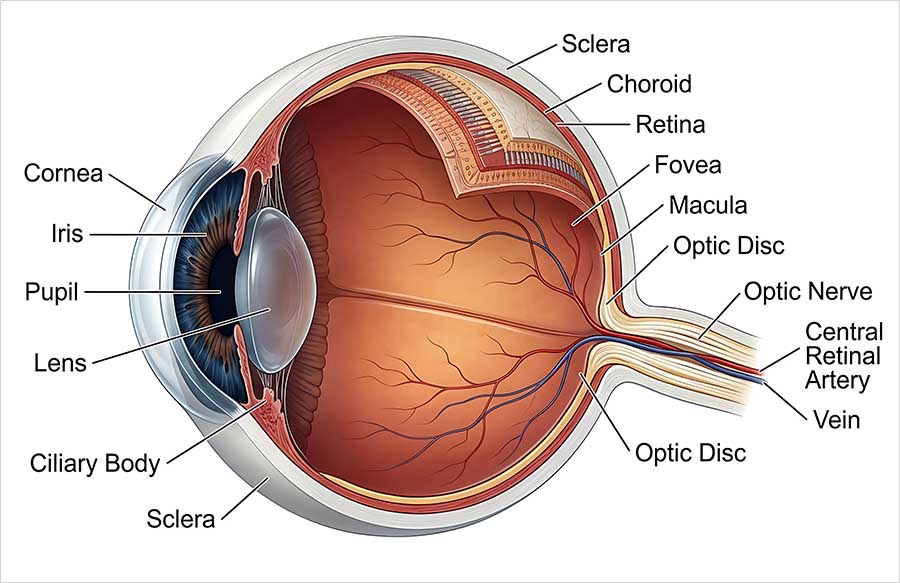
Your cornea is the thin, transparent dome that covers the front part of your eye, extending over your iris (the coloured part of your eye) and your pupil (the dark-coloured dot).
It has two functions. Firstly, it’s designed to protect the more delicate parts of your eye against dirt, bacteria and UV light. Secondly, it’s responsible for providing around two-thirds of your eye’s focusing power. It does this by bending light as it enters your eye and refracting it onto your retina, which is the area of light-sensitive cells found at the back of your eye.
What causes corneal damage or disease?
There are a variety of things that can cause corneal damage or cause disease affecting the cornea to develop.
- Corneal dystrophies: These refer to inherited disorders, such as keratoconus (where the cornea gets progressively thinner and starts to bulge outwards). These can cause problems with your vision that get worse over time.
- Physical injury/trauma: Accidents and injuries can sometimes cause irreparable damage to part or all of your cornea, such as scratches and abrasions. Similarly, exposure to harsh chemicals or intense UV light can also cause trauma to your cornea.
- Dry eye syndrome: In most cases, dry eye syndrome causes only mild symptoms. However, in severe cases, it can leave the outer surface of your eyes extremely unlubricated, and this makes them much more susceptible to abrasions and infection.
- Incorrect contact lens use: Using contact lenses properly is really important for maintaining healthy eyes. Not following instructions and doing things like sleeping in them or not cleaning them properly is one of the main causes of corneal infections and inflammation.
- Age-related corneal damage: As you get older, parts of your body will start to deteriorate, and your eyes and cornea are no exception. Ageing can cause your corneal endothelium to decline, which is the layer of cells that acts as a pump to keep your cornea clear. These cells can’t regenerate, and if the cell count drops significantly, it can lead to a condition called corneal oedema.
How do I know if my cornea is damaged?
Common signs and symptoms of a damaged cornea include:
- eye pain, ranging from mild to severe
- redness
- watering
- a gritty, irritating sensation like there is something in your eye
- blurred vision
- sensitivity to light
- swollen eyelids
- stinging and/or burning sensation
- You may notice a white spot on your cornea.
If you are experiencing these symptoms, always make an appointment with your optician.
What are the different types of corneal transplant surgery?
There are several different types of corneal transplant surgery, differentiated by which part of the corneal tissue is removed and replaced. The most common are:
1. Penetrating keratoplasty
This is a full-thickness transplant where the entire cornea is replaced. It’s recommended when the full thickness of the cornea has been affected, such as seen in advanced keratoconus, severe scarring or previous failed transplants.
2. Endothelial keratoplasty (DSAEK and DMEK surgery)
In this surgery, only the back inner layer of your cornea is replaced. It’s usually used to treat corneal dystrophies, and there are primarily two techniques used – DSAEK and DMEK.
- DSAEK corneal surgery is a partial corneal transplant that replaces the damaged inner cells, called the endothelium. By leaving the healthy, outer layers of tissue intact, you can recover more quickly than you would with a full-thickness transplant.
- DMEK corneal surgery focuses on removing the endothelium and Descemet’s membrane.
3. Anterior lamellar keratoplasty (ALK)
This corneal replacement surgery removes the front layers of your cornea while preserving your healthy, inner layer. It’s most often recommended to treat superficial scarring, as well as some corneal dystrophies.
4. Artificial cornea transplant
In some cases, rather than donor tissue, it may be necessary to replace your cornea with an artificial implant. This could be if you aren’t considered a good candidate for donor tissue, or you’ve previously had donor grafts that have failed.
How do I know if I need corneal transplant surgery?
Before you can have corneal transplant surgery, you’ll need to have a consultation with your ophthalmologist. They will review your medical history and perform some physical tests and assessments of your eyes and vision to determine if corneal transplant surgery might be a viable treatment for you.
Who is suitable for corneal transplant surgery?
You may be a good candidate for corneal transplant surgery if you:
- Have a corneal condition such as keratoconus, Fuchs ’ endothelial dystrophy, bullous keratopathy, or severe scarring such as from keratitis.
- A healthy retina and optic nerve.
- Don’t have any uncontrolled eye surface diseases.
- You are prepared to commit to a long period of aftercare, which will involve regularly using prescription eye drops.
Who is not suitable for corneal transplant surgery?
You may not be suitable for corneal transplant surgery if you have:
- an active eye infection
- uncontrolled raised intraocular pressure
- severe dry eye
- abnormalities with your eyelids
- a severe autoimmune disease.
You also won’t be able to have a transplant if you don’t have realistic expectations for the outcome of your surgery, if you are unwilling or unable to follow your post-operative instructions.
Can I have a corneal transplant if I've had previous eye surgery?
Yes, you may be able to have a corneal transplant if you’ve had eye surgery before. In many cases, a corneal transplant is the recommended treatment for complications or damage that has occurred during a previous eye surgery, such as laser vision correction or cataract surgery.
What are the alternatives to corneal transplant surgery?
If you’re not a good candidate for corneal transplant surgery, there are a few alternative treatments that your consultant may recommend. However, exactly which – if any – you may be able to have will depend on the reason for your corneal damage and the extent of the damage.
They include, but aren’t limited to:
- Wearing glasses or contact lenses designed to correct mild corneal irregularities or early-stage keratoconus
- Speciality contact lenses, which are normally recommended when standard soft contact lenses aren’t effective and include scleral lenses (oversized contact lenses to vault over corneal damage/bulging) or RGP contact lenses (more rigid in design and that work by trapping a liquid lens underneath them)
- Phototherapeutic keratectomy (PRK) surgery, a laser treatment to help smooth corneal irregularities
- Corneal cross-linking, a procedure designed to stabilise rather than replace the cornea.
How can I prepare for corneal transplant surgery?
Before your surgery, your consultant will give you a list of steps that you can take to prepare. Following these will help to reduce your risk of complications during surgery and ensure that you recover as quickly as possible.
Some of these steps may include:
- Stopping some of your regular medications, such as blood thinners, if required
- Attending any pre-operative appointments to help plan your surgery, including any blood tests or urine tests
- Taking any pre-op eye drops that may be prescribed to you (antibiotic or anti-inflammatory drops are sometimes
- Stopping smoking, as it’s widely recognised that it can increase your risk of complications and slow your recovery5
- Stop wearing contact lenses, to give your cornea time to stabilise (typically two weeks for soft lenses, four or more for rigid/speciality contacts)
- Arriving at your appointment with a clean face, free from make-up, lotions and jewellery
- Arranging for someone to drive you home after your appointment
- Following any fasting rules (if you are having a general anaesthetic).
recommended)
How long will I typically wait for a donor cornea?
The average wait time for a donor cornea in the UK is around 19 months. It’s estimated that around 6,000 patients are waiting for corneal transplants at any one time, with wait times depending on the complexity of your case and clinical urgency, as well as availability.
How is corneal transplant surgery performed?
A corneal transplant takes place over several stages. In most cases, it’s performed using a combination of local anaesthetic and sedation, meaning that you’ll be awake and comfortable but unable to feel anything during your surgery. However, for some patients, a general anaesthetic may be more appropriate. Your surgeon will discuss this with you before your appointment.
Once anaesthetic has been applied and your eye is numb, your surgeon will cut a small opening into the front of your eye to remove either part or all of your cornea. This damaged corneal tissue is discarded, and the donor cornea is positioned in place.
If you have an inner layer replacement, an air bubble inside your eye will hold it in place while it heals. However, if you have a full-thickness corneal replacement, you’ll have tiny stitches placed that will secure the donor cornea in place.
After the surgery is complete, your eye will be dressed with pads and covered with a shield to protect it.
How long does corneal transplant surgery take?
Typically, corneal transplant surgery takes between one and two hours.
How long does it take to recover from corneal transplant surgery?
Corneal transplant recovery timelines vary depending on the specific procedure that you had, although the initial stages of healing are very similar.
If you’ve had a partial, inner-layer corneal transplant, you should notice a significant improvement in your vision in less than two weeks, although it can take up to six months to fully recover.
If you’ve had a partial, middle or outer layer corneal transplant, it may take a few weeks for your vision to return, with full recovery taking up to 18 months.
And if you’ve had a full corneal transplant, it could be a month before you regain visual improvement in that eye, with it taking up to two years to make a full recovery.
Regardless of the type of corneal transplant you’ve had, you’ll need to avoid heavy lifting, swimming and eye makeup for at least 4 weeks, and if you have a physically demanding job, you may need to take up to six weeks off of work.
Most people can go back to their usual routines within two weeks, but your eyesight will continue to improve over the following months.
When can I drive after corneal transplant surgery?
You won’t be able to drive until you meet the minimum visual standard for driving as set out by the DVLA.
What’s the best way to sleep after a corneal transplant?
To help your eyes heal as quickly and smoothly as possible, you’ll be advised to sleep on your back with your head slightly elevated. This will help reduce inflammation and prevent putting pressure on your eye. You’ll also be given eye shields to wear while you sleep, and these will stop you from inadvertently touching your eye.
How long after a corneal transplant can I fly?
It depends on the type of corneal transplant you’ve had. In most cases, you will be able to fly within a few days. However, if you’ve had a partial corneal transplant where a bubble has been used to secure your donor corneal tissue, you will not be able to fly until the bubble has completely dissolved. This is because flying can increase pressure inside your eye, causing the bubble to expand, and this could damage your eye.
If you need to fly in the weeks after your surgery, always get the permission of your consultant. Failure to do so could invalidate your insurance.
How long do stitches stay in after a corneal transplant?
It depends on how quickly your eyes heal, but it could take several months before your stitches can be removed.
Can I wear contact lenses after corneal transplant surgery?
Yes, and if you previously relied on prescription eyewear, you will need this again once your eyes have healed after your corneal transplant. However, you will need to get the go-ahead from your ophthalmologist first that it’s safe to do so. It generally takes up to six months for clearance to wear contact lenses after a corneal transplant.
Will I need to take eye drops for life after a corneal transplant?
Not necessarily. You’ll be given eye drops to take initially to help with the healing process. These may include antibiotic, anti-inflammatory and steroid eye drops, which help to reduce your risk of infection, make your eyes more comfortable and prevent rejection of the donor tissue.
If you’re someone at higher risk of donor tissue rejection, your ophthalmologist may recommend that you stay on steroid eye drops long term.
What are the risks and complications of corneal transplant surgery?
Although corneal transplant surgery is largely considered to be very safe, as with any surgery, there are some side effects and risks of complications that it is helpful to be aware of.
These include, but aren’t limited to:
- infection of your cornea or another part of your eye
- bleeding inside your eye
- pain, sensitivity to light and blurred vision
- increased intraocular pressure/glaucoma
- cataract development
- clouding, dislodgement or failure of the new cornea
- astigmatism or other refractive eye errors that require prescription eyewear
- inflammation inside your eye, such as uveitis
- retinal detachment
- problems with wound healing
- rejection of the donor cornea.
What happens if the donor cornea doesn't attach properly?
In the rare event that a donor cornea doesn’t attach properly, the transplanted tissue can become cloudy, move out of alignment or fail to heal. This can cause some of the symptoms listed above, and in some cases, mean that further surgery to correct the issue is required.
What symptoms should I look out for that might indicate corneal transplant rejection?
The acronym R.S.V.P. is used as a way to recognise the signs of corneal transplant rejection:
R = Redness. The whites of your eyes may appear pink or red.
S = Sensitivity to light. Bright lights (natural or artificial) become hard to tolerate.
V = Vision loss. Your eyesight may appear blurred or hazy, like there’s a film over your eyes.
P = Pain. Discomfort can be aching, throbbing, sore, and your eyes may feel gritty.
If you notice any of these symptoms, you should get in touch with your Nuffield Health medical team right away.
What is the success rate of corneal transplant surgery?
Success rates of corneal transplant therapy vary depending on the technique used, but in uncomplicated cases, first-time corneal transplant succeeds in around 90% of patients. Corneal transplant surgery is considered the most successful type of transplant surgery in the world.
What could happen if my corneal condition goes untreated?
It depends on exactly what your corneal condition is, but most, like keratoconus, get worse over time, and this means that your vision will likely become increasingly compromised. If your consultant recommends corneal transplant surgery, it’s because it’s the best treatment option for you and your personal circumstances.
How much does corneal transplant surgery cost at Nuffield Health?
For pricing information, please contact your local Nuffield Health hospital. The hospital or your healthcare team will give you a fixed, all-inclusive price for the treatment following your initial consultation.
SOURCES
- https://www.organdonation.nhs.uk/news/thousands-of-people-are-needlessly-living-with-sight-loss-beca...
- https://pmc.ncbi.nlm.nih.gov/articles/PMC5819093/
- https://pubmed.ncbi.nlm.nih.gov/24335068/
- https://www.health.harvard.edu/blog/corneal-transplants-becoming-more-common-202206302773
- https://www.organdonation.nhs.uk/get-involved/give-the-gift-of-sight/
- https://www.nhs.uk/tests-and-treatments/cornea-transplant/
- https://www.news-medical.net/health/How-Does-a-Cornea-Transplant-Work.aspx
- https://www.rnib.org.uk/your-eyes/eye-conditions-az/corneal-transplant/
FAQs
-
Will a corneal transplant change the colour of my eye?
No, a regular corneal transplant won’t change the colour of your eye. This is because the colour is actually determined by your iris (the coloured part of your eye) while your cornea is a clear dome that sits over the top. Sometimes patients do develop a slight blue-grey tint at the outer edge of their cornea, and this is where scar tissue forms. However, it’s rarely noticeable.
-
How many follow-up appointments will I need after a corneal transplant?
You’ll need to have fairly regular visits with your consultant ophthalmologist after your corneal transplant, with most people attending between 7 and 10 follow-up appointments in their first year. This usually reduces significantly in the second year. Your follow-up visits will always be based on how well your eye heals.
-
Is it possible to have corneal transplant surgery on both eyes at the same time?
It’s never recommended to have corneal transplants in both eyes at the same time. This is because it’s a complex surgery, with a risk of infection and other complications. Operating on both eyes at the same time significantly increases the risks associated with this surgery.
-
How long do the results of corneal transplant surgery last?
Corneal transplants are a long-term solution for corneal problems, with results often lasting anywhere from ten years to a lifetime.
-
How many times can you have a corneal transplant?
There is no specific number of times you can have a corneal transplant. The decision if you can have an additional surgery will be based on your individual circumstances.
-
Will I need glasses or contact lenses after a corneal transplant?
Probably yes. Most people who have had a corneal transplant rely on prescription glasses or contact lenses to help them see clearly. However, you won’t be able to wear contacts until your eye has healed, your cornea has stabilised and your ophthalmologist agrees that it is safe and appropriate to use them.
Ways to pay
Nuffield Health promise
Our prices are all-inclusive. We will equal any comparable price. There are no time limits on your aftercare.
Paying for yourself
There are no hidden costs in our treatment prices. The price you see is the price you pay.
Find out morePersonal medical loan
Spread the cost of your treatment with a 10, 12 or 24 month 0% personal medical loan.
Find out moreMedical insurance
We work with you and your insurance provider to get you the treatment you need quickly.
Find out more