
Capsule endoscopy of the small bowel
- Overview
Or call us on
Reviewed on Friday 10 July 2026 by a Consultant Gastroenterologist.
A capsule endoscopy uses a pill-sized camera to examine your small intestine, an area that's difficult to reach with a standard endoscope, helping diagnose or monitor bowel conditions. At Nuffield Health, our gastroenterologists are experienced at performing capsule endoscopies, offering personalised care, modern techniques and clear guidance at every step.
What is a capsule endoscopy?
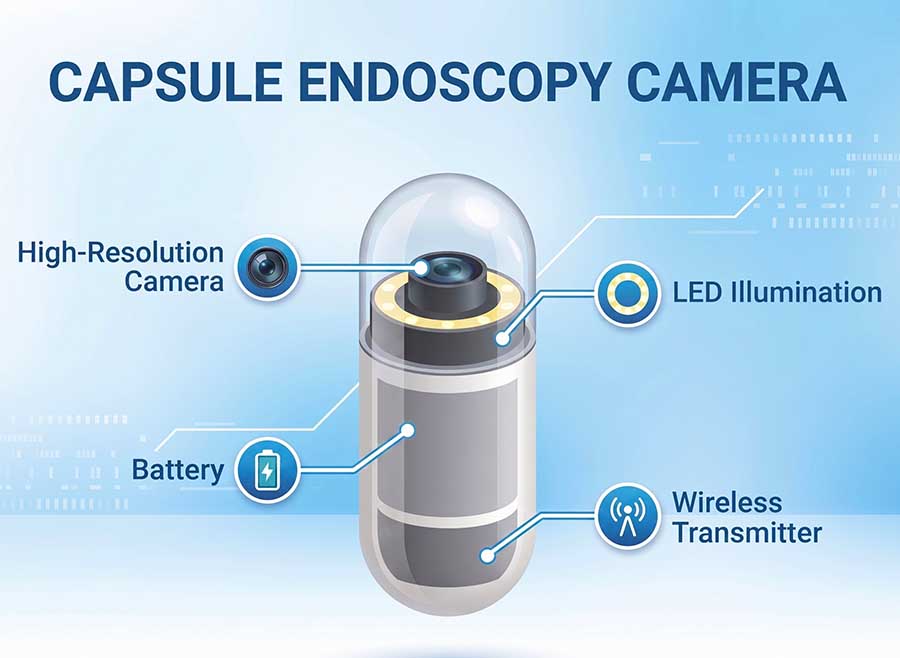
A capsule endoscopy, also known as a video capsule endoscopy (VCE) or a pill cam test, is an innovative approach to a traditional endoscopy procedure. It first entered clinical practice in 2001 and has since become a common approach in modern gastroenterology, with over 2 million performed worldwide.
The process involves swallowing a pill-sized camera that captures thousands of images as it progresses through your digestive system. These images can be used both to diagnose gastrointestinal and bowel conditions and monitor you if you’ve already received a diagnosis.
What does a capsule endoscopy examine?
A capsule endoscopy examines the small intestine. Also known as the small bowel, your small intestine is the primary focus of a capsule endoscopy since, as the longest part of your digestive tract and sitting in the middle of your abdomen, it’s particularly difficult to reach with a standard endoscope.
What conditions can a capsule endoscopy diagnose?
A capsule endoscopy can be a valuable tool in the diagnosis of a wide range of conditions, including:
- Unexplained gastrointestinal bleeding
- Iron-deficiency anaemia
- Crohn’s disease
- Coeliac disease
- Polyps
- Benign or cancerous growths.
It’s important to note that the endoscopy can provide images that can be used as part of the diagnostic process. However, it can’t take tissue samples for laboratory testing, and it can’t provide any treatment for any diagnosed issues.
Can a capsule endoscopy detect cancer?
A capsule endoscopy may be used as part of the diagnostic process for a suspected small bowel cancer. If a mass is detected, further tests will need to be carried out to assess whether it is cancerous or benign.
What symptoms might lead to a capsule endoscopy?
You may be recommended to have a capsule endoscopy if you are experiencing any of the following symptoms:
- Bleeding not found with a standard endoscopy or colonoscopy
- Unexplained weight loss
- Chronic diarrhoea
- Bowel issues such as cramping, urgency, blood in your stools
- Unexplained fatigue.
If you are concerned about these symptoms, you should make an appointment with your GP.
What would happen if these conditions were left untreated?
While some gastrointestinal conditions are fairly mild, most cause unpleasant and sometimes debilitating symptoms. In the case of more serious issues, such as tumours, failing to get a diagnosis could have severe and potentially life-threatening consequences.
What are the alternatives to a capsule endoscopy?
There are a few alternatives to a capsule endoscopy. Which you may be recommended will be based on the area of your body where your doctor believes the issue may be and could include a traditional endoscopy, colonoscopy or a scan such as a CT or MRI.
Capsule endoscopy vs. traditional endoscopy - what's the difference?
There are several differences between a traditional endoscopy and a capsule endoscopy, including the method of investigation. A traditional endoscopy uses a long, thin, flexible tube with a light and camera on the end called an endoscope. It’s passed into your digestive system via your mouth, and feeds back real-time images to a screen in the room.
However, unlike a capsule, a conventional endoscope can also take tissue samples that can be used in the diagnostic process. In some cases, it may be necessary to follow a capsule endoscopy with a traditional endoscopy to take biopsies or remove polyps.
Capsule endoscopy vs. colonoscopy - what's the difference?
There are also several differences between a capsule endoscopy and a colonoscopy, again including the method of investigation. As its name suggests, a colonoscopy is designed to examine the colon, and uses an endoscope to visualise the organ that is inserted into the body via your rectum. Like the ‘scope used in an endoscopy, the one used in a colonoscopy can also be used to collect tissue samples or remove small polyps.
Who is suitable for a capsule endoscopy?
If you’re experiencing any of the symptoms we’ve listed, you could be a good candidate for a capsule endoscopy.
You may not be suitable for this procedure if you:
- are under the age of 2
- are unable to swallow the pill cam
- have a pacemaker
- are pregnant
- have any bowel strictures or obstructions that could cause the capsule to become stuck.
You’ll have a thorough consultation with your Nuffield Health doctor to determine if a capsule endoscopy is the most suitable diagnostic tool for you.
Can I have capsule endoscopy if I have a pacemaker or implant?
Since pill cams have the potential to interfere with implanted devices, including pacemakers, your clinical team will need to check that you can go ahead with the procedure beforehand. Always let them know what devices you have and when they were implanted.
Do I need a GP referral for a capsule endoscopy at Nuffield Health?
Yes, you'll need a referral letter from a GP before you can have a capsule endoscopy. This ensures your symptoms have been assessed and that you're referred to the most appropriate specialist for your care.
How can I prepare for a capsule endoscopy?
Preparation is a crucial part of the process for a capsule endoscopy as it’s essential to make sure that your digestive tract is empty for the camera. To do this, the preparatory steps will start around 3 to 5 days before you swallow the camera.
Three to five days before capsule endoscopy
You’ll be recommended to move onto a low-fibre diet, avoiding nuts, seeds, whole grains, raw fruits and vegetables. You should aim to drink at least 8 to 10 glasses of water each day to ensure you’re well hydrated and to keep your bowels moving. You may also be asked to stop taking certain medications, such as anti-inflammatory pain meds, as these can slow your bowel movements down.
The day before your capsule endoscopy
You’ll be advised to eat a light meal around 1 pm, but after this you’ll have to switch to a clear liquid diet, with no solid food at all. Tea and coffee (without milk), clear broths and water are allowed. You may also be asked to prepare your bowel with a laxative solution which will help remove any lingering waste.
The day of your capsule endoscopy
You’ll not be able to eat solid food until after your procedure, and you’ll be asked to avoid drinking for at least 12 hours beforehand too. If you have to take any essential medications, you’ll be able to do this with an extremely small sip of water.
What happens during a capsule endoscopy?
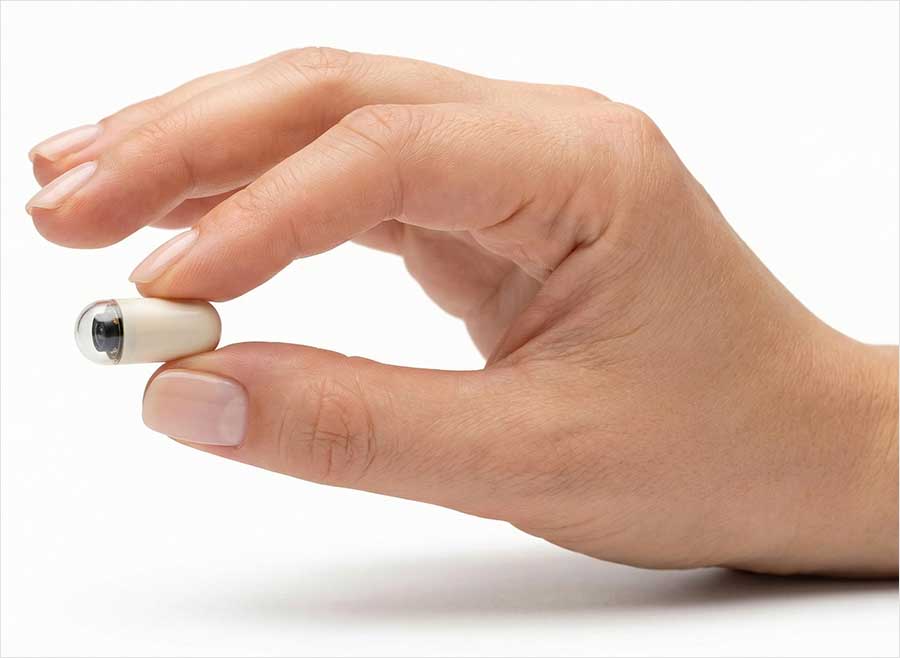
The capsule endoscopy process is very simple. There’s no need for anaesthetic or sedation, meaning you can get started straight away.
Once you are comfortable, you’ll have a belt containing small sensors placed onto your abdomen that will communicate with the camera. You’ll be given the camera, which will be encased in a pill, and you can swallow it with a glass of water.
The pill cam will pass very quickly through your oesophagus and move into your stomach. It usually takes less than half an hour for it to exit your stomach, and your medical team will monitor the images to determine when this has taken place. It’s important to note that everyone is different, and for some people (such as those with diabetes) it takes longer for the capsule to clear the stomach.
Once it’s left your stomach, you’ll be able to go home and carry on with your usual daily activities. You may drink clear liquids 2 hours after swallowing the capsule and eat 4 hours after swallowing the capsule.
How long does a capsule endoscopy take?
The entire process usually takes around 12 hours from start to finish.
Is a capsule endoscopy painful?
No, you shouldn’t feel anything at all.
What happens after a capsule endoscopy?
Your pill cam will exit your body through the normal process – your bowel movements – where it can be flushed away. You’ll need to return the monitoring device to the hospital so that the images can be downloaded and reviewed.
How long do capsule endoscopy results take?
It depends on your consultant and their capacity to review the results. If any tissue samples have been taken, they will want to wait for the results to come back from the laboratory before speaking to you. On average, it can take 2 to 4 weeks to get the results of a capsule endoscopy.
What are the benefits of a capsule endoscopy?
The main benefit of a capsule endoscopy is that it is a non-invasive diagnostic tool that can provide actual images of the inside of your digestive system. This means that there’s no need for anaesthetic or sedation, no downtime and minimal disruption to your day-to-day activities.
What are the risks and possible complications of a capsule endoscopy?
Just like any procedure, there are always some risks and possible complications associated with a capsule endoscopy. Some are more common, while others are extremely rare. They are limited to, but include:
- capsule retention: which is where the capsule gets stuck somewhere in the digestive tract
- small bowel obstruction: which can occur if a capsule gets stuck
- incomplete examination: the capsule may not reach the full length of the small bowel before the battery runs out
- image transmission failure
- difficulty swallowing the capsule.
If there is the possibility of a narrowing in the bowel, your consultant might suggest a dummy or patency capsule procedure first to check if the capsule will pass through safely.
Your consultant will explain all of the risks to you before your procedure.
How safe is a capsule endoscopy?
A capsule endoscopy is a routine diagnostic test and widely considered to be extremely safe.
What happens if the capsule does not pass naturally?
Rarely, a capsule doesn’t pass naturally, but if it doesn’t, one of several things may happen:
- You may need an X-ray to check if the capsule has passed.
- You may be asked to wait a little longer to see if it passes, provided you don’t have any symptoms of an obstruction.
- If you have an obstruction, you may need an urgent medical review, and potentially surgery to remove it.
- In some cases, an endoscopy is needed to remove the capsule.
How much does a capsule endoscopy cost at Nuffield Health?
For pricing information, please contact your local hospital.
FAQs
-
What if I can't swallow the capsule endoscopy pill?If you’re unable to swallow a capsule endoscopy pill, it may be possible to have it placed directly into your stomach or small bowel using an endoscope. It’s still less invasive than a full endoscopy or colonoscopy, while still getting the images needed for comprehensive diagnostics.
-
Do I need to return the capsule after swallowing it?Absolutely not! You can flush it!
-
Will the capsule set off airport security or metal detectors?The honest answer is, we don’t really know. The camera will contain tiny metal parts, but whether or not they will set off metal detectors or not will depend on the sensitivity of the machine. If you’re going somewhere where you are likely to have to go through security, we recommend you take a note from your consultant stating that you have a pill cam in progress.
-
What size is the capsule endoscopy pill?A capsule endoscopy pill is usually around 26mm x 11mm – the equivalent of a large vitamin pill. It’s designed to be swallowed easily, and can be taken with water.
-
Why do I need to avoid MRI scans after capsule endoscopy?Like airport scanners, MRI scans are very sensitive to metal. If you need an MRI scan, you’ll usually be asked if you have any metal in your body, or anything like a pill cam in progress. Always be clear about your medical information and try and avoid booking any other medical procedures for the days around your capsule endoscopy.
-
What happens if capsule endoscopy doesn't find anything?If your capsule endoscopy doesn’t find anything concerning, your consultant will re-evaluate your symptoms and look at alternative diagnostic testing.
Ways to pay
Nuffield Health promise
Our prices are all-inclusive. We will equal any comparable price. There are no time limits on your aftercare.
Paying for yourself
There are no hidden costs in our treatment prices. The price you see is the price you pay.
Find out morePersonal medical loan
Spread the cost of your treatment with a 10, 12 or 24 month 0% personal medical loan.
Find out moreMedical insurance
We work with you and your insurance provider to get you the treatment you need quickly.
Find out more