
Total shoulder replacement surgery at North Staffordshire Hospital
- Overview
At Nuffield Health North Staffordshire Hospital, our experienced orthopaedic specialists offer total shoulder replacement surgery for patients with arthritis, joint damage, and ongoing shoulder pain. By replacing the worn ball and socket of the shoulder joint with artificial components, the procedure can reduce pain, improve mobility and support everyday shoulder function.
What is a total shoulder replacement?
A total shoulder replacement is a procedure to replace two damaged parts of the shoulder joint with artificial components. These are the ball, also known as the humeral head, and the socket, which can be referred to as the glenoid cavity. It’s a common procedure, with more than 8,000 performed in the UK every year.
What are the benefits of a total shoulder replacement?
The main reason, and therefore benefit, of a total shoulder replacement is pain reduction. This is because damage to this joint causes significant and often chronic discomfort.
Other benefits of total shoulder replacement surgery include:
- Improved movement and function. Where you may have found some day-to-day tasks like washing your hair or getting things off a high shelf difficult, the surgery should help make them easier.
- Better strength in your arm, enabling you to eventually lift and carry normally again.
- Great quality of life. From better sleep to being able to do your usual activities without pain and discomfort, people who have a total shoulder replacement are able to enjoy a better quality of life afterward.
- High success rate. Most shoulder replacements last over a decade.
What else is total shoulder replacement known as?
You may also hear of a total shoulder replacement being referred to as total shoulder arthroplasty.
Total, partial or reverse shoulder replacement: what's best for me?
A total shoulder replacement isn’t the same as a partial or reverse shoulder replacement, and your consultant (surgeon) will be able to tell you which procedure is right for you based on the type and severity of your shoulder injury.
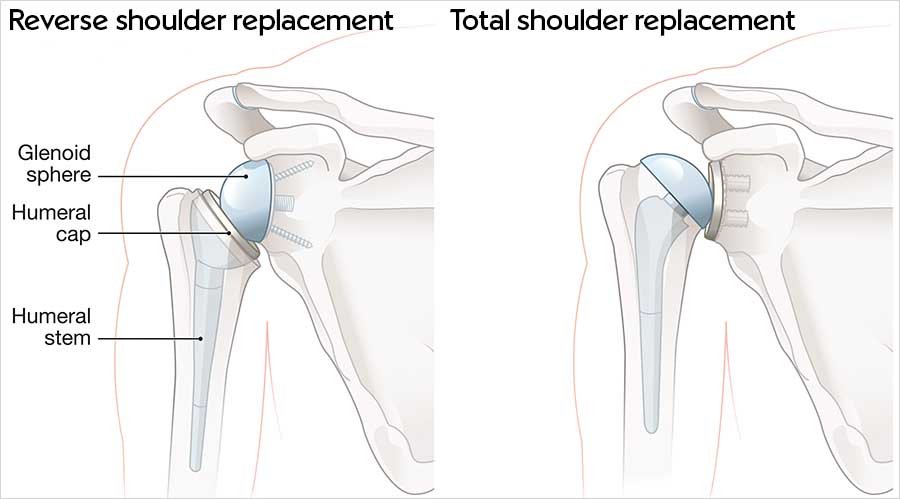
Total shoulder replacement
A total shoulder replacement is recommended for someone with severe osteoarthritis, but with a healthy, working rotator cuff.
Reverse shoulder replacement
A reverse shoulder replacement is the recommended treatment for someone with severe osteoarthritis along with a significant rotator cuff tear that can’t be repaired. It’s also recommended for people who’ve had a previous replacement that has failed.
Partial shoulder replacement
During this procedure, only the ball component of the joint is replaced with an artificial alternative. It’s usually reserved for people with damage limited to the ball component and leaves the natural socket left intact.
What conditions can total shoulder replacement surgery treat?
There are a range of conditions that can be treated with total shoulder replacement surgery. These include:
- Shoulder osteoarthritis: osteoarthritis is a degenerative condition that occurs when the cartilage that covers the ends of the bones in the joint starts to break down. When this happens, it can no longer protect the bones from rubbing together, causing friction, pain, inflammation and movement issues.
- Rheumatoid arthritis: rheumatoid arthritis is caused by an autoimmune disorder, where your body attacks its own healthy cells. The symptoms are like those seen in osteoarthritis.
- Rotator cuff injuries: rotator cuff injuries happen when tendons responsible for stability in your shoulder start to fray or come away from the bones entirely. This usually happens because of repetitive strain or an accident like a fall. In this instance, a reverse total shoulder replacement is needed, as it focuses on repairing the tendon damage as well as replacing the joint.
- Shoulder fracture: A break in your collarbone, shoulder blade or upper arm bone can all be classed as a shoulder fracture, and these usually happen due to blunt force trauma to the area.
- Osteonecrosis: a condition characterised by the death of bone due to a lack of blood supply. It’s quite rare, but can occur because of traumatic injury, long-term steroid use and alcohol abuse. Total shoulder replacement can be used to prevent the joint from failing altogether.
Can shoulder joint pain go away on its own?
If you’ve only sprained or strained your shoulder, it’s likely that the pain you’re feeling will go away on its own within a few weeks, although you may be able to speed this up using ice packs, taking non-steroidal anti-inflammatory pain relief and getting plenty of rest. However, if your pain lasts for more than a few weeks and isn’t getting better, or is even getting worse, it’s important to get your shoulder checked by a medical professional as you may need more significant treatment.
Why choose Nuffield Health North Staffordshire Hospital for your total shoulder replacement surgery?
Serving the local community since 1978, Nuffield Health North Staffordshire Hospital provides specialist orthopaedic care for patients across Stoke-on-Trent, Newcastle-under-Lyme and the surrounding areas. Patients considering total shoulder replacement surgery benefit from consultant-led care, advanced diagnostic imaging and on-site physiotherapy services, ensuring assessment, treatment and rehabilitation can be accessed within the same hospital.
Located in Clayton, near Newcastle-under-Lyme, the hospital combines modern surgical facilities with 39 private en-suite bedrooms, dedicated nursing care and a 24-hour Resident Medical Officer for added reassurance throughout your stay. Following total shoulder replacement surgery, patients can enjoy freshly prepared meals, free on-site parking and personalised physiotherapy programmes.
How to book a consultation at Nuffield Health North Staffordshire Hospital?
Choosing the right treatment for ongoing shoulder pain starts with a specialist assessment. Book online, complete an enquiry form or call our team directly on 01782 432227 to meet with an experienced shoulder consultant at Nuffield Health North Staffordshire Hospital and discuss whether total shoulder replacement surgery could help improve your comfort and mobility.
How do I know if I need a total shoulder replacement?
Not everyone is automatically a good candidate for a total shoulder replacement, and your consultant will give you a thorough assessment before deciding if this procedure is the right one for you.
Who is suitable for total shoulder replacement?
You may be a suitable candidate for a total shoulder replacement if you have significant pain and movement problems that aren’t improved with more conservative treatments such as pain medications, physical therapy and injection therapies.
Who is not suitable for total shoulder replacement?
You may not be a good candidate for a total shoulder replacement if you have an active infection in the joint, have irreparable damage to your joint or are experiencing severe bone loss. You may also be refused surgery if you’ve had a previous failed replacement, make poor lifestyle choices (excessive alcohol consumption, smoking, etc.) or you’re not prepared to commit to the significant rehabilitation programme that will follow your procedure.
What are the alternatives to a total shoulder replacement?
Total shoulder replacement is the final resort treatment for people with severe damage to their shoulder. Before you reach this stage, you may be offered one of a range of alternative treatments. These may include:
- Rest, ice/heat treatments and pain medications.
- Physiotherapy, which is designed to strengthen your muscles, improve your flexibility and range of movement.
- Injection therapies, including Platelet-Rich Plasma (PRP), corticosteroids and stem cell treatment.
How can I prepare for total shoulder replacement surgery?
As with any surgery, it’s important to take steps to prepare. Taking steps to prepare for treatment can help reduce your risk of complications, improve your rate of recovery and provide a better overall outcome from your treatment. These include:
- Eating a healthy, balanced and nutritious diet.
- Stopping smoking. Smoking can significantly increase your risk of complications and cause it to take longer for you to heal.
- Limit your alcohol intake.
- Get regular, gentle exercise.
- Stopping any medications advised by your Nuffield Health North Staffordshire Hospital team.
You’ll be in a sling for at least 6 weeks following your surgery, so you may also want to make preparations at home, such as by batch cooking meals or asking friends and family to help with some of your usual activities. You also won’t be able to drive, so you’ll need to arrange for someone to take you to and from your surgery, and to help you in the days and weeks after.
What to expect during total shoulder replacement surgery
Total shoulder replacement surgery is normally performed under a general anaesthetic, which means that you will be asleep and won’t be in any pain during your procedure. Sometimes this is also combined with a nerve block, which will keep your arm and shoulder numb for some time after your surgery to help minimise post-operative pain.
Once you’re anaesthetised, your surgeon will make the incisions and complete the procedure, removing any damaged tissue, smoothing any bone spurs that may have developed (bony protrusions that can put pressure on nerves in the joint) and replacing the joint with the artificial alternative. If you are having reverse total shoulder replacement surgery, the damaged tendon will be repaired too.
After your surgery, you’ll be moved to a recovery room where you’ll be closely monitored as the general anaesthetic wears off.
How long does a total shoulder replacement operation take?
A total shoulder replacement surgery usually takes around 2 hours. However, exact times can vary.
How long does it take to recover after a total shoulder replacement?
Recovery from a total shoulder replacement surgery can be extensive, and you’ll need to commit to a comprehensive rehabilitation programme alongside standard surgical recovery to get the most from your procedure.
Your recovery can typically be broken down into stages, much the same as in rotator cuff surgery.
Initial healing phase
For the first 6 weeks, you’ll have to wear a sling to keep your shoulder stable and immobilised. This will help kick-start the healing process. You’ll probably need to take pain relief regularly, and you may be given some gentle physical therapy exercises to follow.
Weeks six to twelve
You’ll be able to remove your sling, but you’ll still have to avoid any significant physical activity or heavy lifting. You’ll be given more physical therapy activities to complete to start building gradual strength and movement in your arm. You may also find that you no longer need much in the way of pain relief. If you have a sedentary job, you can probably return to work.
Months three to six
Movement should be getting easier, and your physical therapy exercises will be designed to build more strength and mobility in your shoulder. If you have a physically active job, you may be able to go back to work towards the end of this period.
Months six to twelve
Most people achieve full recovery from their total shoulder replacement surgery within 12 months, enabling them to go back to all of their usual activities including high-impact sport.
Nevertheless, it’s important to remember that rates of recovery can vary between patients, and it’s essential that you always follow the guidance provided by your consultant and medical team.
How soon can I go home after a total shoulder replacement?
In some cases, you may be able to go home the same day as your surgery, but it’s more common to have to stay in hospital for a few nights. This is to help ensure that your pain is under control and you’ve started your physical therapy exercises. Always follow the recommendations of your consultant.
How soon can I drive after a total shoulder replacement?
Most people are able to return to driving between 8 and 12 weeks after their surgery. However, you should get permission from your consultant; otherwise, your insurance could be invalid.
How long before I can return to work after a total shoulder replacement?
It really depends on how physical your job is. If you have a desk-based role, you may be able to return to work in as little as three weeks post-surgery. However, if you have a job that involves manual labour or heavy lifting, it could feasibly take anywhere from 4 to 6 months before your consultant agrees that it is safe for you to go back to work.
What should I avoid after a total shoulder replacement?
Your consultant will provide you with a list of activities that you should avoid in the days and weeks after your shoulder replacement surgery. This will be extensive and could include:
- Performing specific arm movements, such as reaching behind your back.
- Lifting or carrying anything, including light objects, for at least 6 weeks.
- Sleeping on that shoulder for at least 6 weeks.
- Driving until given permission by your surgeon.
- Getting the incision wet for at least 48 hours, and not soaking it until it is fully healed.
- Taking anti-inflammatory medications until otherwise advised as these could slow your rate of healing.
- Smoking, as this will delay your healing and put you at more risk of post-operative complications.
What exercises are best to help recovery from a total shoulder replacement?
You’ll be given a specific physical therapy programme to follow after your surgery, and it’s important that you don’t deviate from this plan. It’s designed to increase your strength and mobility gradually, ensuring that you don’t do too much too soon which could delay your recovery. This programme will include a mixture of passive exercises and active movements, which will get more intense over time.
How long do the results of a total shoulder replacement last?
Exact results vary, but studies show that most total shoulder replacements last for more than a decade. Following the post-operative guidance of your medical team will help ensure that you get the best possible outcome from your total shoulder replacement surgery.
What are the risks and complications of a total shoulder replacement?
All surgeries come with a risk of complications, including total shoulder replacement surgery.
Possible risks of total shoulder replacement surgery
- General surgical risks such as bleeding, deep vein thrombosis, bruising and infection.
- Stiffness/frozen shoulder syndrome.
- The tendon re-tearing or failing to heal.
- Damage to nerves and blood vessels.
- Persistent pain following surgery.
- Rotator cuff tears.
- Implant loosening.
- Shoulder dislocation.
- Scapular stress fracture, which is a rare complication occurring in less than 5% of cases.
How painful is a shoulder replacement?
The surgery itself shouldn’t be painful as it’s carried out under general anaesthetic, meaning you’ll be asleep and unable to feel anything. You’ll also be given a decent degree of post-surgery pain relief to make discomfort manageable in the days immediately following your procedure.
Nevertheless, most people do experience some discomfort for weeks and even months after their surgery. Taking your pain medications as scheduled should help you to manage it, but if you have any concerns, speak to your medical team.
How much does total shoulder replacement surgery cost at Nuffield Health North Staffordshire Hospital?
To enquire about the cost of total shoulder replacement surgery, contact our healthcare team on 01782 432227. Following your consultation and assessment, you'll receive a personalised fixed-price quotation covering all aspects of your treatment, hospital stay and aftercare.
FAQs
-
Is total shoulder replacement surgery worth it?
The high success rate of total shoulder replacement surgery, along with high patient satisfaction rates of between 75% and 100% mean that most people consider this procedure to be valuable in helping to eliminate their symptoms and improving their quality of life.
-
Is total shoulder replacement a major operation?
Yes, total shoulder replacement should be considered a major procedure as while the surgery itself is fairly straightforward, there is a lengthy recovery period.
-
What is the waiting time for a total shoulder replacement at Nuffield Health?
If you are looking to get a total shoulder replacement at a Nuffield Health Hospital, you could be scheduled for surgery in as little as 2 weeks from your initial consultation.
-
Will total shoulder replacement surgery leave a scar?
Yes, total shoulder replacement surgery generally leaves a scar of between 6 and 10 centimetres, and this will be located on the front part of your shoulder. There are many topical treatments that can support healing and help to minimise the appearance of your scar.
-
How long after a total shoulder replacement can I return to playing sports or exercising?
Your return to exercise after a shoulder replacement should be gradual. You’ll be encouraged to start gentle exercise within a few months, but more strenuous or high impact activities and sports may require you to wait 4 to 6 months or more. This is particularly true for those which place repetitive strain on your shoulder, such as golf, swimming or weightlifting.
Always follow the guidance of your consultant (surgeon) and surgical team.
Total shoulder replacement surgery consultants at North Staffordshire Hospital
Clayton Road, Newcastle-under-Lyme, ST5 4DB
Ways to pay
Nuffield Health promise
Our prices are all-inclusive. We will equal any comparable price. There are no time limits on your aftercare.
Paying for yourself
There are no hidden costs in our treatment prices. The price you see is the price you pay.
Find out morePersonal medical loan
Spread the cost of your treatment with a 10, 12 or 24 month 0% personal medical loan.
Find out moreMedical insurance
We work with you and your insurance provider to get you the treatment you need quickly.
Find out more