
Trabeculectomy (glaucoma surgery)
- Overview
Reviewed on Tuesday 4 August 2026 by a General Practitioner (GP).
Glaucoma can quietly damage your sight before you notice any change. Our specialists at Nuffield Health offer trabeculectomy, an operation that creates a tiny drainage channel in the eye to lower the pressure and protect the optic nerve from further damage.
What is trabeculectomy?
Trabeculectomy is the name given to a procedure used to treat the eye condition best known as glaucoma. Glaucoma is characterised by raised intraocular pressure (IOP) – that’s the pressure inside your eyes – which can cause irreversible damage to your vision if left untreated.
What is trabeculectomy also known as?
You may also hear a trabeculectomy referred to by other names, including glaucoma drainage surgery, glaucoma filtration surgery and filtering bleb surgery.
What are the benefits of trabeculectomy?
The main benefit of a trabeculectomy is that it is very successful in helping to lower intraocular pressure, slowing or even halting vision loss in people with glaucoma, particularly when other treatment methods have failed.
It can also help to lower your reliance on IOP medications and provide a long-term solution for glaucoma.
What are the different trabeculectomy techniques?
The different trabeculectomy techniques refer to how your surgeon will access your eye to perform the procedure. However, first it’s important to understand the main part of the treatment.
The eyes continually make two key fluids to keep them healthy and properly pressurised. These new fluids replace the old ones, which drain out of the eye through something called the trabecular meshwork. When this becomes blocked, it can make it hard for fluid to drain and this causes the pressure in your eye to rise.
Put simply, a trabeculectomy is a procedure where a new drainage channel is created to bypass the trabecular meshwork and enable fluid to pass out of your eyes and into your bloodstream again. In doing so, your intraocular pressure should come down.
-
Fornix-based trabeculectomyIn this trabeculectomy technique, your surgeon will make a small incision into your conjunctiva, which is the clear soft cover over the white part of your eye. Unlike other techniques, the incision is made into an area called the limbus, which is right at the very edge of where your iris (the coloured part of your eye) meets the sclera (the white part). It’s then hinged backwards, and creates a wide bled, which is the blister than stores excess fluid in this procedure).
-
Limbal-based trabeculectomyIn this trabeculectomy technique, the incision is made around 8-10mm away from the limbus (sometimes these falls under the eyelid) and is hinged towards your cornea. This creates a smaller, more localised bleb. This type of trabeculectomy is considered to offer tighter, more secure wound closure.
-
Device-modified (augmented) trabeculectomyAs the name of this technique suggests, augmented trabeculectomy incorporates the addition of a tiny device, like a microscopic stent, or specific medicines, to aid drainage.
-
PhacotrabeculectomyThis is a very specific procedure that combines cataract removal with a trabeculectomy to treat both cataracts and glaucoma at the same time.
-
Trabeculectomy with antimetabolites (MMC/5-FU)Again, this is a specialist type of trabeculectomy procedure, in which medications called mitomycin C (MMC) or 5-fluorouracil (5-FU) are applied to the eye to reduce the risk of post-operative scarring and improve the overall success of treatment.
Trabeculectomy and glaucoma
Trabeculectomy is one of the final treatment options for people with glaucoma who have exhausted other, less invasive therapies such as eye drops and laser therapy.
What causes glaucoma?
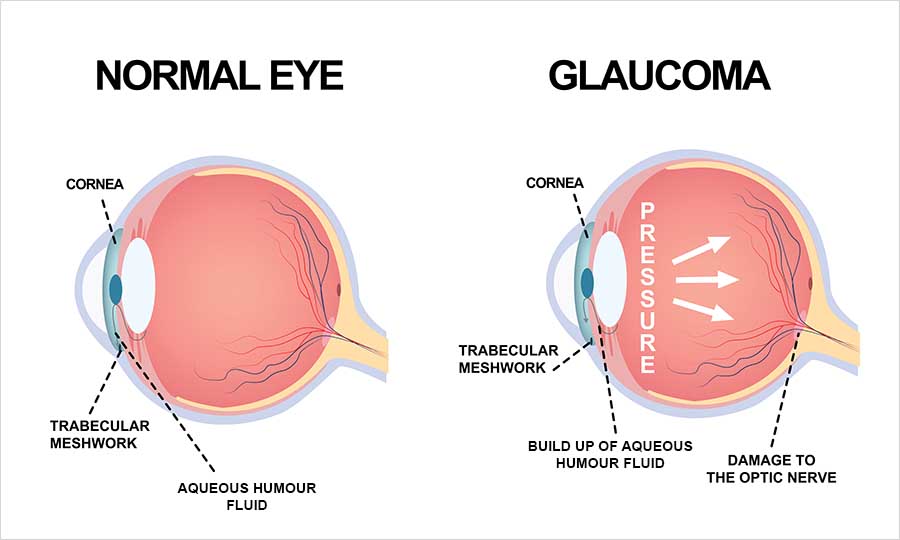
Glaucoma occurs when rising pressure inside your eye causes damage to your optic nerve, which connects the light-sensitive patch of cells at the back of your eye (your retina) to your brain, to tell you what you can see. This rising pressure is most often caused by the fluid in your eye (that usually drains and refills automatically to keep your eyes healthy) failing to drain away or draining away too slowly.
What are the different types of glaucoma?
There are several different types of glaucoma. These are:
- Open-angle glaucoma: The most common type of glaucoma, open-angle glaucoma usually develops slowly over several months and years, as the drainage channels in your eyes become increasingly clogged. It causes virtually no symptoms in the early stages but gradually affects your peripheral vision.
- Acute angle-closure glaucoma: This is a serious type of glaucoma that requires immediate medical attention. It happens when the drainage channel in your eye suddenly becomes blocked and intraocular pressure rises very quickly. If it’s not treated right away, it can lead to permanent vision damage.
- Normal tension glaucoma: If you’re diagnosed with normal tension glaucoma, it means that your optic nerve is damaged, but the pressure within your eyes falls within normal, safe parameters. It can be caused by factors like poor blood flow to your optic nerve or weak optic nerve tissue. The low intraocular pressure of normal tension glaucoma can make it harder to diagnose than other types of the condition.
- Secondary glaucoma: Secondary glaucoma is characterised by increased intraocular pressure that is caused by an identifiable medication, injury or medical condition. In many cases, it can be linked to a specific event, such as an eye trauma, or a medical/eye condition, like uveitis.
Who is at risk of developing glaucoma?
Although anyone can potentially develop it, some people have a higher risk of getting glaucoma. They include people who:
- are over the age of 40, with your risk increasing the older you get
- have an immediate blood relative with glaucoma
- are of black African, Caribbean or Asian descent
- have underlying health conditions, such as migraines, diabetes and high blood pressure
- have severe short-sightedness (myopia).
If you’re concerned about glaucoma risk, you should always speak to your optician or general practitioner.
What happens if glaucoma is left untreated?
Without treatment, glaucoma can cause irreversible damage to your eyesight. This will start with losing your peripheral vision, which is the edges of what you see, but will eventually extend across your entire visual range.
Who is suitable for trabeculectomy?
You may be a good candidate for trabeculectomy if you:
- have moderate to severe glaucoma
- have tried more conservative treatments, such as eye drops or laser therapy, and have been unable to achieve a reasonable reduction in your intraocular pressure
- are unable to use alternative treatments for any reason
- you have acute angle glaucoma and need rapid treatment to lower your eye pressure.
Who may not be suitable for trabeculectomy?
You may not be suitable for trabeculectomy if you:
- have normal tension glaucoma, as this treatment tends to be less effective for this type of glaucoma
- have had eye surgery within the last six months, as this could increase your risk of complications and post-operative scarring
- have very high myopia.
Your consultant ophthalmologist will be able to advise you if trabeculectomy could be a viable treatment for your glaucoma at your consultation appointment.
What are the alternatives to trabeculectomy?
There are a wide range of alternatives to trabeculectomy, including:
Minimally Invasive Glaucoma Surgery (MIGS)
This is a term used to encompass a collection of microscopic procedures designed to lower intraocular pressure and treat glaucoma. They involve making tiny incisions to improve the existing drainage channels in your eyes, rather than creating new ones.
Common MIGS techniques include using microscopic stents, such as the iStent, to bypass the blockage, enabling fluid to drain out normally.
MIGS techniques have a lower risk profile than trabeculectomy, with less surgical trauma, a faster recovery and lower risk of complications.
Selective laser trabeculectomy (SLT)
As its name suggests, this is a laser technology technique for treating glaucoma. In SLT, gentle laser pulses are aimed at your eye to clean the natural drainage channels, removing blockages and enabling excess fluid to drain effectively.
It’s fast, at less than 10 minutes per eye, and doesn’t involve any incisions, meaning that there are no wounds to heal, reduced risk of infection and faster recovery.
Your consultant ophthalmologist will discuss which treatments may be suitable for you and help you to make an informed decision about your care.
How should I prepare for trabeculectomy?
Taking steps to prepare ahead of your procedure – sometimes called prehabilitation – can help to reduce your risk of complications and improve your rate of recovery. Your consultant will give you a list of things that you can do to help prepare, and these could include:
- taking any medications, such as pressure-lowering eye drops, exactly as directed
- stopping any regular medications if required
- limiting alcohol intake, as alcohol can dehydrate your eyes
- stopping smoking if you can, as this could reduce your risk of complications and aid your recovery
- avoiding make-up on your face and eyes the day of your surgery
- arranging for someone to drive you home after your procedure.
If you’re unsure about any aspect of the preparation for your trabeculectomy procedure, always get in touch with your medical team.
What happens during trabeculectomy?
During a trabeculectomy procedure, your surgeon will create a new drainage path for fluid to leave your eye, reducing your intraocular pressure. Exactly where and how this is done will depend on the type of trabeculectomy technique used.
Trabeculectomy is usually carried out under local anaesthetic with sedation, meaning you’ll be awake but relaxed and unable to feel any pain during the surgery. However, in some cases it’s possible to have a general anaesthetic.
How long does trabeculectomy take?
On average, trabeculectomy surgery takes between one and two hours.
Is trabeculectomy painful?
No, trabeculectomy shouldn’t be painful since it will be carried out under local or general anaesthetic. Some people do experience some discomfort in the days following their surgery, but this can usually be managed with over-the-counter pain relief.
How long does trabeculectomy (glaucoma surgery) recovery take?
As with most surgeries, recovery from trabeculectomy is a marathon, not a sprint, with full recovery, including stabilised vision, taking up to 3 months.
You’ll need to follow a strict schedule of taking eye drops and attending follow-up appointments to ensure that your recovery is on track, as well as limiting certain physical activities to help get the best possible outcome from your treatment.
What is the best way to sleep after glaucoma surgery?
Keeping the pressure in your eyes under control is very important in the days after your trabeculectomy, so you’ll be advised to sleep a certain way to support this. You should sleep on your back (or, if you’ve only had one eye treated, your non-operated side) with your head raised to between 30 and 45 degrees using pillows.
You should also continue to wear the eye shield you’ll be provided with for at least two weeks. This will protect your eye and stop you from inadvertently touching or rubbing it.
How long will my vision be blurry after glaucoma surgery?
You should expect your vision to be blurred for up to around two weeks following your glaucoma surgery, although exact rates can vary. It typically takes several months for your eye to heal fully and your vision to return to normal.
When can I return to work after glaucoma surgery?
Most people are advised to take at least two weeks off work after glaucoma surgery. If you have a job that involves manual labour or intense physical activity, you may need to allow a month of rest. Always follow the recommendation of your consultant.
When can I drive after glaucoma surgery?
It depends on how quickly your vision stabilises after surgery. You definitely won’t be able to drive yourself home from your appointment, or for at least 48 hours afterwards. Once you can meet the minimum visual standards for driving, and have the permission of your consultant, you’ll be able to get back behind the wheel.
When can I exercise after glaucoma surgery?
You’ll need to take it easy in the initial stages of your recovery, with only gentle walking advised for the first few weeks. You’ll also need to avoid bending below your waist, as this can increase the pressure in your eyes.
Running, cycling, lifting weights and other more strenuous activities will need to be avoided for at least two weeks, but always get the permission of your surgeon before restarting as everyone heals at a different pace.
When can I swim after glaucoma surgery?
Swimming should be avoided for as long as three months to help prevent infection. Again, always follow the guidance of your medical team.
What are the possible risks and complications of trabeculectomy?
Trabeculectomy is widely considered to be a safe surgery. However, as with all procedures, there are some risks and complications to be aware of. These include:
- infection
- bleeding inside your eye
- low eye pressure, which can sometimes need further treatment
- leaking inside the surgical site
- cataract formation
- failing to lower eye pressure enough.
Your consultant ophthalmologist will explain all the risks, complications and side effects to you, so that you are fully informed ahead of your surgery.
What is the success rate of trabeculectomy?
Success rates of trabeculectomy surgery vary by the type of glaucoma being treated. However, typically they start at 80-90% at one-year post-surgery, dropping to 60-73% over five to six years.
Does trabeculectomy increase the risk of cataracts?
Yes, studies show that trabeculectomy can considerably increase your risk of getting cataracts.
How much does trabeculectomy cost at Nuffield Health?
For pricing information, please contact your local Nuffield Health hospital. The hospital or your healthcare team will give you a fixed all-inclusive price for the treatment following your initial consultation.
FAQs
-
Is it safe to have cataract surgery if I have glaucoma?
Yes, it’s widely considered to be safe to undergo cataract surgery if you have glaucoma. However, your individual risk will be determined by your consultant.
-
Can trabeculectomy be performed on both eyes?
While trabeculectomy can be performed on both eyes at the same time, it’s very unusual. It’s almost always recommended to have the surgery on one eye at a time, with a gap of at least a few months in-between. This is both to ensure minimal risk of complications, and to ensure that the first eye is healing well and your vision is recovering properly, before operating on the second eye. This is particularly important as your eyesight could be blurred for a few weeks before returning to normal.
-
What is a bleb and will it be visible after trabeculectomy?
A bleb is the name given to the small, blister-type pocket that develops just under the white part of your eye during trabeculectomy surgery. Its purpose is to collect the surplus fluid so that it can drain out of your eye, reducing your intraocular pressure. It’s nearly always hidden from view by being tucked under your upper eyelid, so other people won’t notice it when looking at you. However, if you lift up your upper eyelid and look in the mirror, or look upwards, you may be able to see it yourself.
-
Will I need to change my glasses prescription after trabeculectomy?
Potentially, yes. By changing the amount of pressure in your eye, it can actually change the physical shape of your eye, and by default, where light is focused onto your retina, altering your prescription. However, don’t rush to get new glasses right away. It can take up to three months for your vision to stabilise after a trabeculectomy, so wait until your consultant ophthalmologist says that you’re ready to have a sight test to evaluate your prescription.
-
Can I wear eye makeup after trabeculectomy?
Yes, you can, but not right away. In fact, you’ll be advised to wait at least a fortnight. This is to help reduce your risk of developing an infection from using makeup that could be contaminated with bacteria. Always get the permission of your surgeon before starting to wear makeup after glaucoma surgery.
-
Can trabeculectomy be repeated if it fails?
Yes, glaucoma surgery can be repeated if it fails. However, previous surgeries increase the risk of scarring, and this could affect which technique is used.
Ways to pay
Nuffield Health promise
Our prices are all-inclusive. We will equal any comparable price. There are no time limits on your aftercare.
Paying for yourself
There are no hidden costs in our treatment prices. The price you see is the price you pay.
Find out morePersonal medical loan
Spread the cost of your treatment with a 10, 12 or 24 month 0% personal medical loan.
Find out moreMedical insurance
We work with you and your insurance provider to get you the treatment you need quickly.
Find out more